Fishing Vacations

Top 10 Fishing Destinations in Connecticut

Candlewood Lake 

Farmington River

Squantz Pond

Pattaconk Lake

Mashapaug Lake

Fort Trumbull Pier

Bantam Lake

Connecticut River

Lake Wononscopomuc

Lake Mcdonough


Fishing in Connecticut: Top 10 Destinations, Species & Travel Guide

Fishing in Connecticut is less about finding remote wilderness and more about understanding how to take advantage of a dense, well-managed, and highly accessible fishery. Within a relatively small geographic area, the state offers thousands of lakes, ponds, rivers, and coastal access points, allowing anglers to move quickly between completely different fishing environments in a single day.

What separates Connecticut from larger fishing states is efficiency. You’re rarely more than a short drive from productive water, and that makes it possible to fish more often, adjust quickly to conditions, and explore multiple locations without committing to a single destination.

How Fishing Works in Connecticut (What to Know Before You Go)

Fishing in Connecticut is shaped by three key factors: stocking programs, seasonal movement, and accessibility.

Stocking Drives Trout Fishing

Many rivers and lakes are regularly stocked with trout, especially in spring and fall. This creates consistent opportunities, even in waters that wouldn’t naturally support large trout populations year-round.

Seasonal Movement Matters

  • Spring → trout are active and widely distributed
  • Summer → fish move deeper or toward cooler water
  • Fall → aggressive feeding before winter
  • Winter → ice fishing becomes viable in many lakes

Understanding where fish move during each season is often more important than choosing the “best” location.

Access Is Easy—but Pressure Exists

Because many locations are easy to reach, fishing pressure can be higher than in remote states. Success often comes from:

  • Fishing early or late in the day
  • Targeting less obvious areas
  • Adjusting presentation instead of relying on location alone

Freshwater vs Saltwater: Choosing Your Focus

One of Connecticut’s biggest advantages is the ability to choose between freshwater and saltwater fishing without traveling far.

Freshwater Fishing

  • Lakes and ponds → bass, perch, sunfish, catfish
  • Rivers → trout and migratory species
  • More consistent for casual and frequent fishing

Saltwater Fishing

  • Long Island Sound → striped bass, bluefish, flounder
  • Piers and shoreline access available
  • Strong seasonal peaks, especially spring and summer

Top Fish Species in Connecticut (What You’ll Actually Target)

Connecticut is not about chasing rare species—it’s about having reliable access to fish that are active and catchable.

Trout (Core Species)

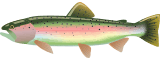
  • Rainbow trout
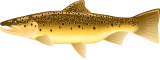
  • Brown trout
  • Brook trout

These are the backbone of the state’s fishing, especially in stocked waters and rivers like the Farmington.

Warm-Water Species

  • Largemouth bass
  • Smallmouth bass
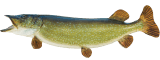
  • Chain pickerel
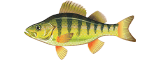
  • Yellow perch
  • Sunfish

These dominate lakes and ponds and provide consistent action throughout the year.

Saltwater Species

  • Striped bass
  • Bluefish
  • Flounder
  • Tautog

These species drive coastal fishing and offer some of the most exciting seasonal action in the state.

Types of Catch Available


raindbow trout

Rainbow Trout

brook trout

Brook Trout

brown trout

Brown Trout

yellow perch

Yellow Perch

Channel Catfish

Channel Catfish

northern pike

Muskie

walleye

Walleye

Carp

Pumpkinseed Sunfish

Bluegill

Bluegill

Largemouth Bass

Largemouth Bass

smallmouth bass

Smallmouth Bass

State Fishing Records

GET YOUR CONNECTICUT STATE FISHING LICENSE HERE.

Top 10 Fishing Spots Across Connecticut

How to Choose Where to Fish in Connecticut

The biggest mistake anglers make in Connecticut is choosing a location first instead of choosing a goal.

Start with what you want:

  • Steady action and variety → lakes like Candlewood or Mashapaug
  • Trout fishing (especially fly fishing) → Farmington River
  • Saltwater experience → Fort Trumbull or coastal areas
  • Less pressure and quieter water → smaller lakes and forest ponds

Because travel distances are short, you can adjust quickly. If one location isn’t producing, another is often less than an hour away.

Candlewood Lake

Candlewood Lake, Litchfield and Fairfield County, CT

Candlewood Lake is the largest lake in Connecticut and serves as one of the most complete freshwater fisheries in the state. Its size—combined with over 90 miles of shoreline—creates a wide range of fishing conditions, from shallow structure near shore to deeper open water zones.

This is primarily a bass-driven fishery, with largemouth and smallmouth bass being the main targets, but what makes Candlewood stand out is its consistency across multiple species. Anglers can also target trout, crappie, perch, and catfish depending on season and location.

Fishing success here often comes down to structure. Bass tend to hold near drop-offs, submerged cover, and weed edges, especially during warmer months. Crankbaits, soft plastics, and jigs are all effective, but adjusting depth throughout the day is key as fish move between feeding and resting zones.

Spring and fall offer the most aggressive bass activity, while summer fishing is best early and late in the day. Because of its popularity, fishing pressure can be high, especially on weekends, so timing and location selection make a big difference.

Candlewood is ideal for anglers who want a reliable, multi-species lake where success comes from adapting to changing conditions rather than relying on a single pattern.


Squantz Pond State Park

Squantz Pond State Park, New Fairfield, CT

Squantz Pond offers a more controlled and approachable fishing environment compared to larger lakes, making it a strong option for anglers looking for steady action without overwhelming water size.

The pond supports bass, trout, perch, carp, and walleye, with regular stocking helping maintain trout populations. Deeper sections of the pond tend to hold more active fish, especially during warmer months when shallow water heats up.

Live bait such as worms, shiners, and alewives tends to produce consistent results, though artificial lures can also be effective around structure and drop-offs.

Because of its popularity for recreation, fishing success often comes from working areas away from swimmers and high-traffic zones.

Squantz Pond is best suited for anglers looking for easy access and consistent multi-species fishing in a manageable setting.


Mashapaug Lake

Mashapaug Lake, Union, CT

Mashapaug Lake is a shallow, 297-acre fishery known for its accessibility and strong year-round productivity. Its relatively shallow depth makes it easier for anglers to locate fish, especially compared to deeper, more complex lakes.

The lake supports bass, perch, sunfish, trout, and catfish, and has produced state-record fish, highlighting its potential for larger catches.

Because of its depth, fish are often more evenly distributed, making it a great option for both shore and small boat anglers. During winter, the lake becomes a reliable ice fishing destination.

Simple techniques—live bait, small jigs, and basic lure presentations—tend to work well here, making it accessible to anglers of all experience levels.

Mashapaug is ideal for those who want consistent action across seasons without needing complex strategy or equipment.


Bantam Lake

Bantam Lake, Litchfield, CT

Bantam Lake is one of the most diverse fisheries in Connecticut, offering a wider range of species than most other lakes in the state.

Anglers can target northern pike, chain pickerel, bass, trout, perch, and multiple sunfish species. This diversity allows anglers to shift focus throughout the day depending on conditions and goals.

Pike and pickerel are often found near vegetation and structure, while bass tend to hold along drop-offs and submerged cover. Trout are more active in cooler months and deeper water.

The lake’s size provides enough space to explore, but it still remains manageable for most anglers.

Bantam is best for anglers who want variety and the ability to target multiple species without committing to a single fishing style.


Lake Wononscopomuc

Lake Wononscopomuc, Salisbury, CT

Lake Wononscopomuc is one of the cleanest and most well-maintained lakes in Connecticut, offering a consistent and reliable fishing experience.

The lake supports trout, bass, pickerel, perch, and sunfish, with regular stocking helping maintain strong populations. Spring is the most active season, when fish move into more accessible areas and feed aggressively.

Clear water conditions require a more thoughtful approach. Lighter line, natural presentations, and careful lure selection can improve success, especially for trout.

Fishing pressure increases during peak seasons, so early morning and late evening are often the most productive times.

This lake is ideal for anglers seeking steady fishing in a clean, scenic environment where presentation matters.


Farmington River

Farmington River, Windsor, CT

The Farmington River is the premier trout fishery in Connecticut and one of the most respected rivers in the Northeast.

Cold, clear water supports strong populations of brown and brook trout, with additional stocking of rainbow trout. This is a technical fishery where success depends on presentation and understanding insect hatches.

Trout hold in current seams, pools, and behind structure where food naturally flows toward them. Fly fishing is the dominant method, though spin fishing can also be effective.

Fishing is productive year-round, with spring and fall offering the best conditions. Summer fishing requires focusing on cooler water and low-light periods.

The Farmington is best suited for anglers looking for serious trout fishing where skill and technique drive success.


Pattaconk Lake

Pattaconk Lake, Cockaponset State Forest, Haddam, CT

Pattaconk Lake offers a quieter, more natural fishing experience within Cockaponset State Forest. Surrounded by forest, it provides a break from more crowded and developed locations.

The lake supports bass, trout, sunfish, and catfish, with vegetation and shoreline structure creating ideal habitat, especially for bass.

Access requires a short walk, which helps reduce fishing pressure and creates a more relaxed environment. Kayak fishing is often the best way to cover water here.

Live bait and simple lure presentations tend to work well, particularly near vegetation and shallow structure.

Pattaconk is ideal for anglers who want less pressure, a natural setting, and steady fishing without crowds.


Fort Trumbull Pier

Fort Trumbull Pier, Fort Trumbull State Park, New London, CT

Fort Trumbull Pier is one of the best shoreline saltwater fishing locations in Connecticut, offering access to deeper water without the need for a boat. Its position along the Thames River creates a natural feeding zone where baitfish attract larger predators.

Striped bass and bluefish are the primary targets here, especially during spring and summer runs. Tautog and flounder are also common, depending on season and water conditions.

Fishing here is heavily influenced by tide movement. Incoming and outgoing tides create current that pushes bait through the area, making these periods the most productive. Anglers who time their fishing around tide changes consistently outperform those who fish randomly.

The pier’s structure and lighting also make it a strong night fishing location, when larger predatory fish become more active.

This is ideal for anglers who want a true saltwater experience with minimal equipment and maximum accessibility, especially those who understand how to fish moving water and tides.


Connecticut River

Connecticut River, Middletown to Hartford, CT

The Connecticut River is one of the most dynamic fisheries in the state, offering a mix of freshwater and migratory species.

Anglers can target trout, salmon, striped bass, and other species depending on season and location. The river’s size and structure create constantly changing conditions influenced by current and seasonal movement.

Fly fishing and drift fishing are both effective here, especially in areas where fish hold near current breaks and structure.

Timing plays a major role, particularly during spawning runs and seasonal migrations.

The Connecticut River is best suited for anglers who enjoy variety and are comfortable adapting to changing water conditions.


Lake McDonough

Lake McDonough, Barkhamsted, CT

Lake McDonough offers a balanced fishing experience that combines accessibility with consistent productivity.

The lake supports bass, trout, pickerel, and sunfish, and is popular for boat, kayak, and shore fishing. Structure and vegetation create productive zones, especially for bass.

Anglers commonly find success using spinnerbaits, soft plastics, and jerkbaits, particularly around shoreline cover and drop-offs.

While there is an entrance fee, the quality of the lake and its upkeep make it worthwhile.

Lake McDonough is ideal for anglers looking for reliable fishing with easy access and a well-maintained environment.


Best Time to Fish in Connecticut

  • Spring: Peak trout season and strong bass activity
  • Summer: Best for lakes and saltwater fishing
  • Fall: One of the most productive times for trout and bass
  • Winter: Ice fishing opportunities in lakes and ponds

Planning a Successful Trip (What Actually Makes the Difference)

Fishing success in Connecticut rarely comes from finding a “secret spot.” It comes from:

  • Timing your trip around fish activity
  • Adjusting depth and presentation
  • Understanding seasonal movement
  • Being willing to move between locations

The anglers who do best here are not the ones who travel the farthest—they’re the ones who adapt the fastest.

>