
Rainbow Trout Fishing Guide
Rainbow Trout Fishing Guide
A Complete System for Finding, Understanding, and Catching Trout
Overview
Rainbow trout are not aggressive chasers like striped bass.
They are selective, condition-driven feeders that respond to subtle presentation, water clarity, and food availability. They can be easy one day and extremely difficult the next.
What separates successful anglers from frustrated ones is simple:
Control your presentation, match what they’re feeding on, and stay in the right depth zone.
Where to Find Rainbow Trout
Trout are highly dependent on:
- Oxygen
- Temperature
- Food availability
- Water clarity
They do not roam randomly—they position themselves where all four conditions align.
Lakes & Reservoirs
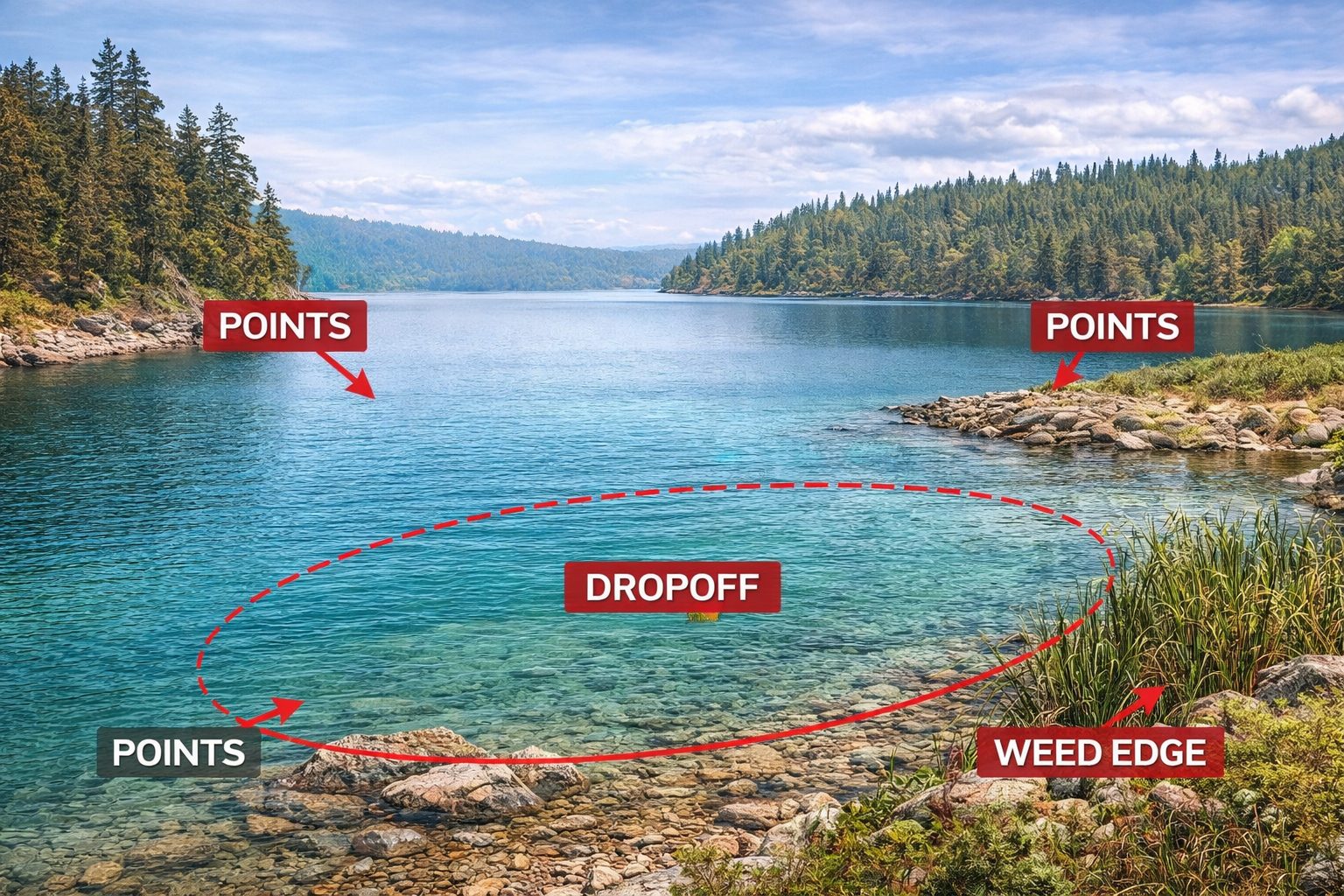
Trout in lakes behave very differently than river trout.
Key areas:
- Shoreline drop-offs
- Points and coves
- Inlets and creek mouths
- Weed edges
- Suspended over deeper water
Rivers & Streams
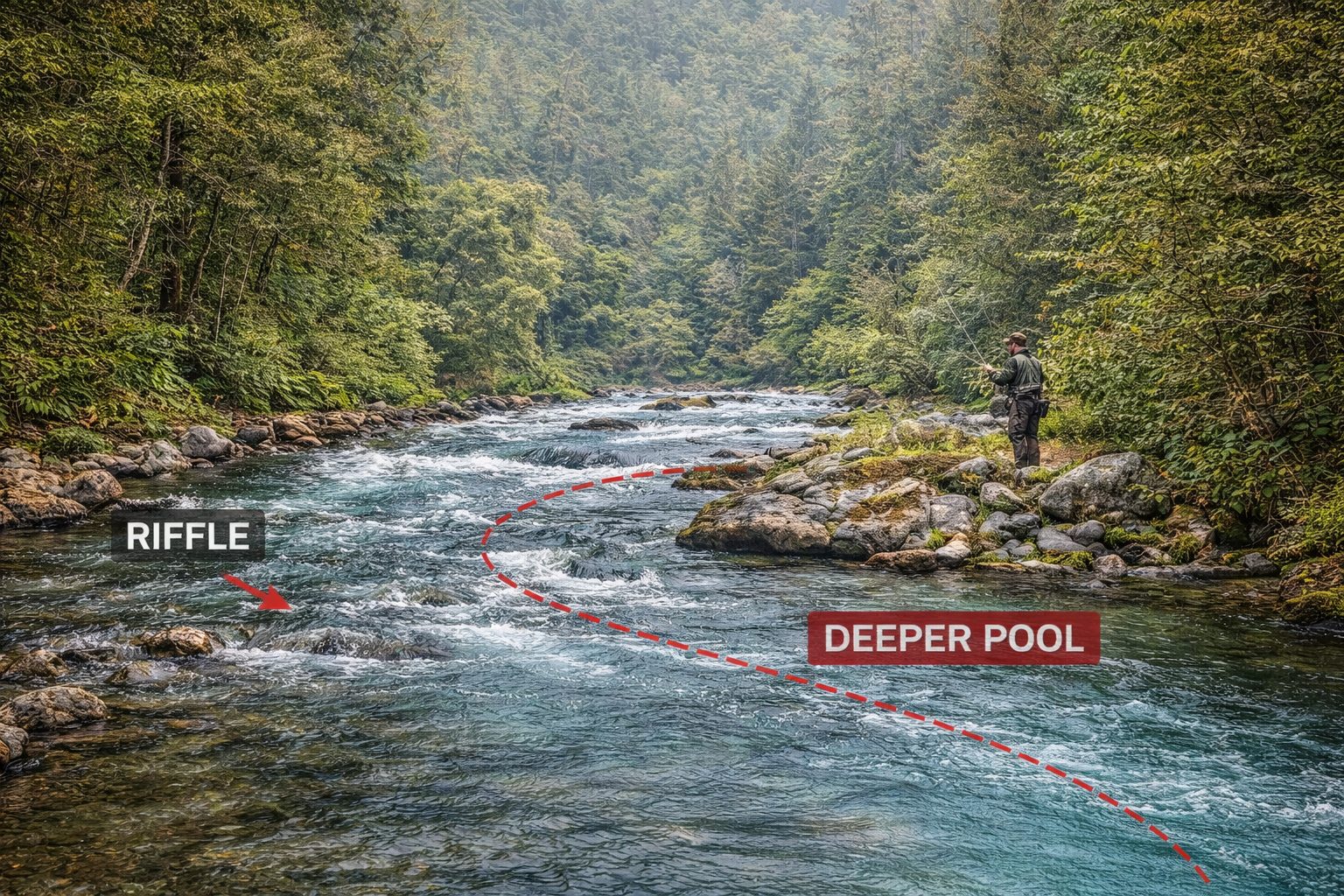
Trout use current for survival and feeding.
Look for:
- Current seams
- Behind rocks (current breaks)
- Deep pools
- Undercut banks
- Tailouts below riffles
These areas allow trout to conserve energy while feeding.
Seasonal Patterns
Trout behavior shifts with water temperature more than anything else.
Spring
- Fish are active and spread out
- Often closer to shore in lakes
- Strong feeding behavior
Summer
- Fish move deeper in lakes
- Seek cooler, oxygen-rich water
- Early morning and evening become critical
Fall
- Fish move shallow again
- Increased feeding before winter
- Excellent time for shore anglers
Winter
- Slower metabolism
- Hold deeper or in slower water
- Bite windows are shorter but predictable
Best Times to Fish
Time of Day
- Early morning is best
- Evening can be equally strong
- Midday can work in cooler conditions
Conditions
- Overcast is ideal
- Light wind creates movement and breaks visibility
- Clear, still water requires finesse
Tackle & Setup
- Rod: Light to medium-light (6’–7’)
- Reel: Small spinning reel
- Line: 4–8 lb test (light line matters)
- Leader: Light fluorocarbon
Everything should be as natural and subtle as possible.
Proven Methods
Bait Fishing
- PowerBait
- Worms
- Salmon eggs
Works well for stocked trout and less pressured fish.
Artificial Lures
- Small spinners
- Spoons
- Micro swimbaits
Retrieve speed matters more than lure choice.
Fly Fishing
- Dry flies (surface feeding)
- Nymphs (subsurface)
- Streamers (baitfish imitation)
Bubble + Fly System (Primary Method)
This is where your site becomes different.
For trout, this is not a secondary method—
this is one of the most effective systems available.
Why It Works
Trout feed heavily on:
- Small baitfish
- Insects
- Suspended food
A fly matches that perfectly—but casting distance is limited.
The bubble solves that problem.
What the Bubble Actually Does
- Adds casting weight
- Keeps your fly suspended
- Allows precise depth control
- Maintains a natural presentation
Depth Control: The Critical Advantage
This is the difference between catching fish and getting ignored.
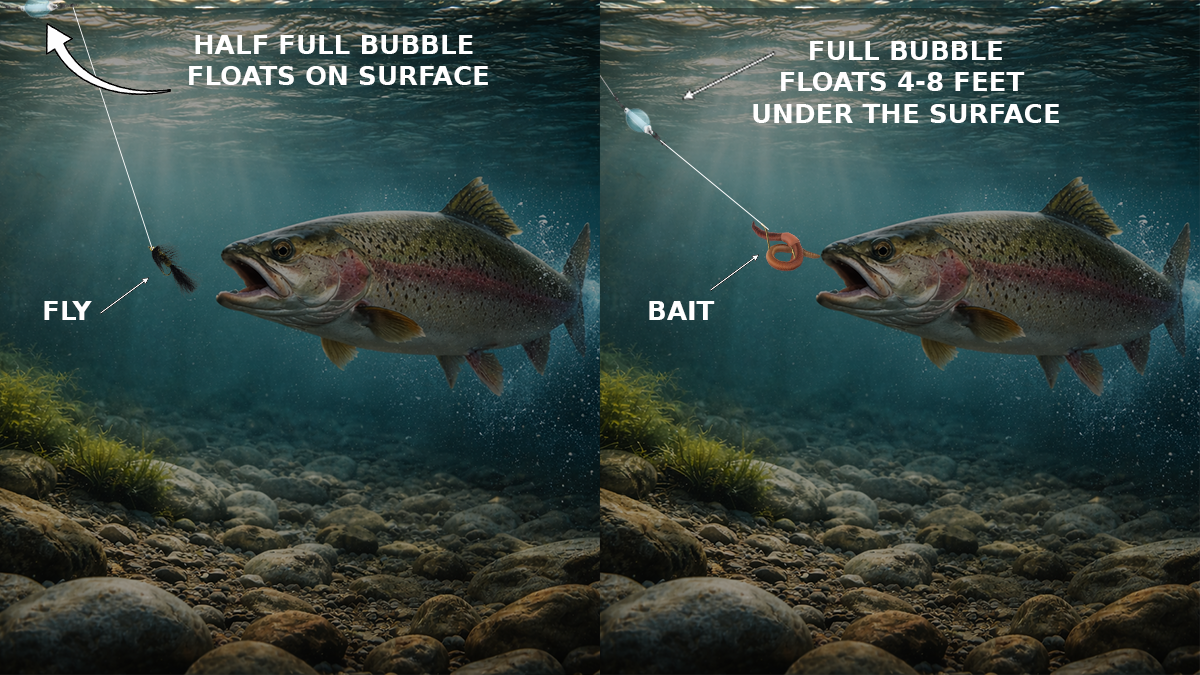
Partially Filled Bubble (Shallow Presentation)
- Keeps fly near the surface
- Best when:
- Trout are rising
- Insect activity is visible
- Fish are feeding high
Fully Filled Bubble (Advanced Drift Method)
This is your high-level system.
- Allows fly to sit 4–8 feet below the surface
- Creates a slow, natural drift
- Keeps fly in the strike zone longer
When This Wins
- Trout are not breaking the surface
- Fish are suspended
- Water is clear and fish are cautious
- Pressure is high
How to Fish the Bubble + Fly
- Cast beyond your target zone
- Let the rig settle
- Use a slow retrieve or drift
- Add gentle twitches or pauses
The goal is not action—it’s natural movement.
Fly Selection
Match what trout are feeding on:
- Small baitfish patterns
- Woolly Buggers
- Nymph-style flies
- Light-colored patterns in clear water
What You Need to Fish This System Correctly
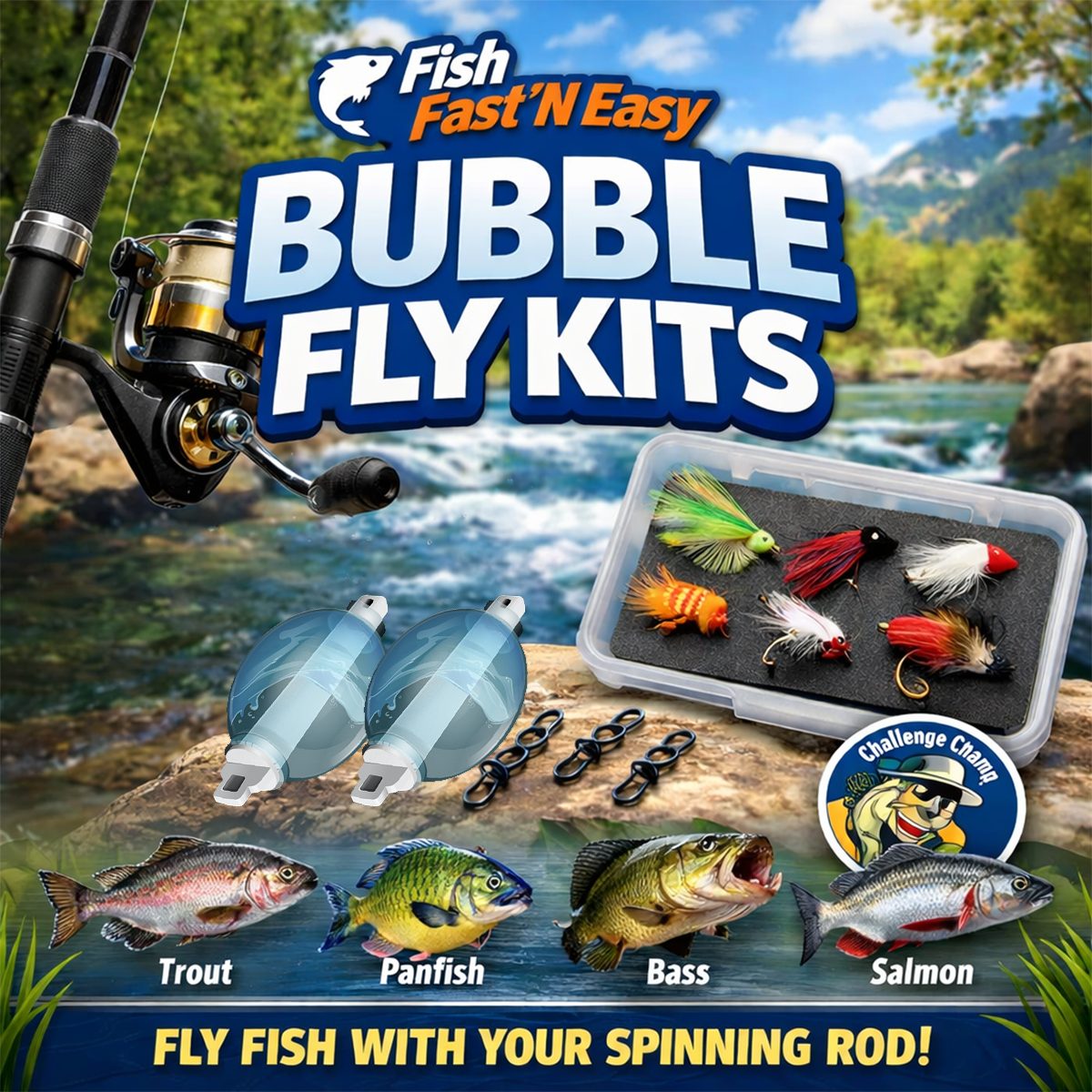
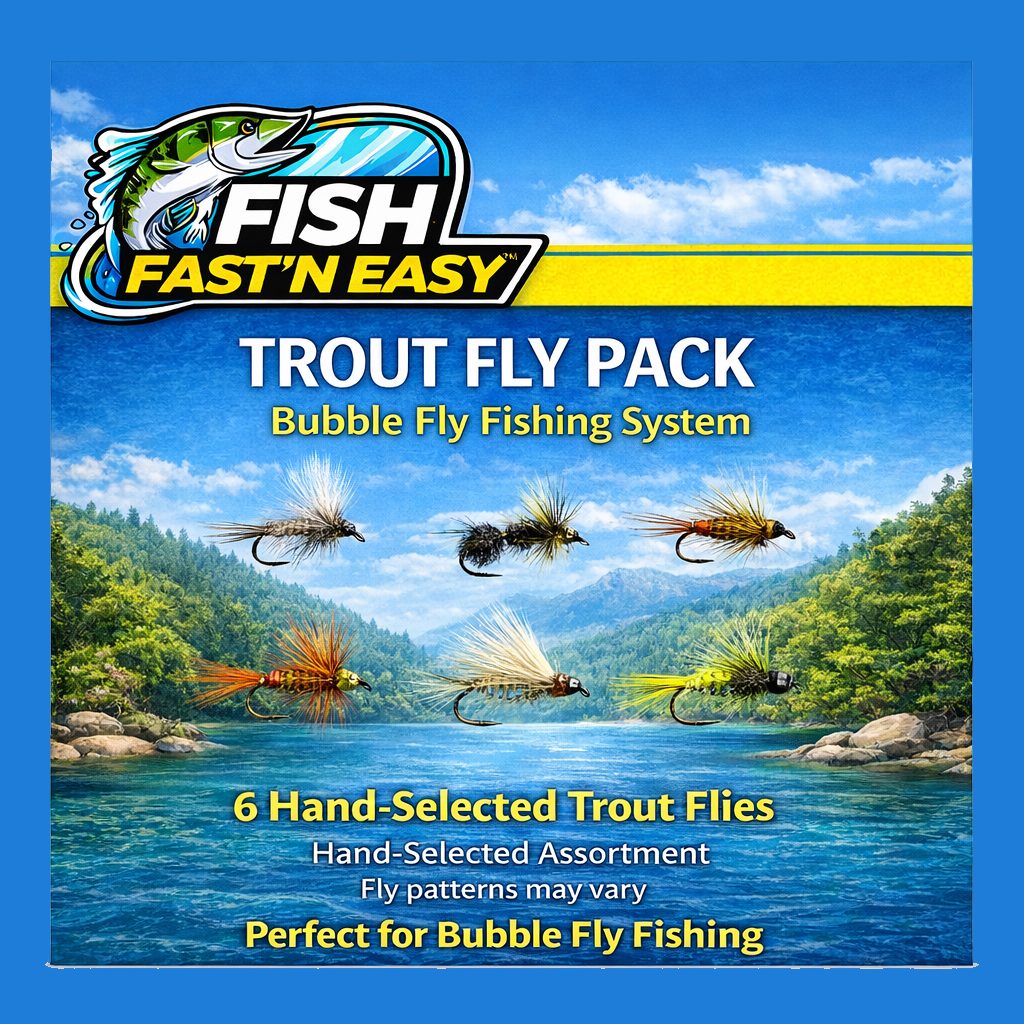
Size matters more than color.
Bubble + Bait
Works best when:
- Fish are stocked
- Water is slightly murky
- Trout are feeding aggressively
Use:
- Worm pieces
- PowerBait alternatives
Still apply depth control using bubble fill.
Species-Specific Strategy
Trout Reject Unnatural Movement
If something looks off—even slightly—they won’t commit.
That’s why:
- Light line matters
- Slow movement matters
- Depth control matters
They Feed in Windows
Trout don’t feed constantly.
You need to:
- Stay patient
- Stay in the right zone
- Be ready when the window opens
Depth Is Everything
More than lure, more than bait.
If you’re not at the right depth:
→ nothing else matters
Common Mistakes
- Fishing too fast
- Fishing too shallow
- Using line that’s too heavy
- Constantly changing lures instead of adjusting depth
- Overworking the presentation
Best Destinations for Rainbow Trout
Sierra Nevada Lakes, California
Cold, clear water with consistent trout populations
Lake Tahoe (CA/NV)
Deep water trout with seasonal shoreline access
Rocky Mountain Streams (CO, MT, WY)
Classic river trout fishing
Stocked Lakes Across the U.S.
Accessible and highly productive
Quick Tactical Summary
To consistently catch trout:
- Fish early or late
- Keep your presentation natural
- Use light line
- Adjust depth constantly
- Use bubble + fly for distance and control
- Use a fully filled bubble to reach suspended fish (4–6 ft zone)
- Slow down before changing anything
Looking for more species and techniques? Explore our Complete Fishing Guides.
SHARING IS CARING
FishingVacations.com Copyright 2019 - 2026