
Largemouth Bass Fishing Guide
A Complete, Real-World System for Finding and Catching Largemouth Bass
Largemouth Bass Fishing Guide
A Complete, Real-World System for Finding and Catching Largemouth Bass
Overview
Largemouth bass are not random feeders.
They are ambush predators—and if you understand that, everything changes.
They don’t roam endlessly like striped bass. They position, wait, and strike when opportunity comes to them.
That means one thing:
Find the cover, understand the conditions, and you find the fish.
Where to Find Largemouth Bass
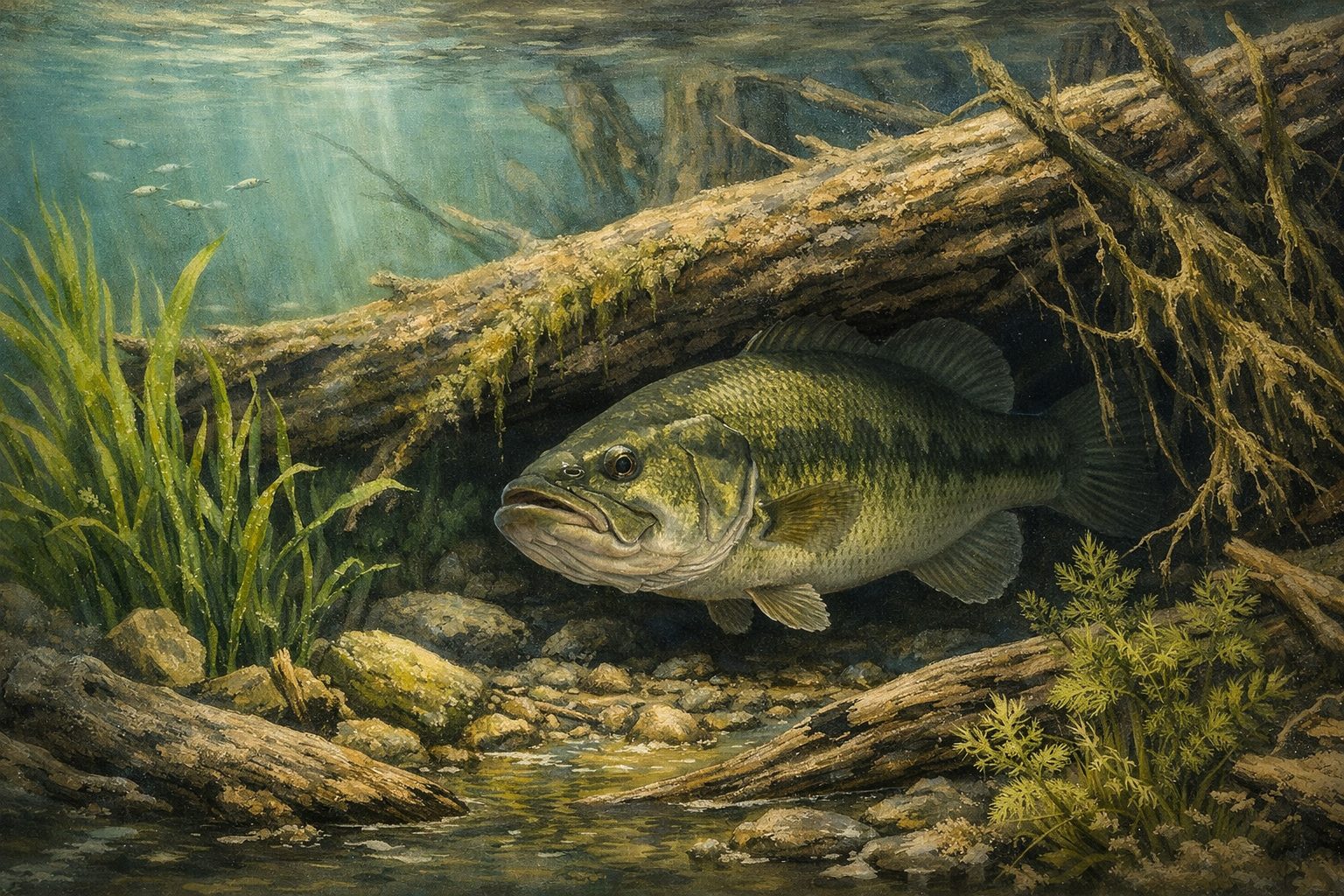
Largemouth bass position themselves where they can:
- Stay hidden
- Conserve energy
- Strike efficiently
They are almost always tied to cover and structure.
Lakes & Ponds
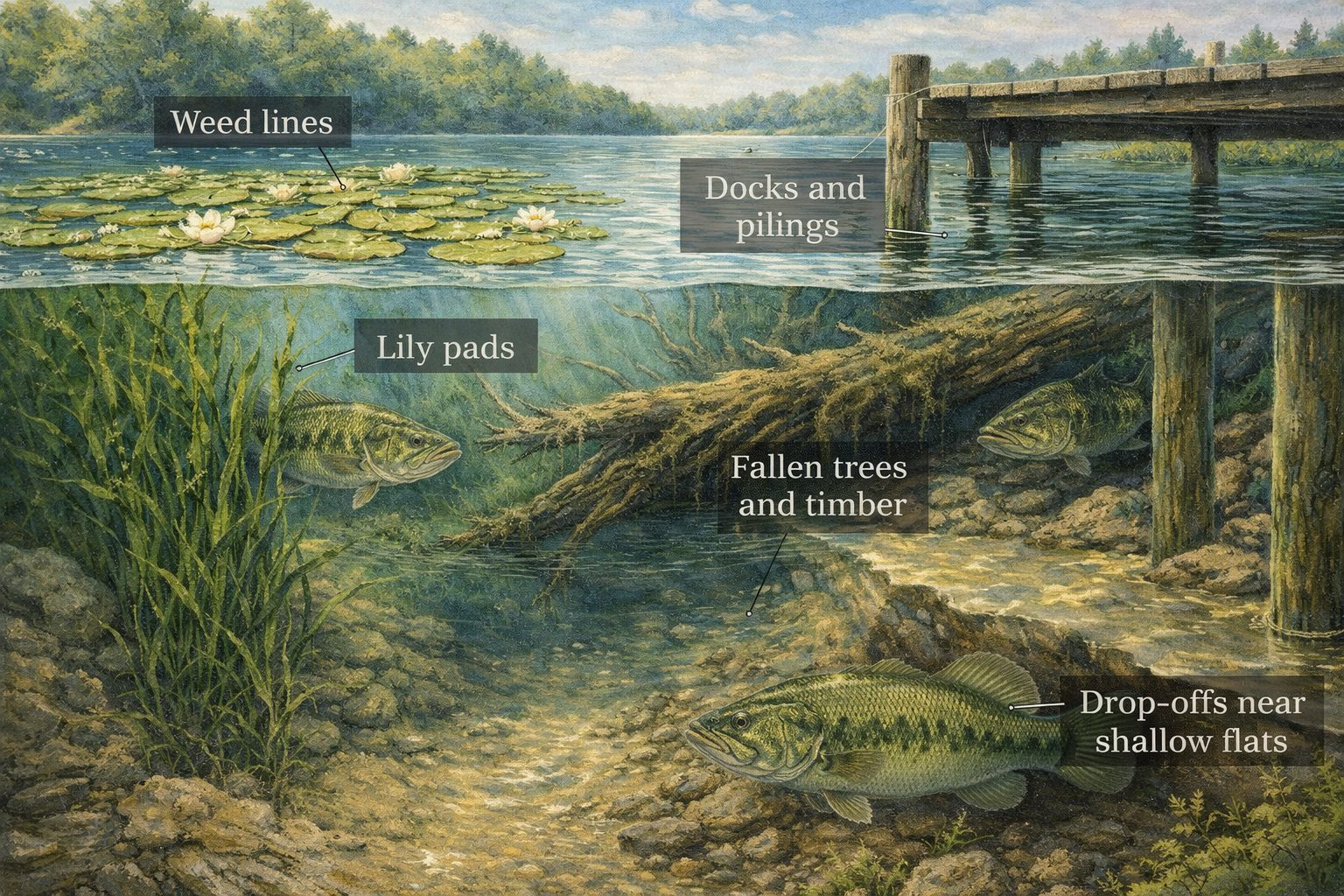
Primary holding zones:
- Weed lines
- Lily pads
- Fallen trees and timber
- Docks and pilings
- Drop-offs near shallow flats
Bass will often sit just inside or along edges of cover, waiting to ambush prey.
Reservoirs
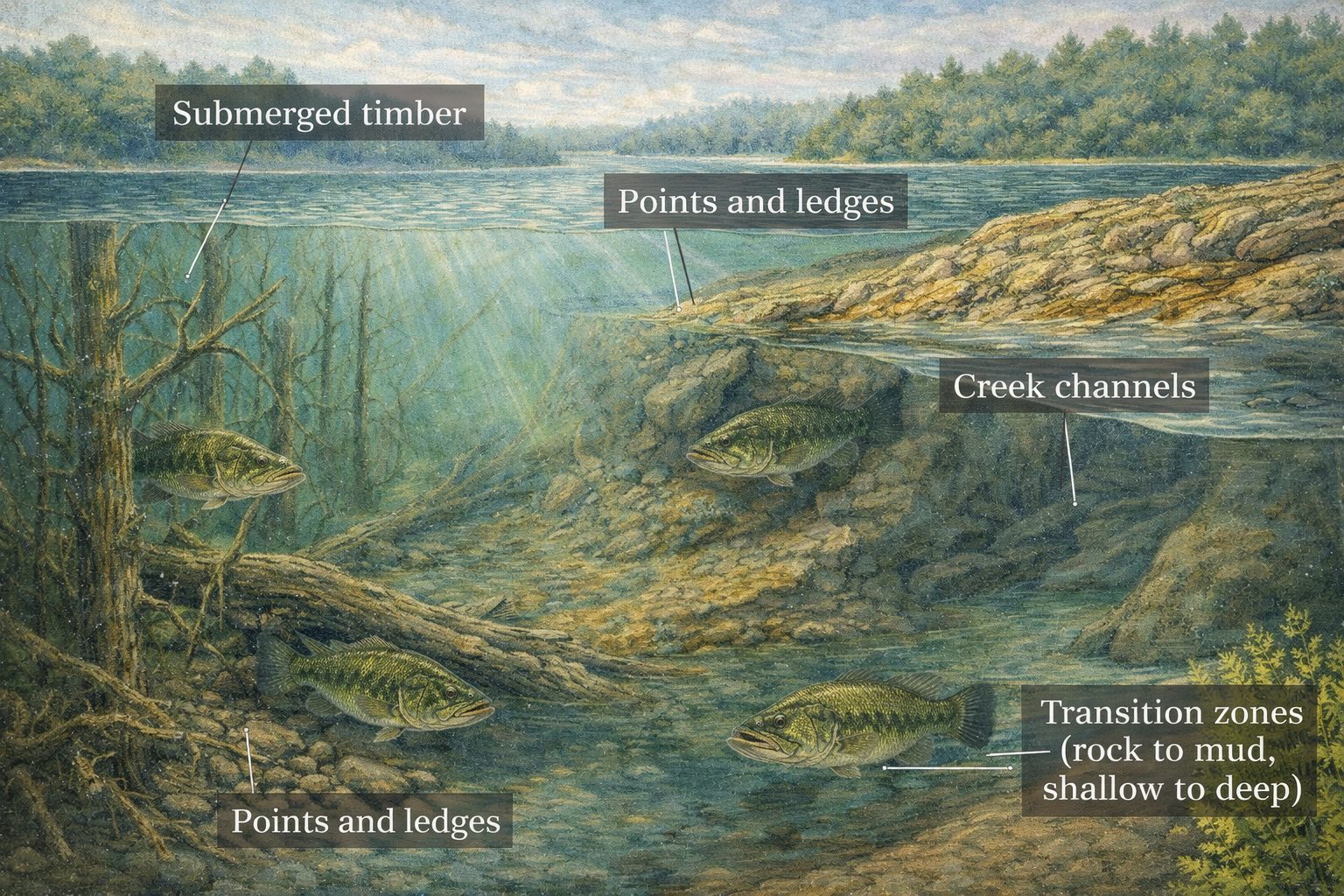
More complex—but highly predictable.
Focus on:
- Submerged timber
- Points and ledges
- Creek channels
- Transition zones (rock to mud, shallow to deep)
Depth changes more frequently here based on season and pressure.
Rivers
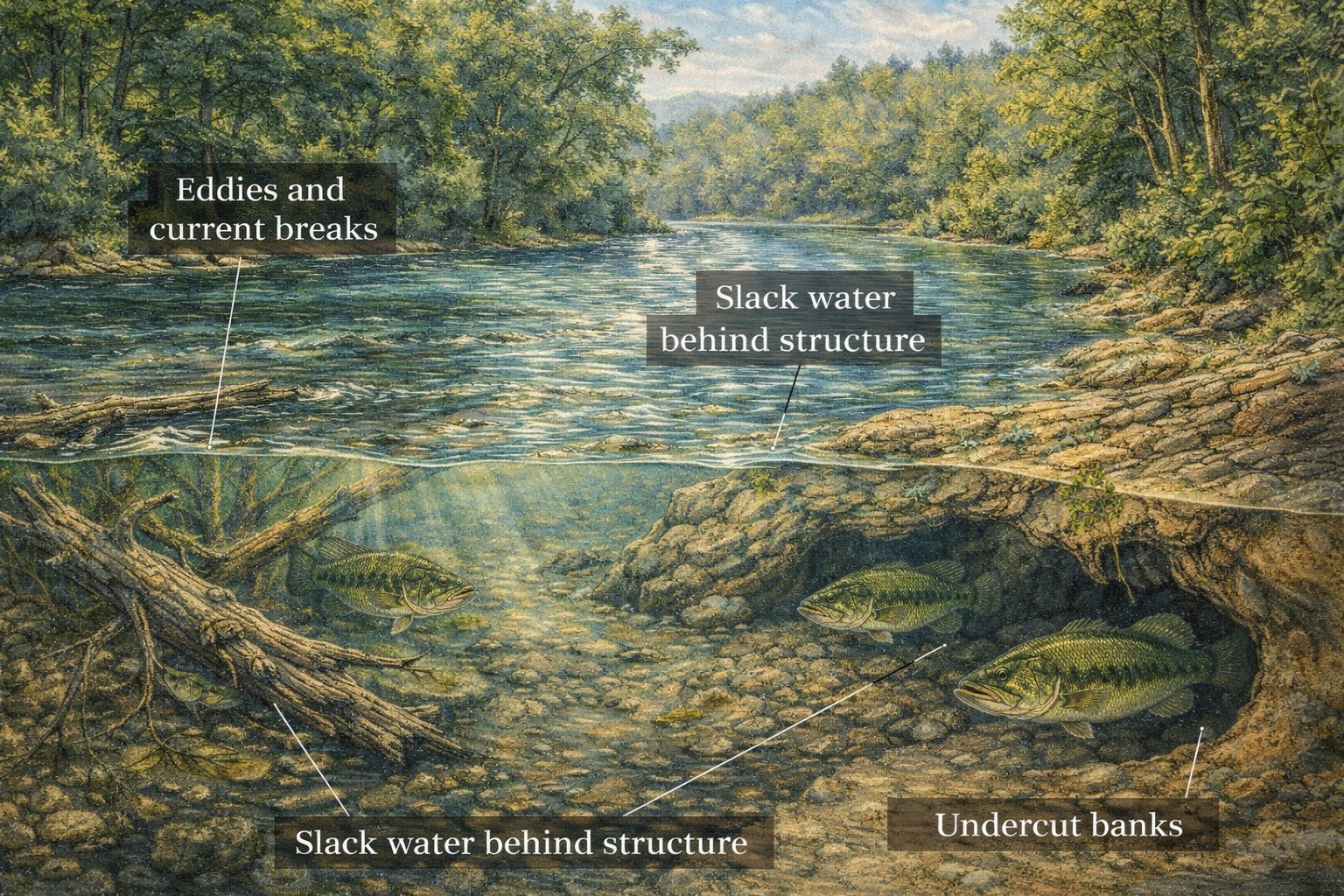
Bass use current differently than trout.
Look for:
- Eddies and current breaks
- Slack water behind structure
- Undercut banks
They position where food is delivered but current is reduced.
Seasonal Patterns
Bass behavior shifts dramatically with temperature and spawning cycles.
Spring
- Move shallow to spawn
- Extremely aggressive
- One of the best times to fish
Target:
- Flats
- Protected coves
- Warm water zones
Summer
- Push into deeper water or heavy cover
- Feed early morning and late evening
- Become less aggressive mid-day
Key adjustment:
Fish slower and deeper—or tighter to cover.
Fall
- Feed heavily before winter
- Follow bait into shallow water again
- Highly active and aggressive
This is one of the most consistent seasons.
Winter
- Move deeper
- Slow metabolism
- Smaller feeding windows
Success depends on:
- Slowing everything down
- Staying in the strike zone longer
Best Times to Fish
Time of Day
- Early morning → peak feeding
- Late evening → strong activity
- Midday → slower, deeper bite
Weather
- Overcast = extended feeding windows
- Wind = pushes bait into structure
- Stable conditions outperform rapid changes
Tackle & Setup
Keep it simple and purpose-driven.
- Rod: Medium-heavy spinning or baitcasting
- Reel: Smooth drag, strong retrieve
- Line:
- Braid (cover fishing)
- Fluorocarbon (clear water)
Proven Methods
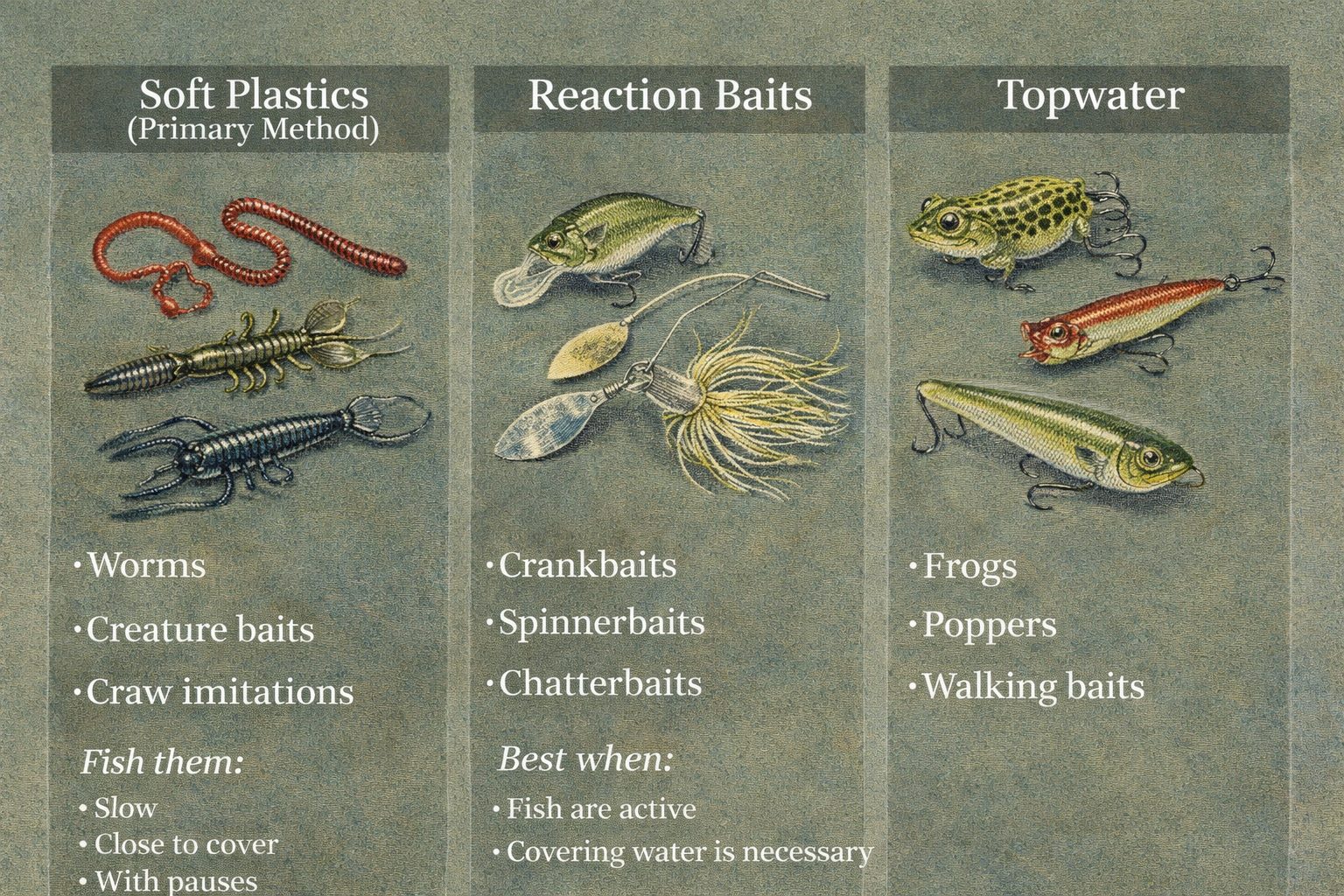
Soft Plastics (Primary Method)
- Worms
- Creature baits
- Craw imitations
Fish them:
- Slow
- Close to cover
- With pauses
This is the most consistent method across conditions.
Reaction Baits
- Crankbaits
- Spinnerbaits
- Chatterbaits
Best when:
- Fish are active
- Covering water is necessary
Topwater
- Frogs
- Poppers
- Walking baits
Best during:
- Early morning
- Late evening
- Low-light conditions
Bubble + Bait System (Highly Effective but Situational)
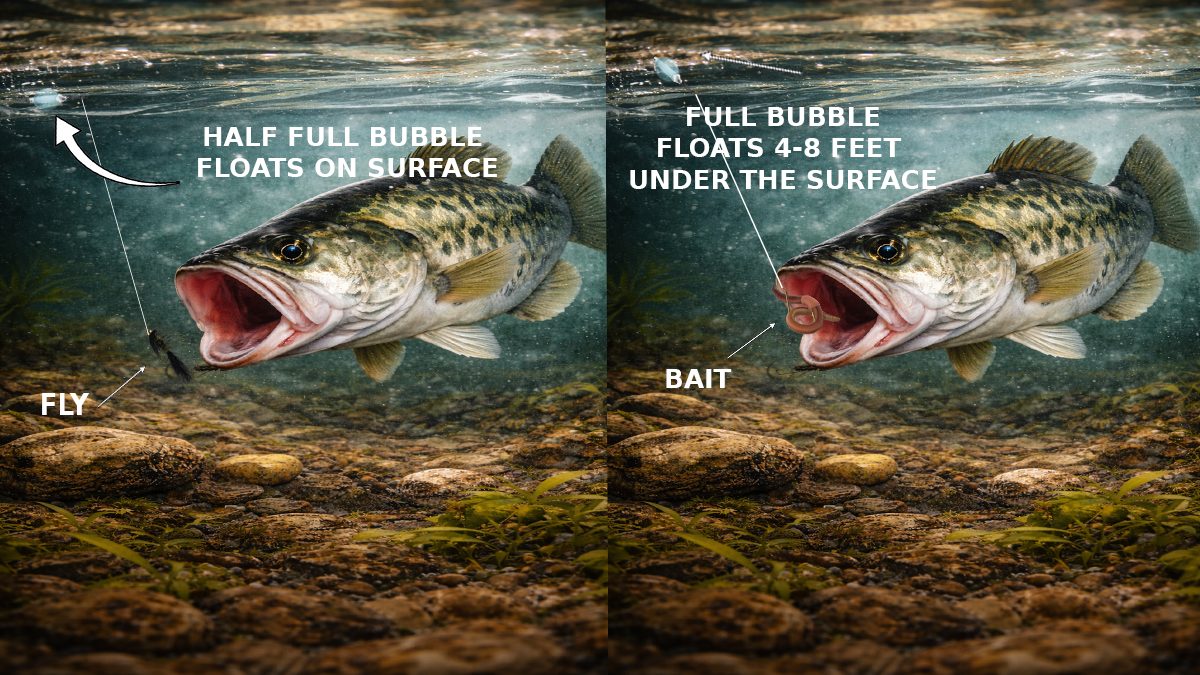
This is where most bass anglers overlook a major advantage.
When This System Works for Bass
Unlike striped bass, this is not a primary method—but in the right conditions, it becomes extremely effective:
- Pressured water where fish ignore lures
- Clear water where subtle presentation matters
- Shallow feeding zones
- Shore fishing situations
Why It Works
Largemouth bass respond to:
- Easy meals
- Natural movement
- Suspended prey
A properly presented bait under a bubble:
- Stays in the strike zone longer
- Moves naturally
- Doesn’t trigger hesitation
How to Fish It
- Use a partially filled bubble for shallow presentation
- Keep bait near cover edges
- Minimal movement—let the bait sit and drift
This is not a search method—it’s a targeted presentation tool.
Best Baits for This System
- Nightcrawlers
- Minnows
- Soft bait imitations
Focus on natural presentation, not action.
Fly Fishing for Largemouth Bass
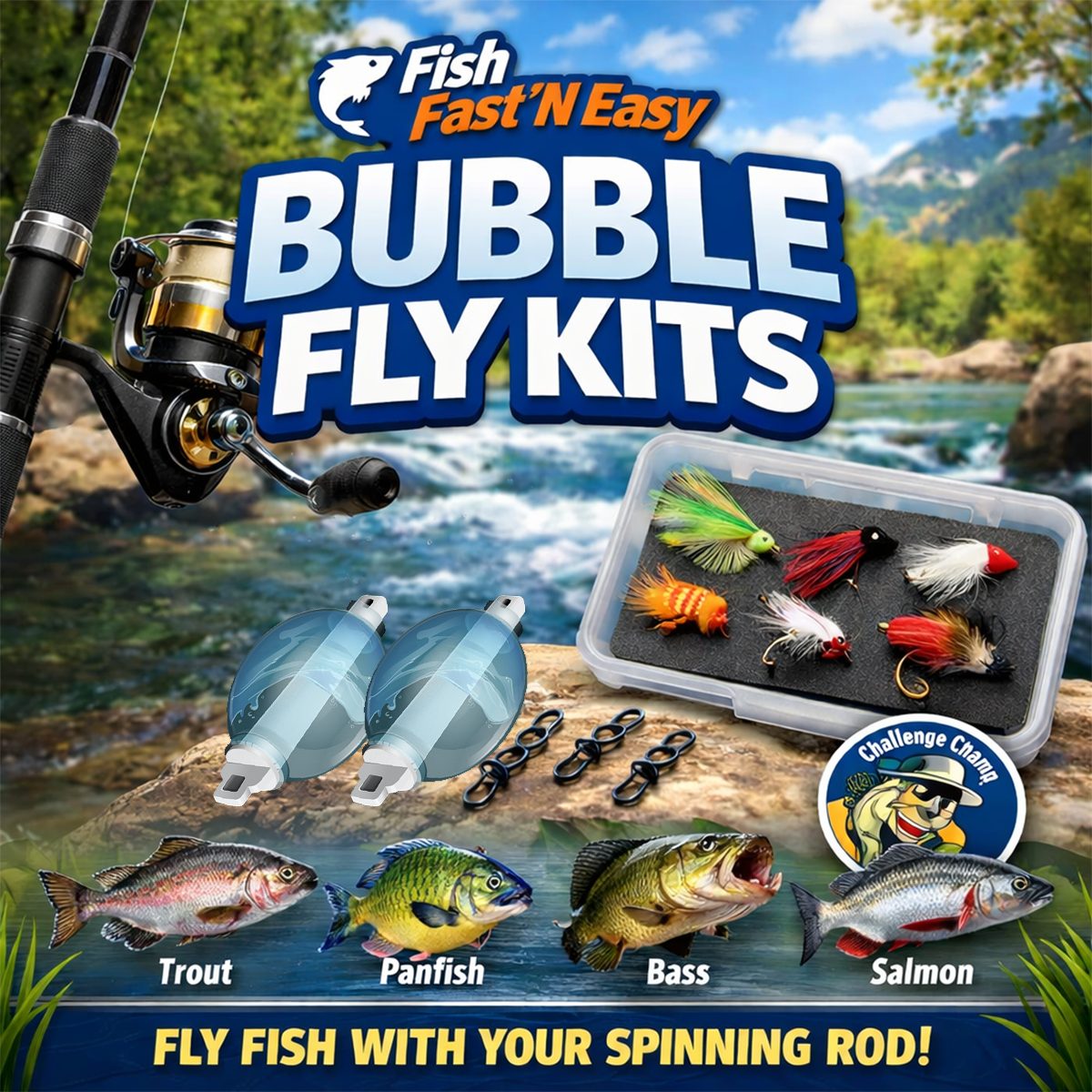
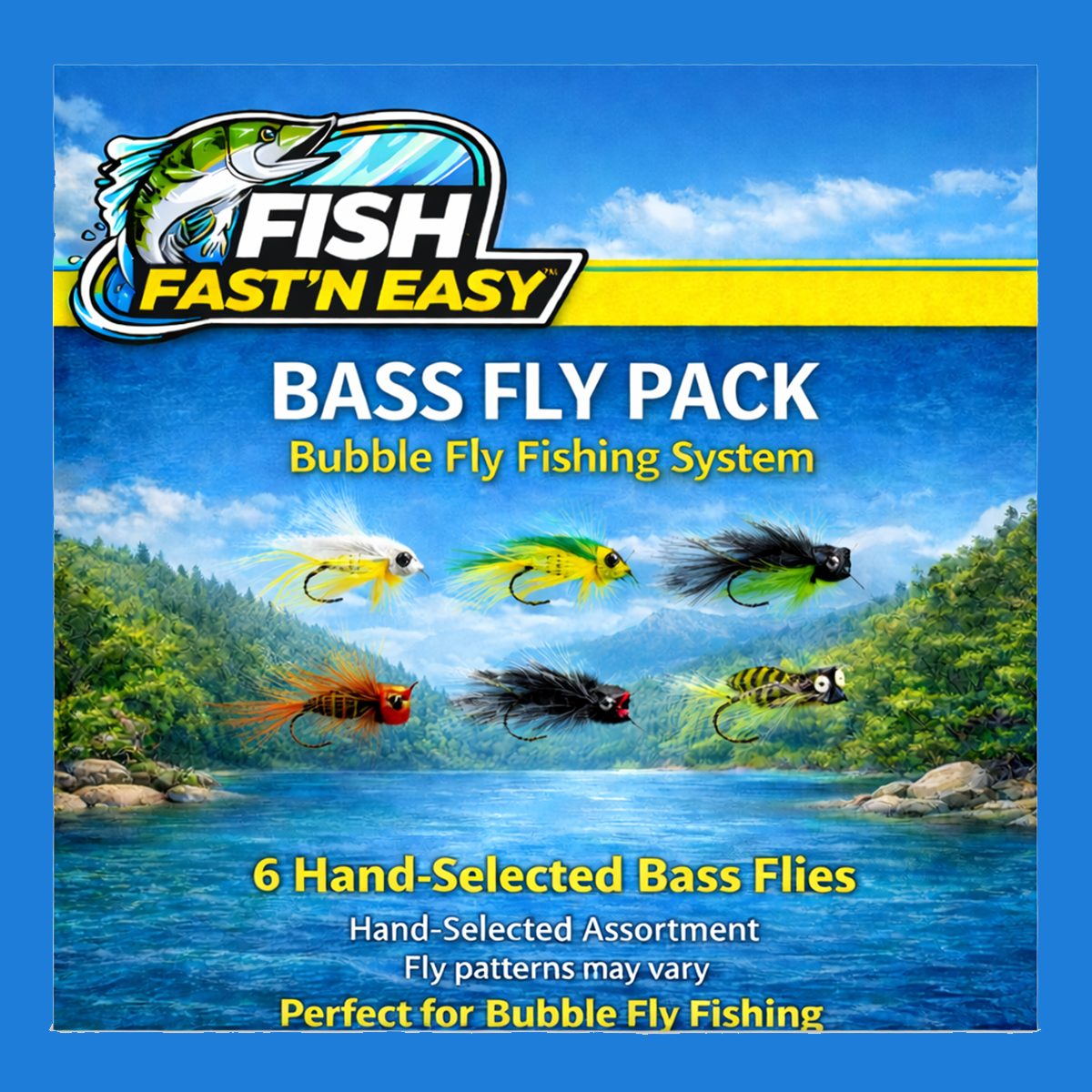
Fly fishing is highly effective in the right environment.
Best areas:
- Shallow flats
- Vegetation edges
- Calm water
Use:
- Poppers
- Streamers
- Frog imitations
This method excels in low-light conditions.
Species-Specific Strategy
They Strike Based on Opportunity
Bass don’t chase everything.
They wait for:
- The right angle
- The right distance
- The easiest target
Cover Is Everything
If there’s no cover:
There are usually no bass.
Presentation Matters More Than Lure Choice
You can have the perfect bait and still fail if:
- You move it too fast
- You don’t fish tight to cover
- You don’t stay in the strike zone
Common Mistakes
- Fishing too fast
- Ignoring cover
- Fishing open water randomly
- Leaving productive zones too quickly
- Overcomplicating lure selection
Best Destinations for Largemouth Bass
- California Delta
- Lake Fork, Texas
- Lake Okeechobee, Florida
- Guntersville Lake, Alabama
Quick Tactical Summary
If you want consistent success:
- Fish cover—not open water
- Slow down your presentation
- Target edges and transitions
- Adjust depth with seasons
- Use natural bait when fish won’t commit
- Use bubble + bait when subtle presentation matters
Looking for more species and techniques? Explore our Complete Fishing Guides.
SHARING IS CARING
FishingVacations.com Copyright 2019 - 2026