
Bluegill Fishing Guide
A Complete, Real-World System for Finding and Catching Bluegill
Bluegill Fishing Guide
A Complete, Real-World System for Finding and Catching Bluegill
Overview
Bluegill are not random biters.
They are opportunity feeders—and if you understand how they position and feed, you can catch them almost anywhere they exist.
They don’t require complicated gear. They don’t require perfect conditions.
But they do require one thing:
A natural presentation at the right depth, in the right zone.
Get that right, and bluegill become one of the most consistent fish you’ll ever target.
Where to Find Bluegill
Bluegill are structure-oriented—but unlike bass or crappie, they favor smaller, protected environments.
They relate to:
- Cover
- Shade
- Food-rich areas
Lakes & Ponds
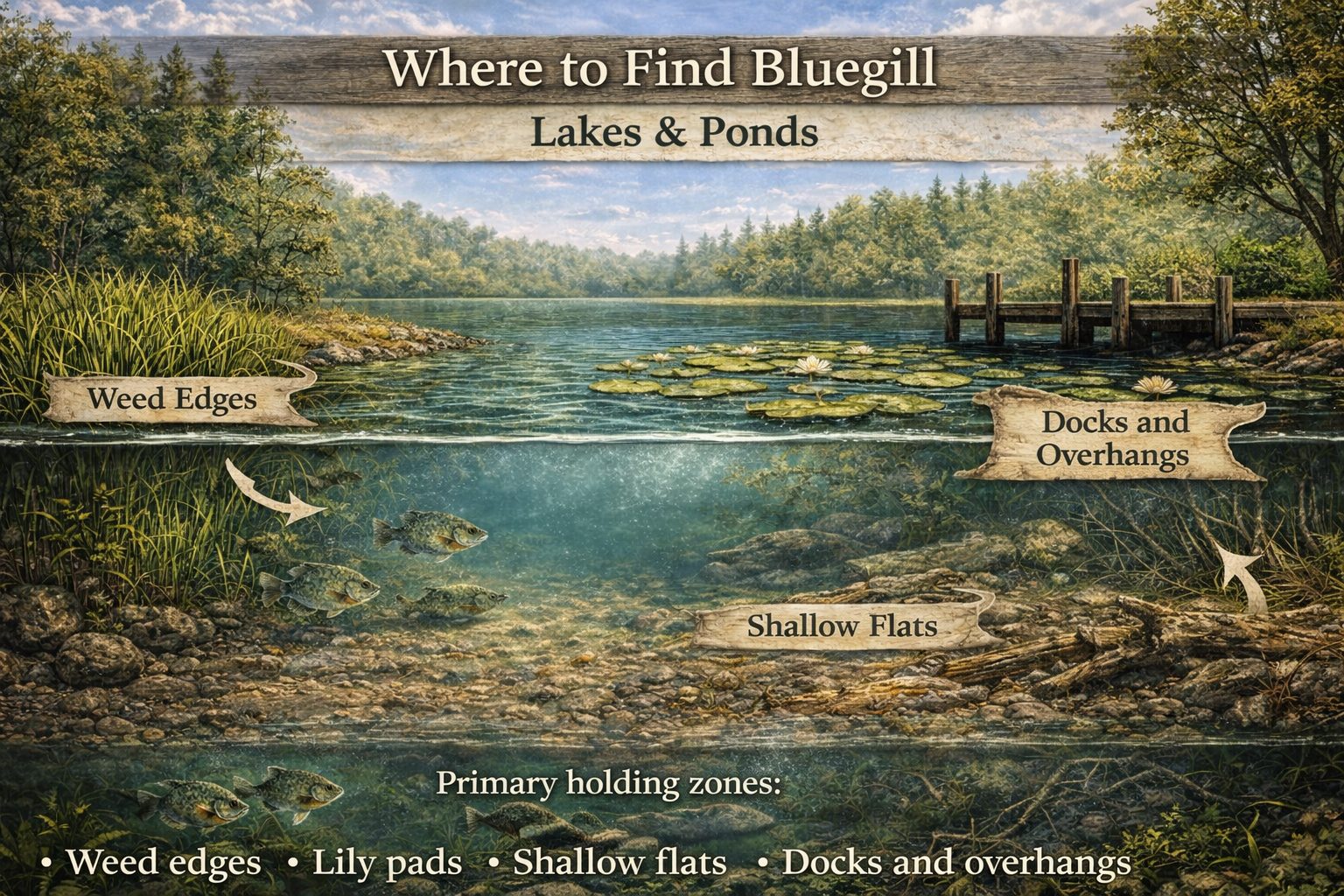
Primary holding zones:
- Weed edges
- Lily pads
- Shallow flats
- Docks and overhangs
- Brush and submerged cover
Bluegill often stay shallow, especially in warmer months.
They rarely roam far—if you find one, there are usually more.
Reservoirs
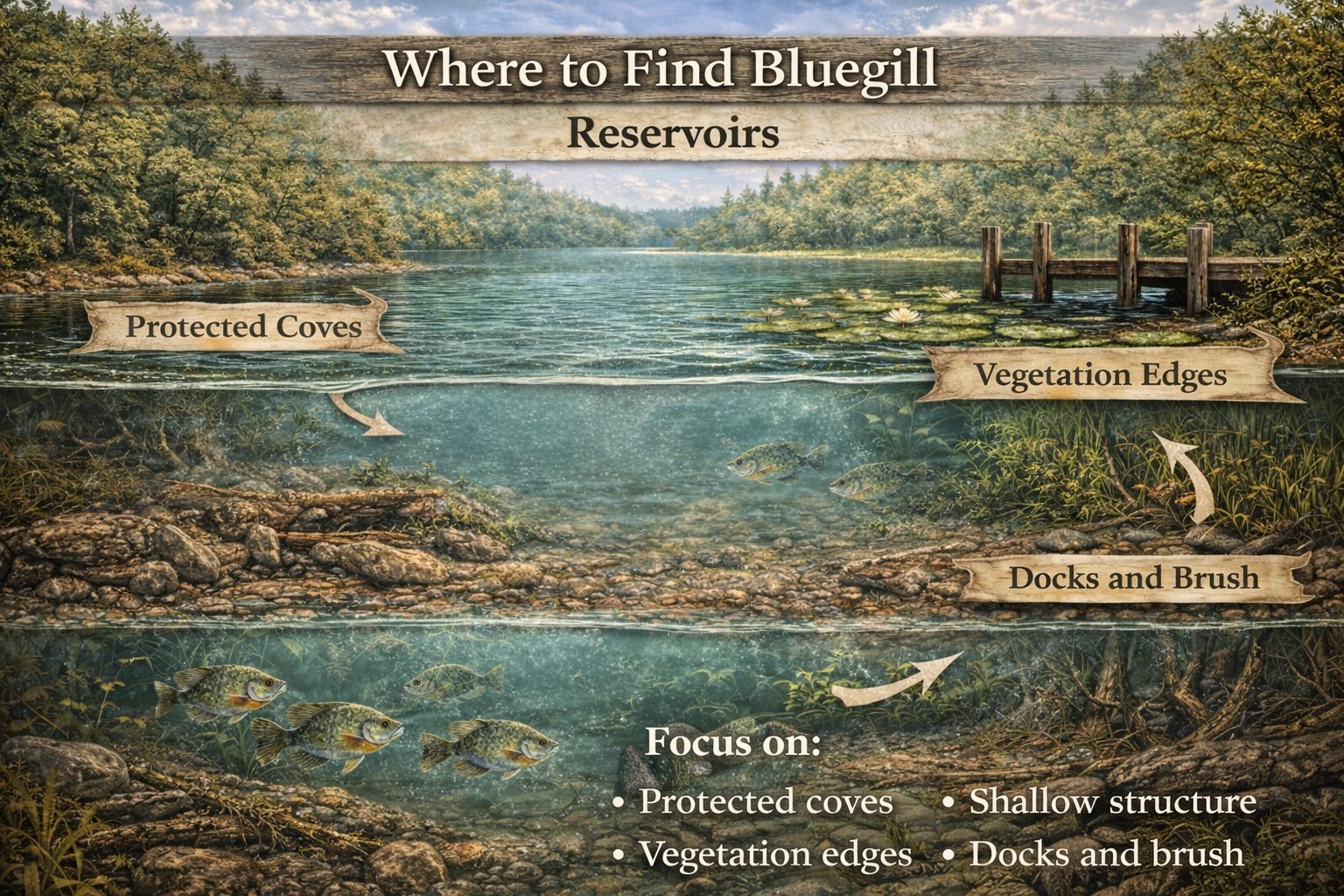
More spread out, but still predictable.
Focus on:
- Protected coves
- Shallow structure
- Vegetation edges
- Docks and brush
They avoid deep open water unless forced by conditions.
Rivers
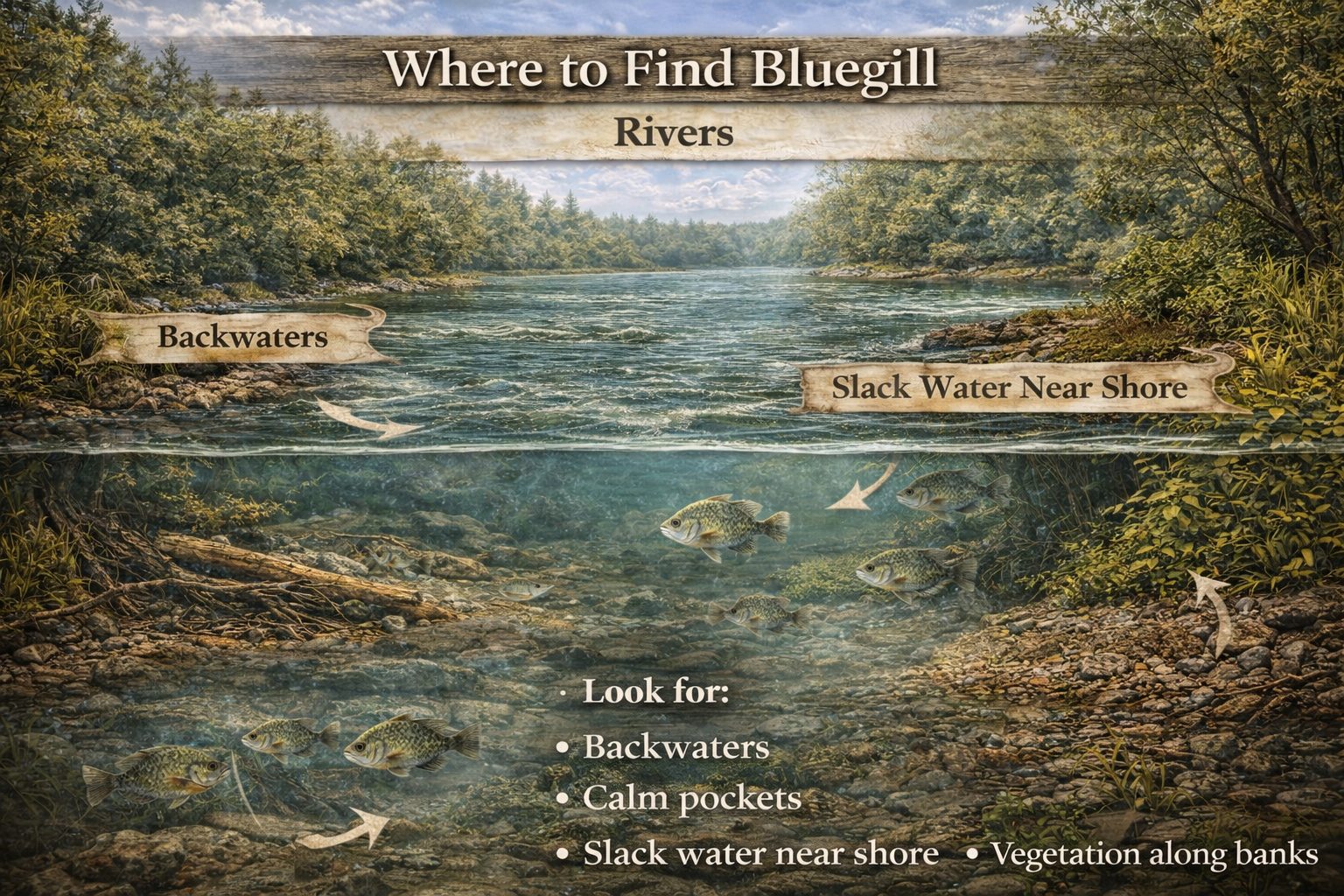
Bluegill avoid current even more than crappie.
Look for:
- Backwaters
- Calm pockets
- Slack water near shore
- Vegetation along banks
If water is moving fast, they’re not there.
Seasonal Patterns
Bluegill are one of the most seasonally predictable fish.
Spring
- Move shallow
- Begin bedding
- Extremely active
This is one of the easiest times to catch them.
Summer
- Stay shallow early and late
- Move slightly deeper mid-day
- Hold near cover and shade
Key zones:
- Docks
- Weed edges
- Overhanging structure
Fall
- Feed heavily before winter
- Move between shallow and mid-depth
Consistent but less aggressive than summer.
Winter
- Move deeper
- Group tightly
- Slow but catchable
Ice fishing can be excellent.
Best Times to Fish
Time of Day
- Morning → strong bite
- Evening → very consistent
- Midday → shade becomes critical
Conditions
- Warm, stable weather is best
- Light wind helps
- Clear water = more cautious fish
Tackle & Setup
Bluegill reward simplicity.
- Rod: Ultralight or light
- Reel: Small spinning reel
- Line: 2–6 lb test
Lighter gear = more bites.
Proven Methods
Live Bait (Most Reliable Method)
- Worms
- Nightcrawlers
- Crickets
Fish them:
- Still
- Under a float
- Near cover
This consistently produces in almost all conditions.
Small Jigs
- Tiny soft plastics
- Hair jigs
- Micro tube jigs
Fish them:
- Slowly
- With minimal movement
- At controlled depth
Float Fishing
This is the foundation of bluegill fishing.
Why it works:
- Controls depth
- Keeps bait in strike zone
- Slows presentation naturally
Bubble + Bait System (Best Method for Bluegill)
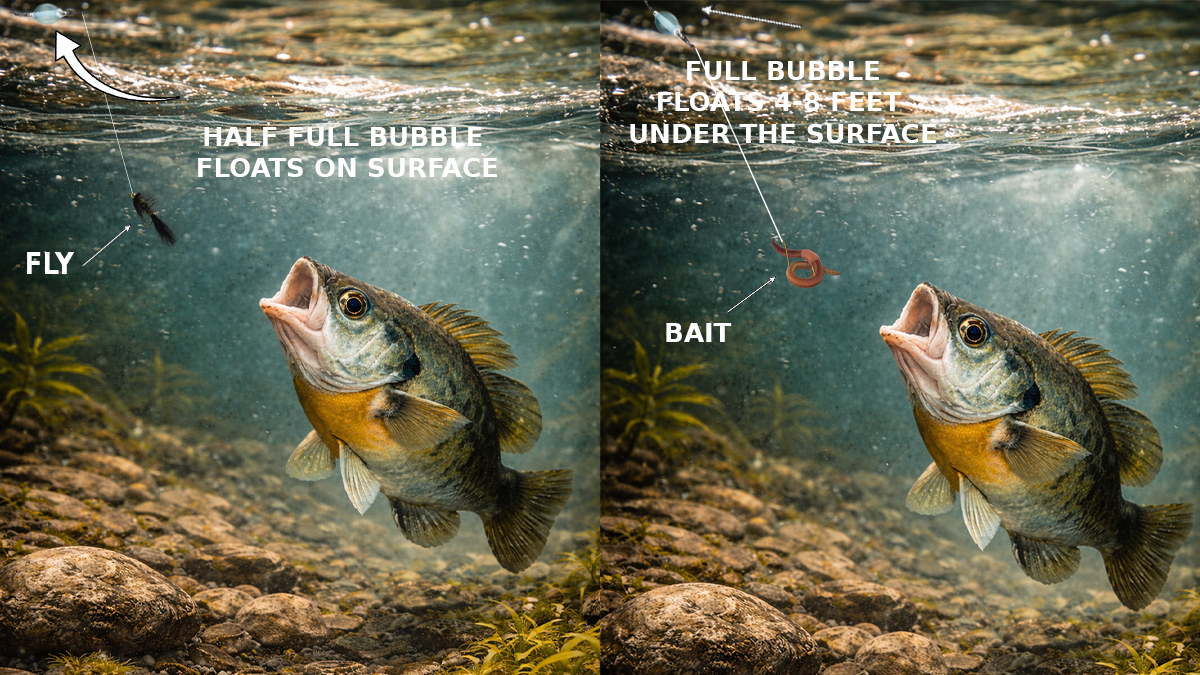
This is where your system becomes dominant.
For bluegill:
This is not optional—it’s one of the best ways to fish them.
Why It Works So Well
Bluegill:
- Feed upward
- Stay shallow
- Respond to subtle movement
The bubble allows you to:
- Cast farther than traditional bobbers
- Control depth precisely
- Present bait naturally
When to Use It
- Shore fishing
- Around docks and weed edges
- Clear water
- Pressured areas
- When fish are shallow but out of reach
How to Fish It
- Use a lightly filled bubble for shallow presentation
- Short leader (1–3 ft typical)
- Cast and let it sit
- Slight movement only
Most bites come when the bait is barely moving
Best Baits for This System
- Worm pieces
- Crickets
- Small soft plastics
Natural bait consistently produces the best results.
Fly Fishing for Bluegill
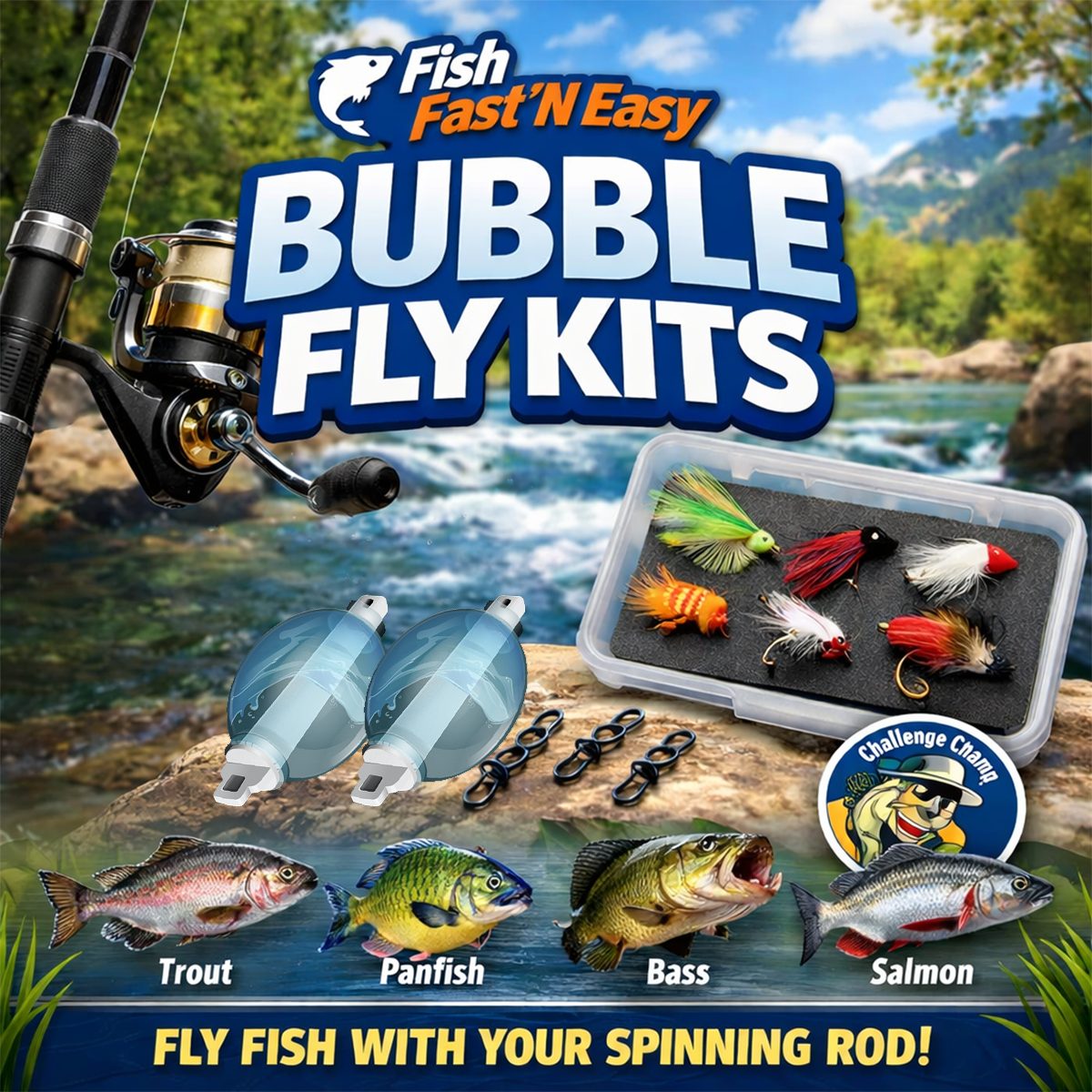
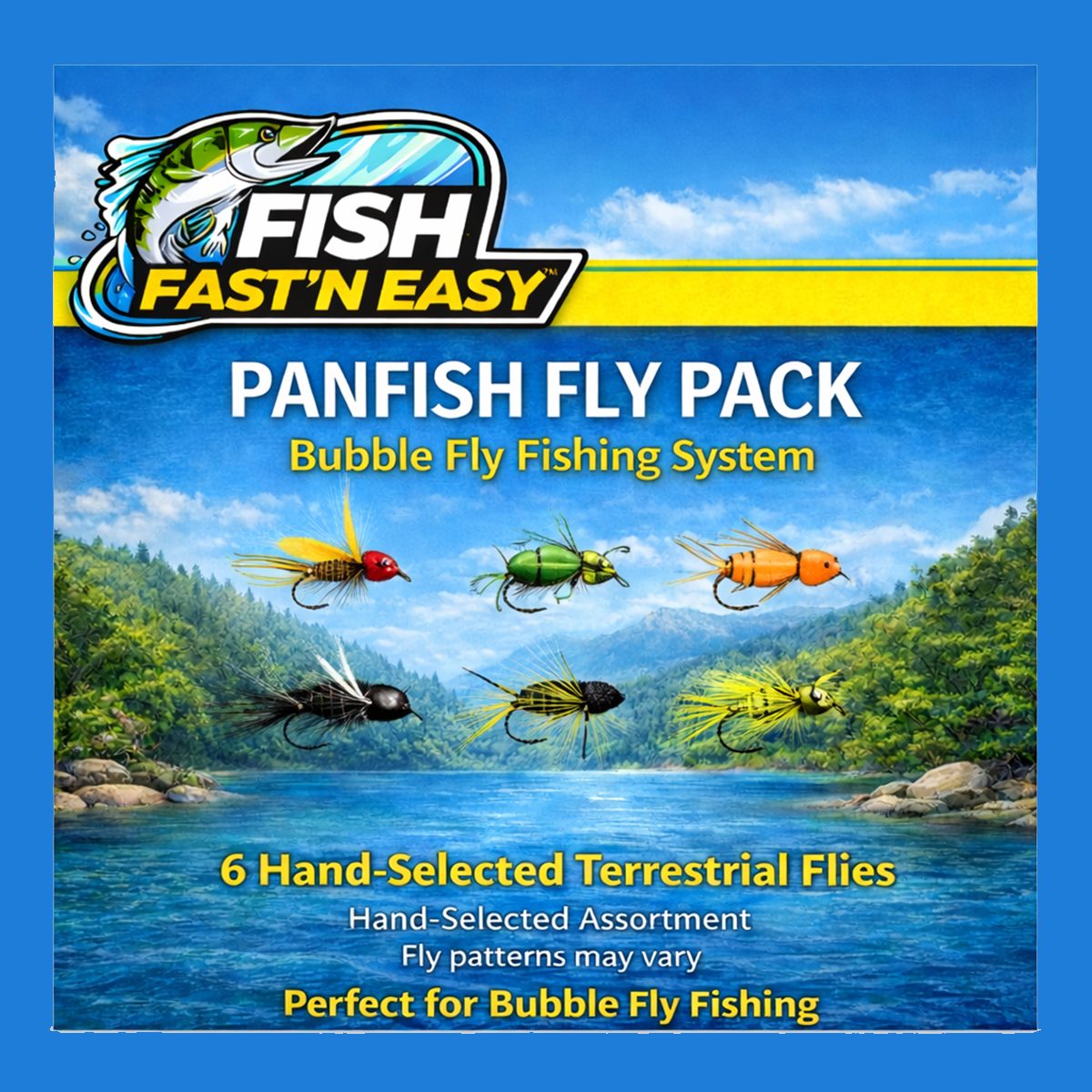
This is one of the easiest and most fun ways to catch them.
Best conditions:
- Calm water
- Shallow fish
- Visible feeding
Use:
- Small poppers
- Foam bugs
- Tiny streamers
This is extremely effective in summer.
Species-Specific Strategy
They Feed Upward
If your bait is below them: You lose most of your chances
Always fish:
- At their level
- Slightly above
They Stay Where Food Is Easy
Bluegill don’t chase far.
They stay:
- Near cover
- Near insects
- Near structure
They Bite Based on Presentation, Not Size
Big bait doesn’t equal big fish.
Natural presentation beats everything.
Common Mistakes
- Fishing too deep
- Moving bait too much
- Ignoring shade and cover
- Using hooks that are too large
- Overcomplicating the setup
Best Destinations for Bluegill
- Midwest farm ponds (Iowa, Illinois, Indiana)
- Southern lakes and reservoirs
- Florida ponds and canals
- Small public lakes nationwide
Quick Tactical Summary
If you want consistent success:
- Fish shallow cover first
- Keep bait at or above fish level
- Use light tackle
- Fish slow—almost still
- Use bubble + bait for reach and control
- Focus on presentation, not complexity
Looking for more species and techniques? Explore our Complete Fishing Guides.
SHARING IS CARING
FishingVacations.com Copyright 2019 - 2026