
Catfish Fishing Guide
A Complete, Real-World System for Finding and Catching Catfish
Catfish Fishing Guide
A Complete, Real-World System for Finding and Catching Catfish
Overview
Catfish are not sight feeders.
They are scent-driven predators—and once you understand that, everything about how you fish changes.
They don’t rely on chasing bait.
They rely on:
- Smell
- Vibration
- Water movement
That means success comes down to:
Putting the right bait in the right place—and letting it work
Where to Find Catfish
Catfish are structure-oriented, but more importantly, they are bottom-oriented and current-aware.
They position where:
- Food naturally collects
- Current delivers scent
- They can conserve energy
Lakes & Ponds
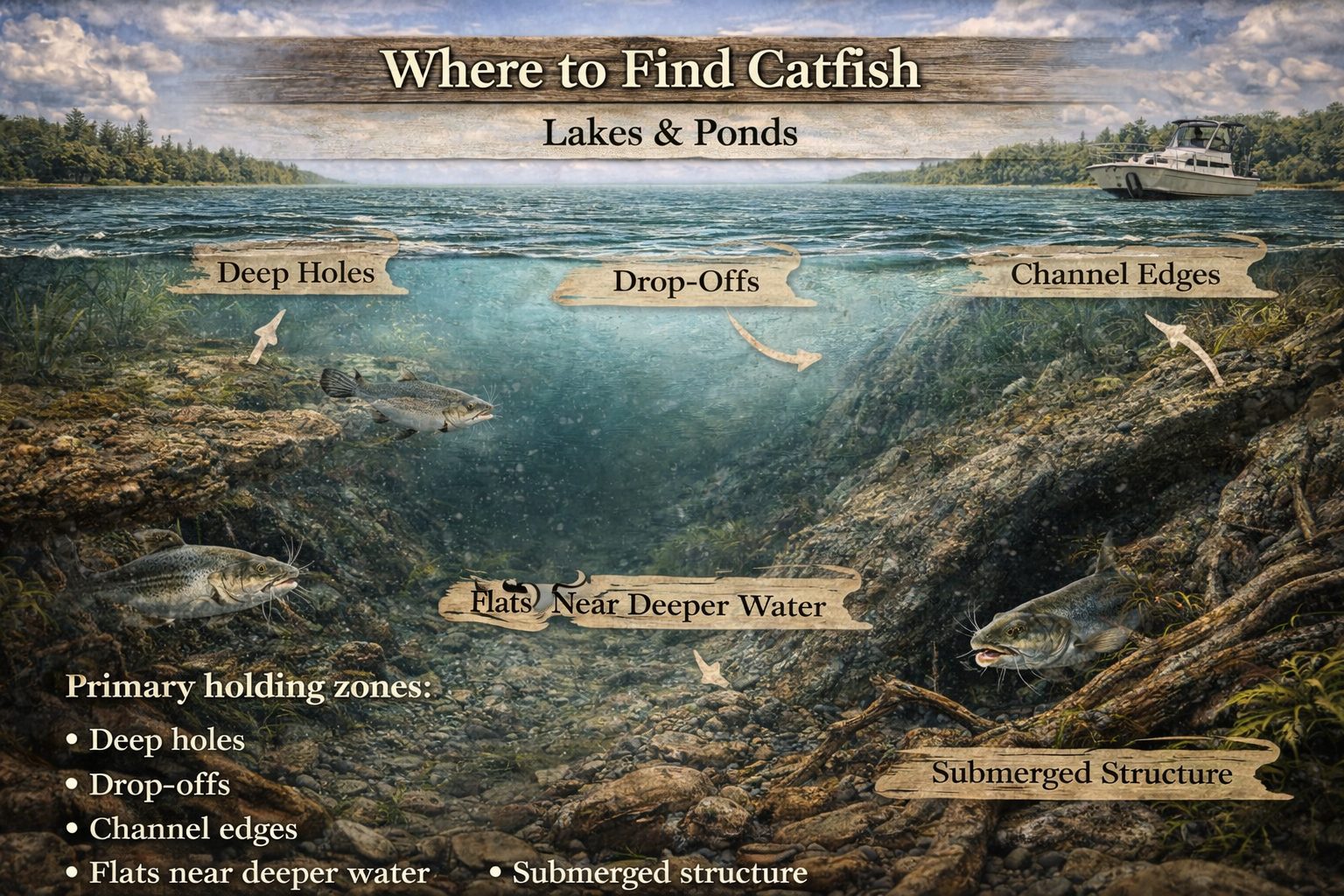
Primary holding zones:
- Deep holes
- Drop-offs
- Channel edges
- Flats near deeper water
- Submerged structure
During the day, catfish often hold deeper.
At night, they move shallow to feed.
Rivers
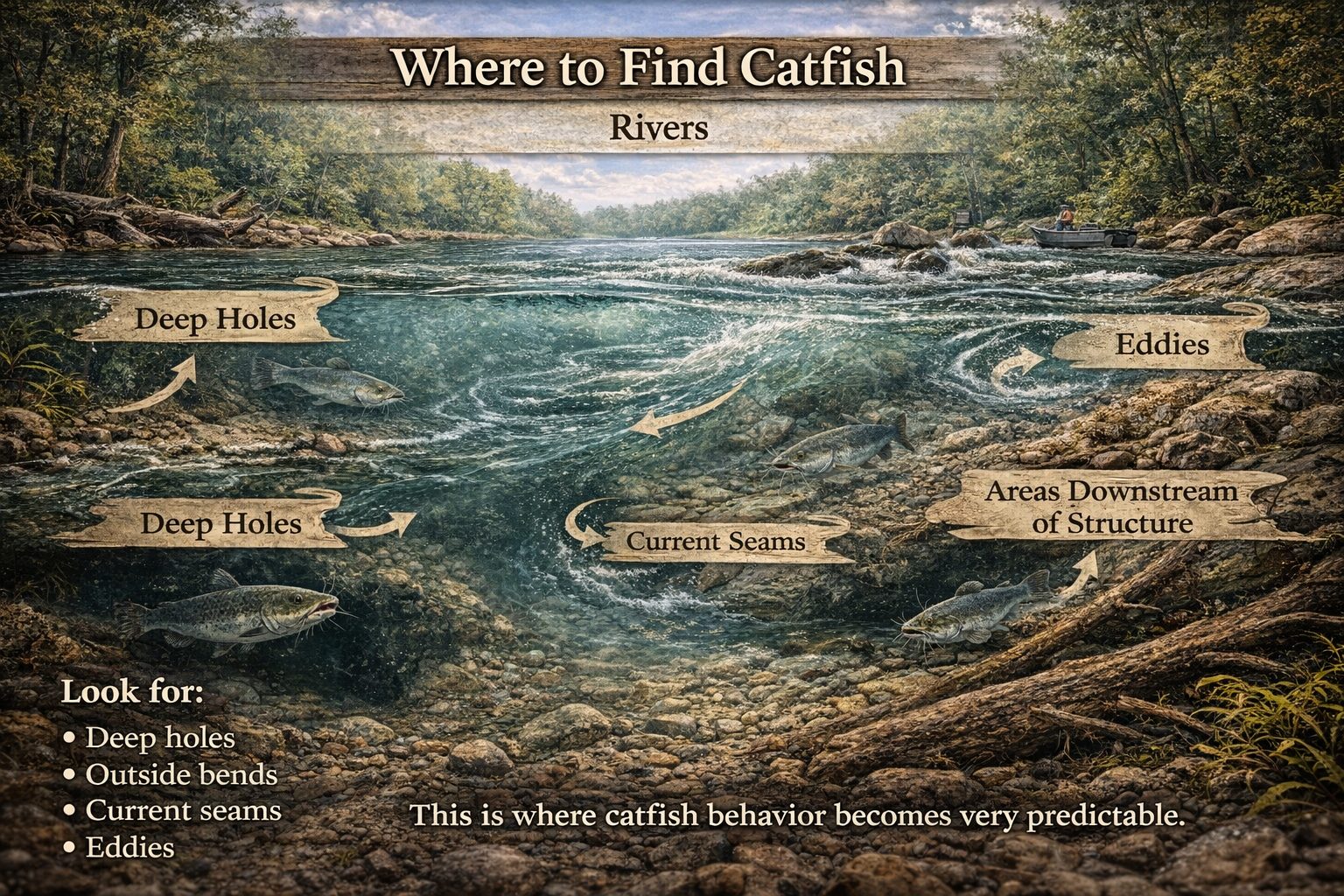
This is where catfish behavior becomes very predictable.
Look for:
- Deep holes
- Outside bends
- Current seams
- Eddies
- Areas downstream of structure
Catfish position where current brings food to them without forcing them to fight it.
Reservoirs
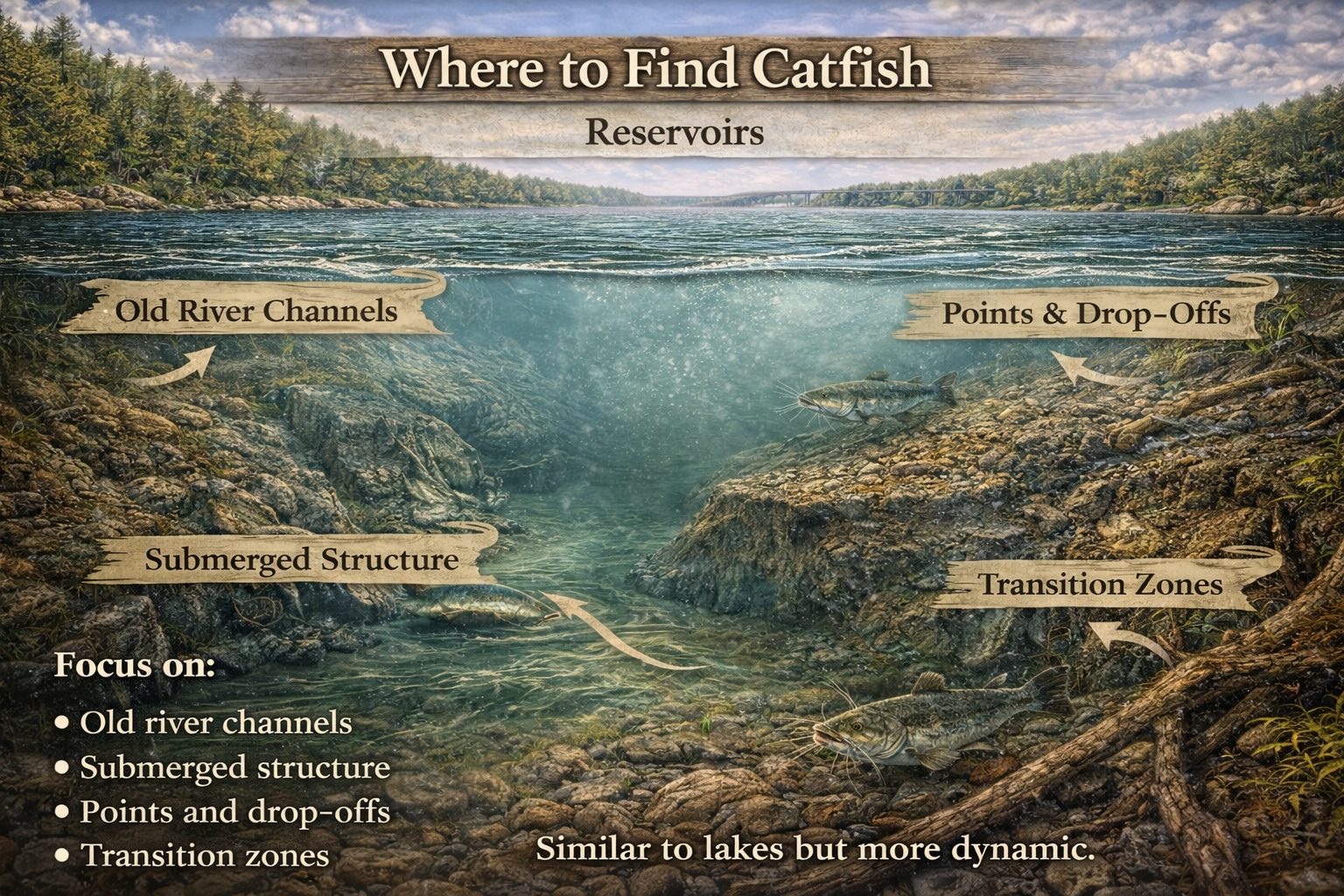
Similar to lakes but more dynamic.
Focus on:
- Old river channels
- Submerged structure
- Points and drop-offs
- Transition zones
Movement is tied to depth and feeding cycles.
Seasonal Patterns
Catfish are active much longer than most species.
Spring
- Move shallow to spawn
- Increased feeding activity
Summer
- Peak catfishing season
- Night fishing becomes dominant
- Move shallow to feed after dark
Fall
- Feed heavily before winter
- Strong daytime bite returns
Winter
- Move deeper
- Slower, but still catchable
Best Times to Fish
Time of Day
- Night → best overall
- Early morning → strong
- Evening → consistent
Conditions
- Warm water improves activity
- Slight current helps
- Stable weather patterns are best
Tackle & Setup
Catfish are powerful and require stronger gear.
- Rod: Medium-heavy to heavy
- Reel: Strong drag
- Line: 10–30 lb depending on size
This is not finesse fishing—you’re targeting strength.
Proven Methods
Bottom Fishing (Primary Method)
This is the most effective and consistent approach.
Use:
- Sinker to hold bait on bottom
- Strong hook setup
- Natural bait
Let it sit.
Catfish come to the bait—you don’t bring bait to them.
Drift Fishing
Best for:
- Covering water
- Finding active fish
Let bait move slowly along bottom.
Jug / Set Line Fishing (Where Legal)
Passive but effective.
Focus on:
- High-percentage areas
- Structure edges
Best Baits for Catfish
This is where everything changes compared to other species.
Natural Baits (Top Producers)
- Cut bait
- Shad
- Bluegill (where legal)
- Nightcrawlers
Prepared / Scent Baits
- Stink bait
- Dough bait
Highly effective for:
- Channel catfish
Live Bait
- Minnows
- Small fish
Best for larger catfish.
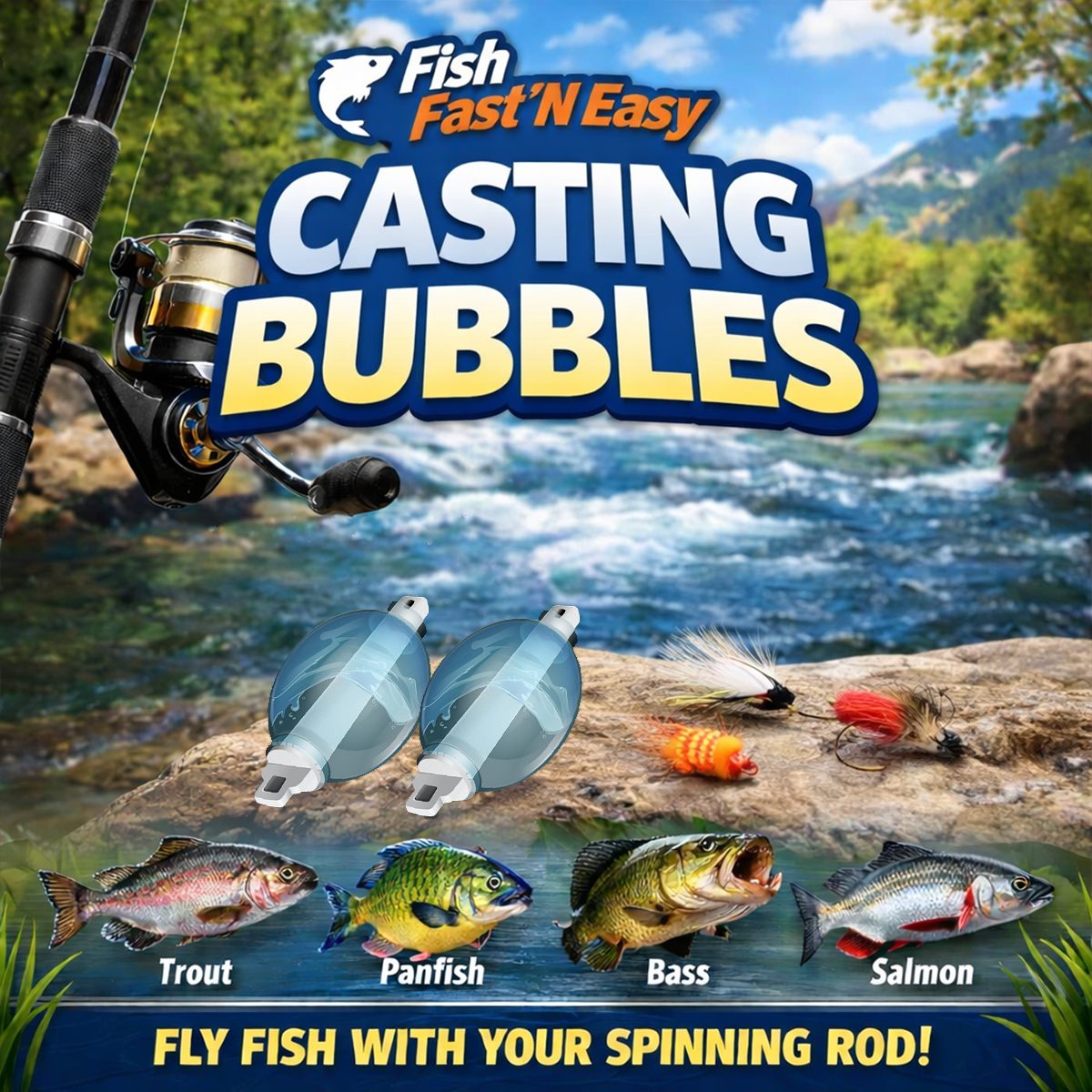
Bubble + Bait System (Underrated Advantage)
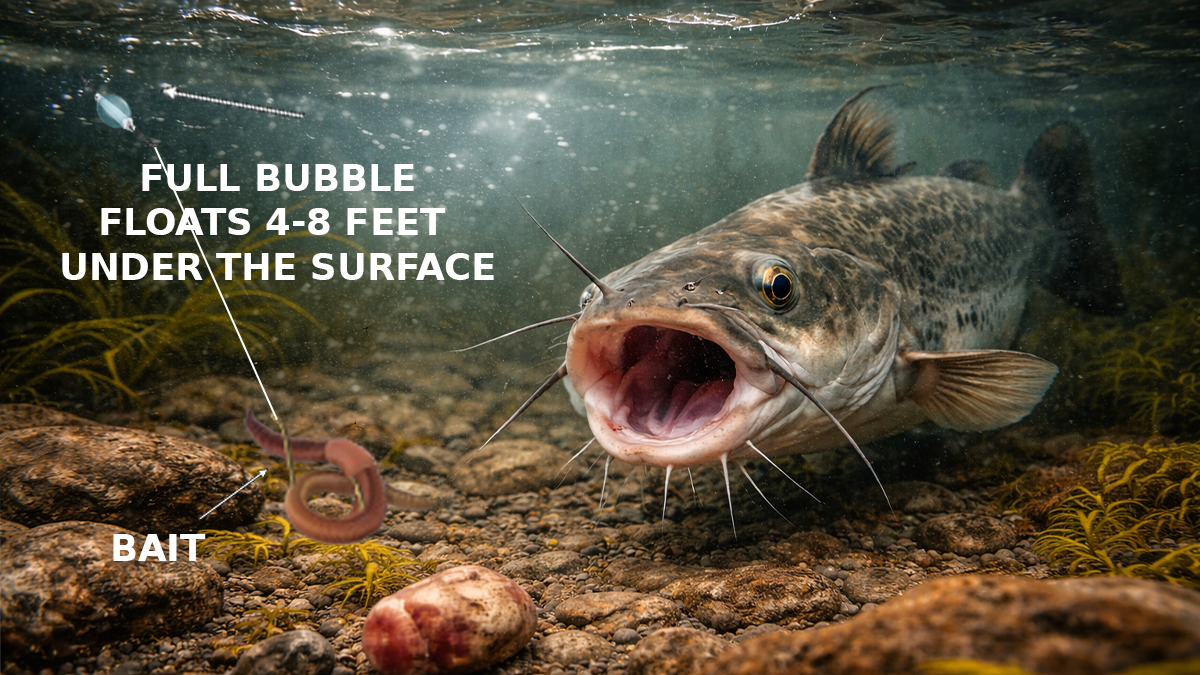
Most people don’t think of using a bubble for catfish—but in the right situation, it becomes extremely effective.
When It Works Best
- Shore fishing
- Fishing above snags
- Shallow flats at night
- Suspending bait just off bottom
Why It Works
Catfish:
- Feed by scent
- Often cruise just above bottom
The bubble allows you to:
- Keep bait slightly elevated
- Avoid snags
- Spread scent more effectively
How to Fish It
- Use a heavier-filled bubble for stability
- Longer leader (3–6 ft typical)
- Keep bait just above bottom
Let it sit.
Movement is not required—scent does the work.
Fly Fishing for Catfish
Not common—but possible.
Best in:
- Shallow water
- Warm conditions
Use:
- Streamers
- Crawfish patterns
This is more niche than practical.
Species-Specific Strategy
They Follow Scent, Not Sight
Presentation matters—but scent matters more.
They Let Food Come to Them
You don’t need to work the bait.
You need to: Put it in the right place and wait
They Move More at Night
Especially in:
- Warm water
- Shallow zones
Night fishing often outperforms everything.
Common Mistakes
- Moving bait too much
- Fishing too clean (not enough scent)
- Fishing the wrong depth
- Ignoring current in rivers
- Leaving spots too quickly
Best Catfish Destinations
- Mississippi River
- Missouri River
- Southern reservoirs
- Texas lakes
Quick Tactical Summary
If you want consistent success:
- Fish the bottom (or just above it)
- Use strong-smelling bait
- Target current breaks and deep zones
- Fish at night when possible
- Be patient—catfish come to you
- Use bubble system to control depth and avoid snags
Looking for more species and techniques? Explore our Complete Fishing Guides.
SHARING IS CARING
FishingVacations.com Copyright 2019 - 2026