
Jigs are one of the most effective and versatile fishing tools ever created.
They catch everything — bass, crappie, bluegill, trout, and even saltwater species — because they imitate what fish naturally feed on: baitfish, crawfish, and bottom-dwelling prey.
The key isn’t just throwing a jig.
It’s understanding how to fish it based on conditions, structure, and fish behavior.
Why Jigs Work So Well
Jigs succeed because they:
- Stay in the strike zone longer
- Imitate natural prey
- Can be fished at any depth
- Work in all seasons
Unlike reaction baits, jigs allow you to slow down and target fish precisely.
Core Jig Fishing Techniques
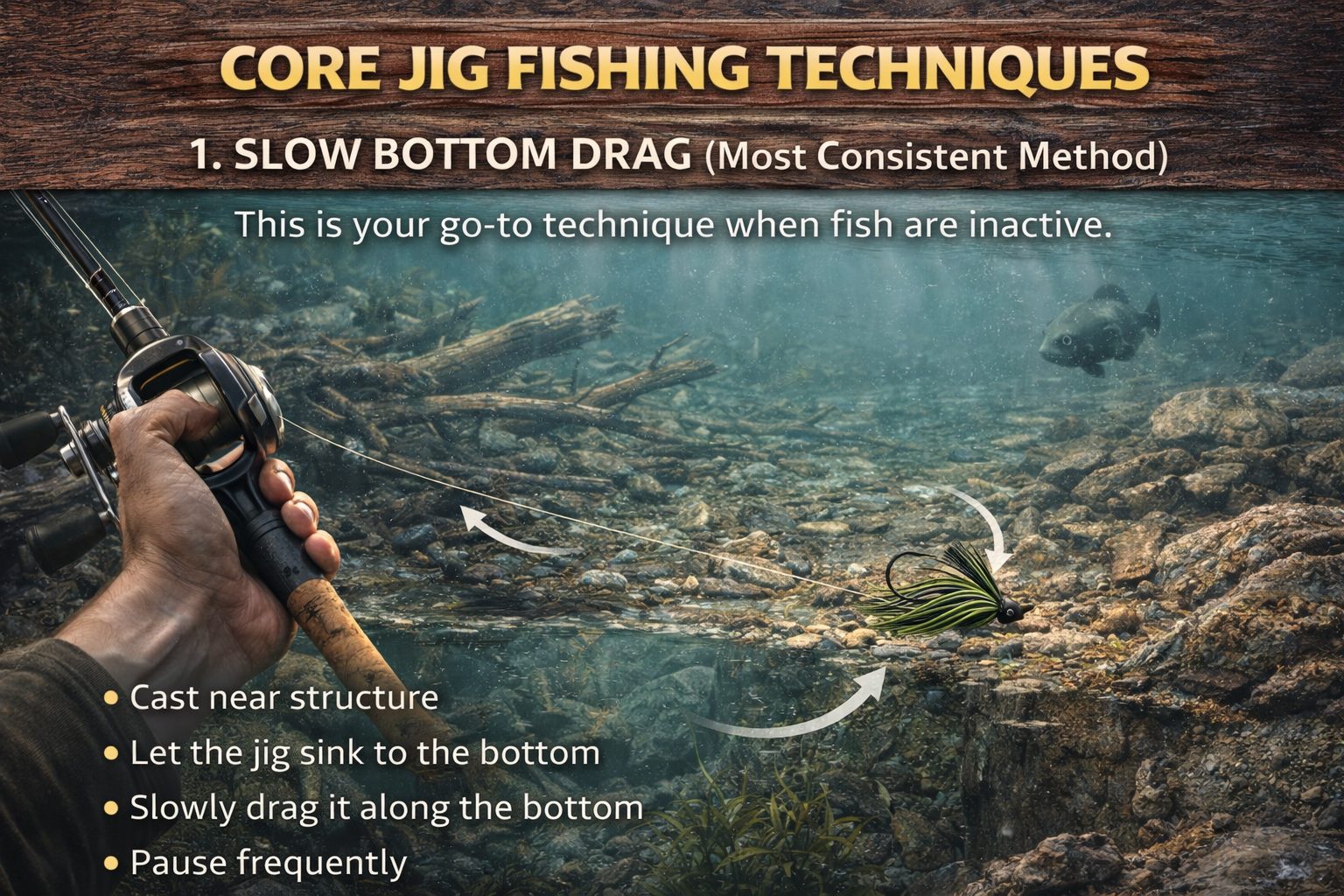
1. Slow Bottom Drag (Most Consistent Method)
This is your go-to technique when fish are inactive.
How to Fish It:
- Cast near structure
- Let the jig sink to the bottom
- Slowly drag it along the bottom
- Pause frequently
Best For:
- Cold water
- Pressured fish
- Deep structure
Think: crawfish crawling along the bottom
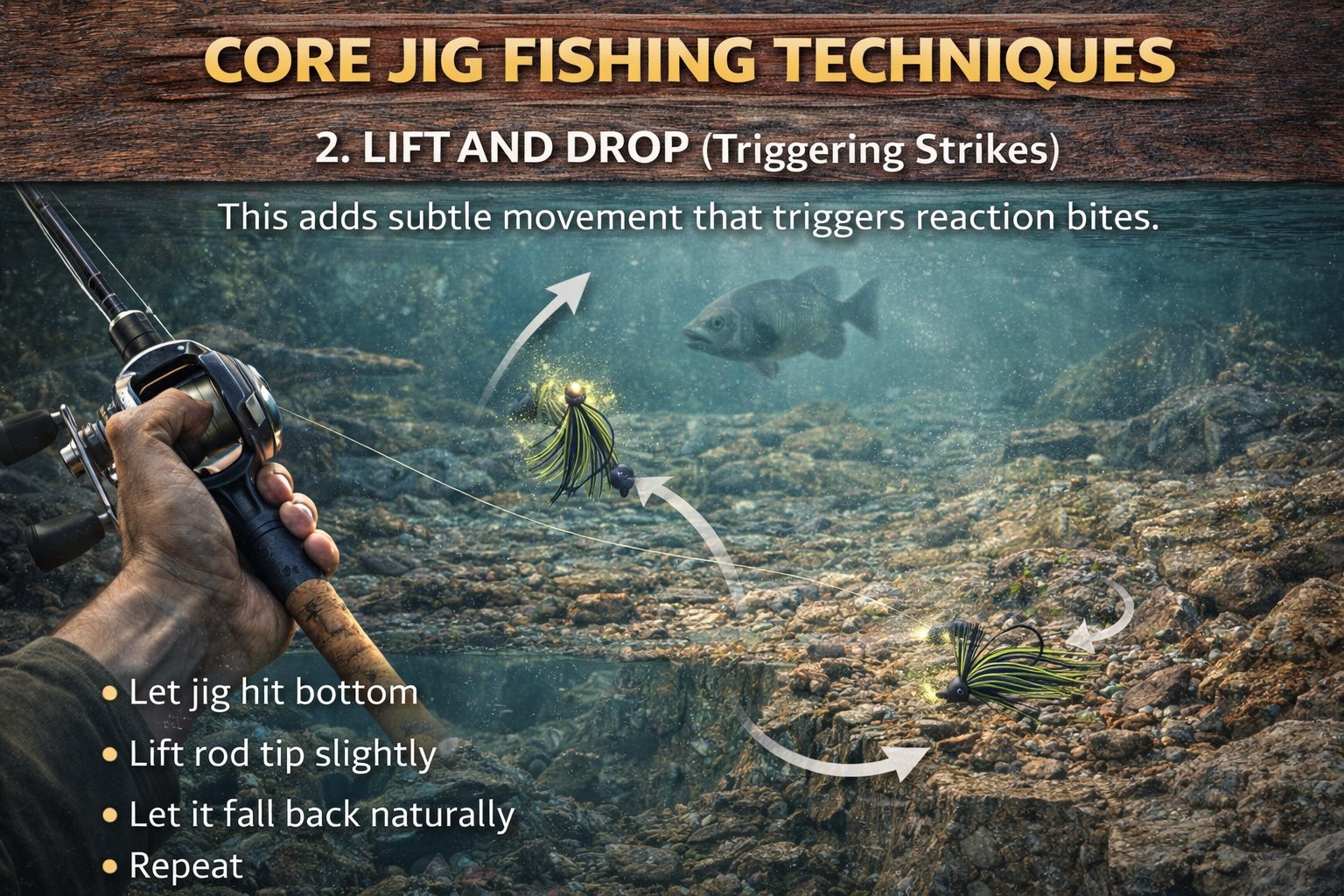
2. Lift and Drop (Triggering Strikes)
This adds subtle movement that triggers reaction bites.
How to Fish It:
- Let jig hit bottom
- Lift rod tip slightly
- Let it fall back naturally
- Repeat
Best For:
- Transition zones
- Fish holding tight to structure
- Moderate activity levels
Most strikes happen on the fall
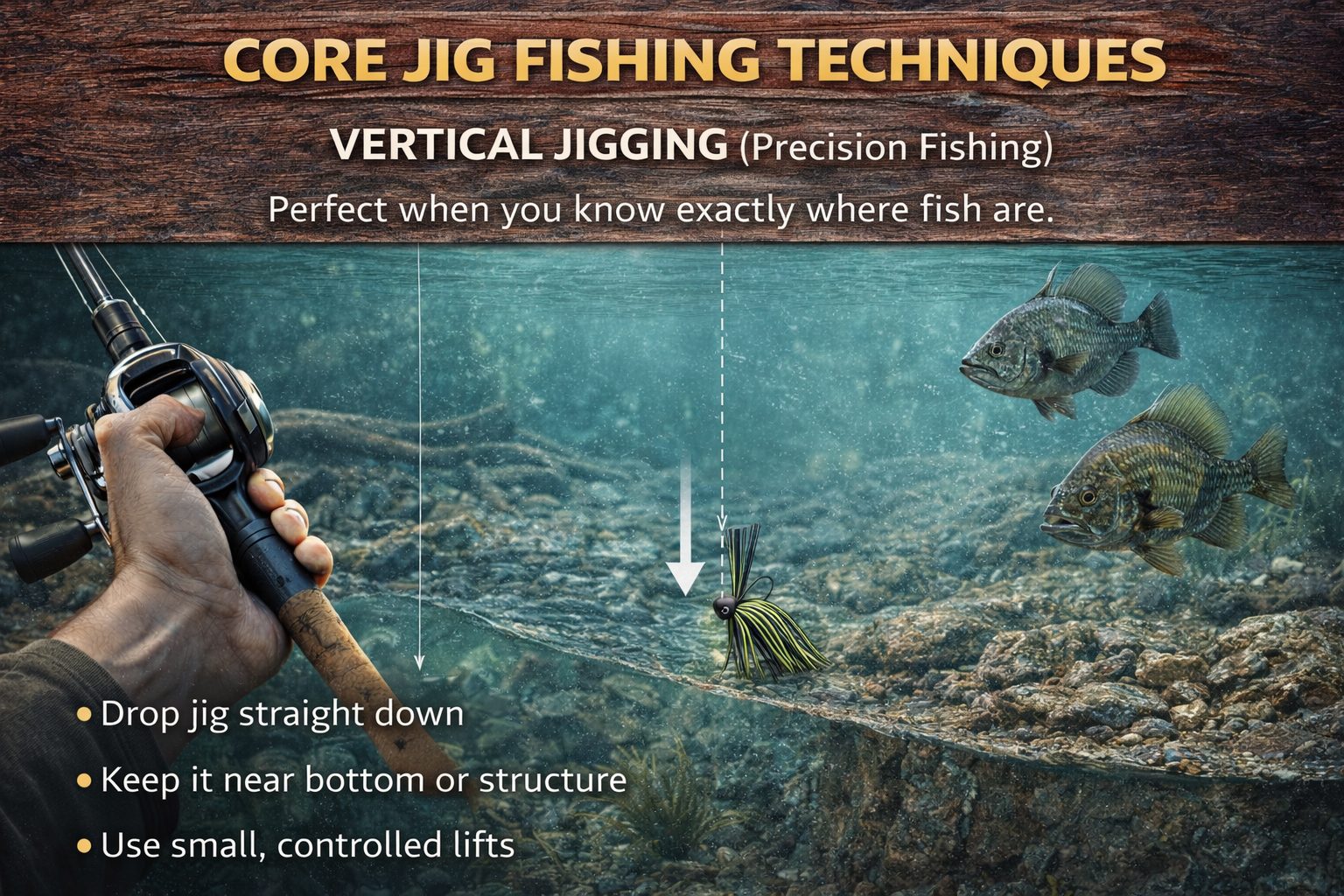
3. Vertical Jigging (Precision Fishing)
Perfect when you know exactly where fish are.
How to Fish It:
- Drop jig straight down
- Keep it near bottom or structure
- Use small, controlled lifts
Best For:
- Crappie
- Deep water
- Fishing from boats or docks
Keeps bait in the strike zone at all times
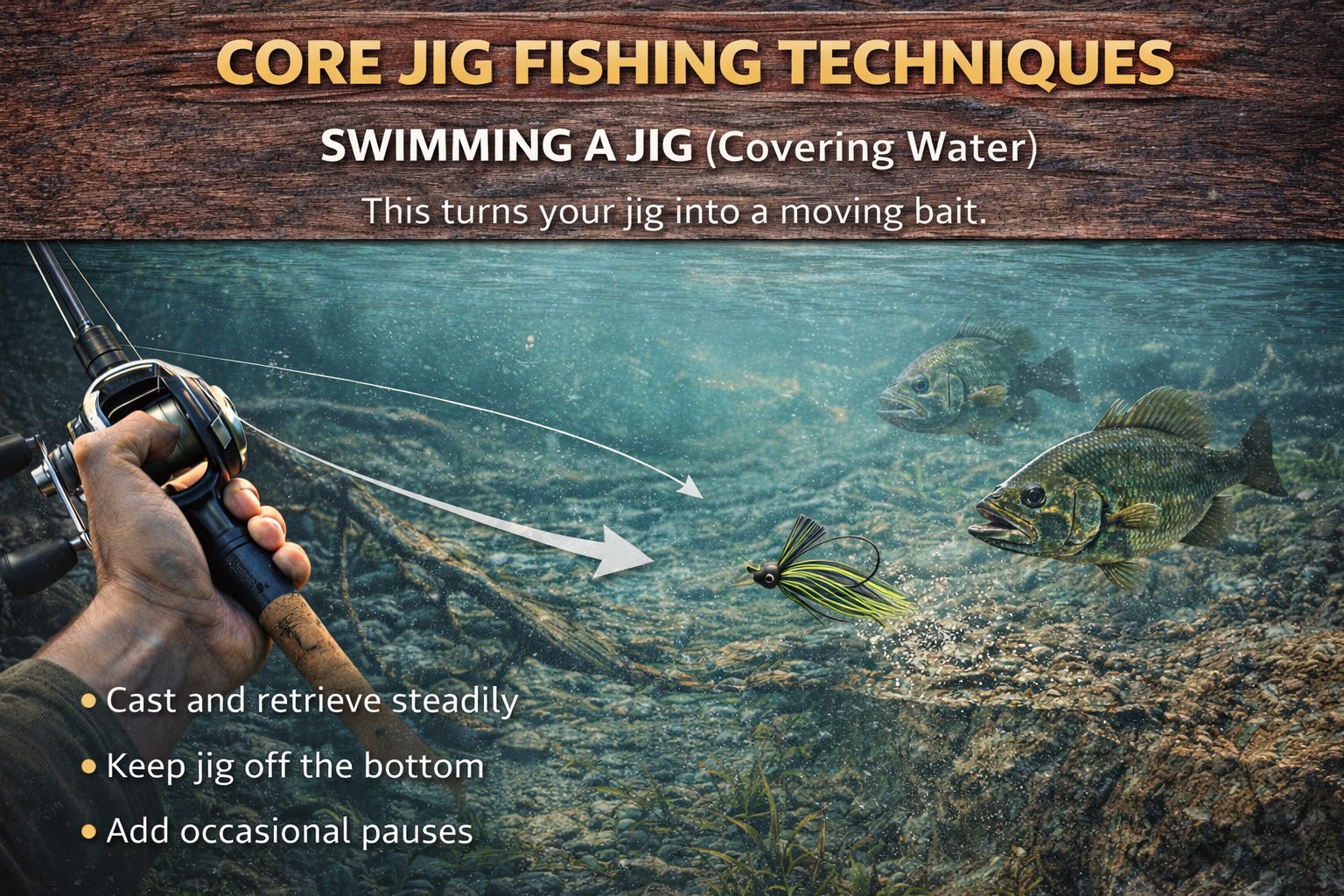
4. Swimming a Jig (Covering Water)
This turns your jig into a moving bait.
How to Fish It:
- Cast and retrieve steadily
- Keep jig off the bottom
- Add occasional pauses
Best For:
- Active fish
- Shallow water
- Weed edges and flats
Mimics a small baitfish
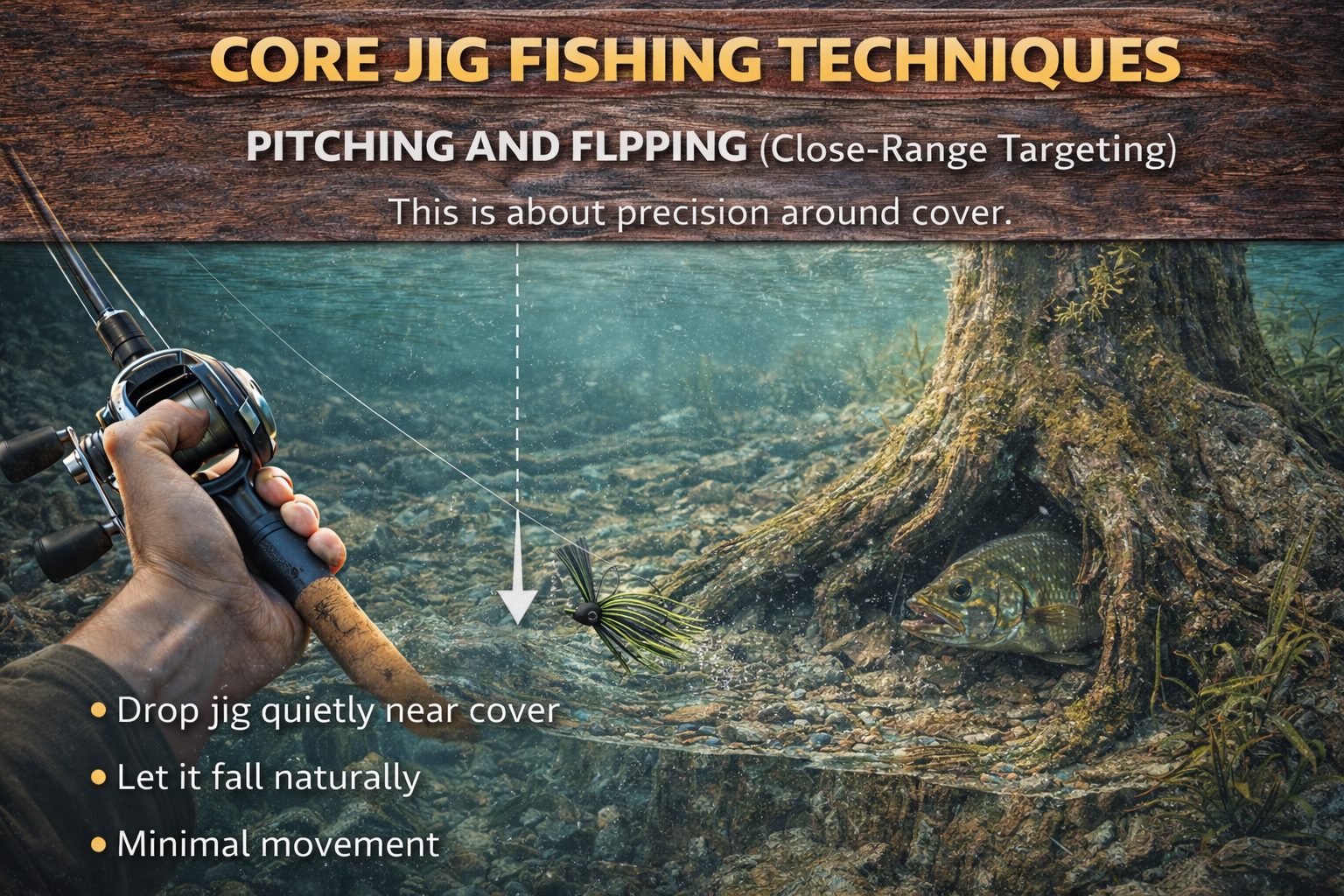
5. Pitching and Flipping (Close-Range Targeting)
This is about precision around cover.
How to Fish It:
- Drop jig quietly near cover
- Let it fall naturally
- Minimal movement
Best For:
- Docks
- Brush piles
- Heavy cover
Big fish live in tight spaces
Where to Fish a Jig
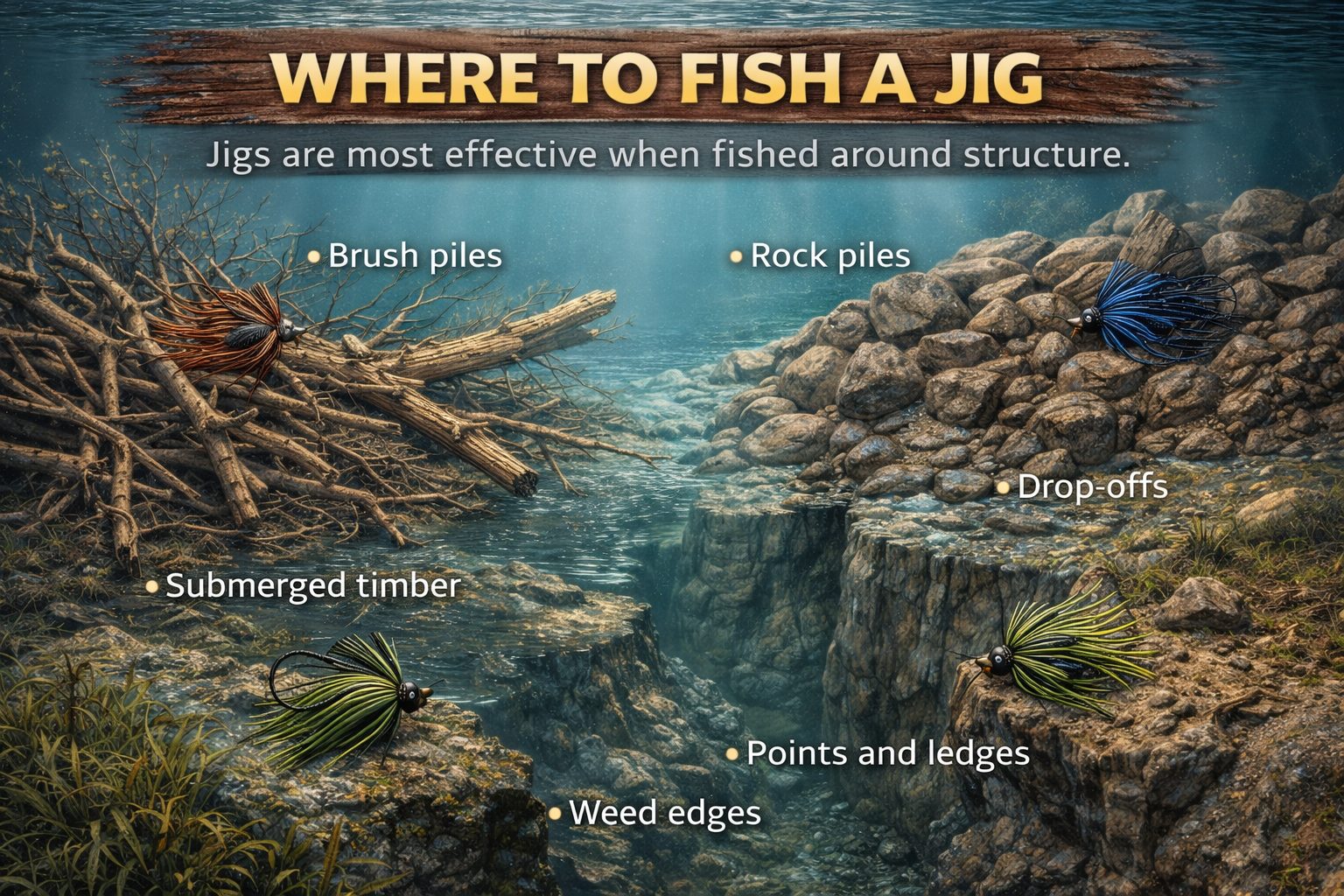
Jigs are most effective when fished around structure.
Focus on:
- Brush piles
- Submerged timber
- Rock piles
- Drop-offs
- Points and ledges
- Weed edges
Fish relate to structure — jigs let you fish it thoroughly
Matching Technique to Conditions
Cold Water
- Slow drag
- Long pauses
Warm Water
- Lift and drop
- Swimming jig
Active Fish
- Faster retrieve
- Cover water
Inactive Fish
- Slow down
- Stay near bottom
Choosing the Right Jig
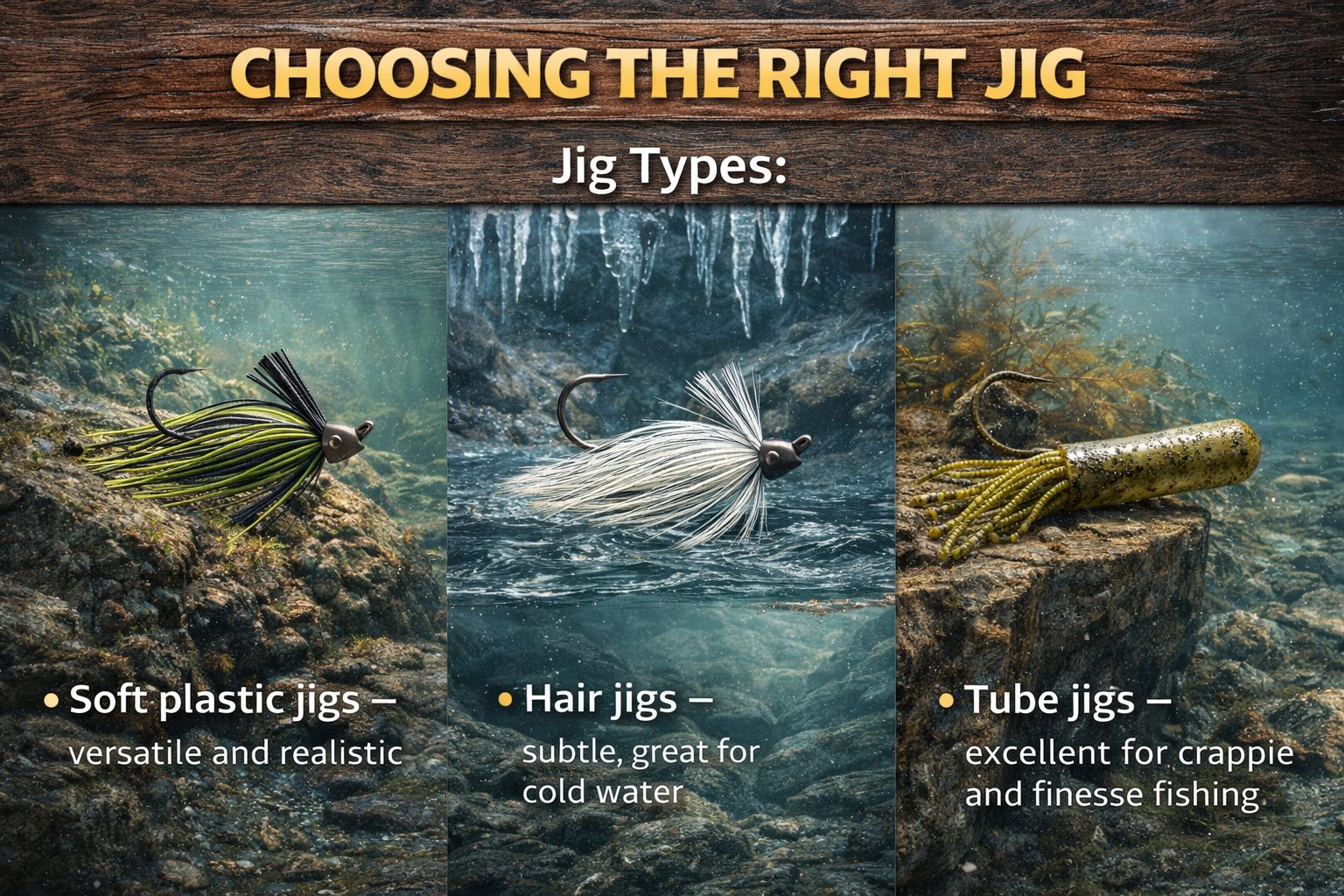
Jig Types:
- Soft plastic jigs – versatile and realistic
- Hair jigs – subtle, great for cold water
- Tube jigs – excellent for crappie and finesse fishing
Weight Matters:
- Light jigs → shallow water, slow fall
- Heavy jigs → deep water, faster control
Always match depth and conditions
Common Mistakes to Avoid
Fishing Too Fast
Most anglers move jigs too quickly.
Slow down — especially in tough conditions
Not Fishing Structure
Jigs are made for structure.
If you’re not near cover, you’re missing fish
Ignoring the Fall
Many bites happen as the jig falls.
Watch your line carefully
Using the Wrong Weight
Too heavy = unnatural
Too light = no control
Balance is key
Pro Tips for More Fish
- Use natural colors in clear water
- Use darker colors in stained water
- Always maintain contact with the jig
- Set the hook immediately when you feel anything unusual
Combine Jigs with Other Techniques
Jigs are powerful on their own, but even better when combined with other systems.
For example:
- Use jigs to locate fish
- Then switch to finesse or float systems
Final Thoughts
Jigs are not just a lure — they’re a system.
Once you learn how to:
- Control depth
- Read structure
- Adjust retrieve
You can catch fish anywhere, in almost any condition.
Explore More Fishing Guides
Want to learn how to target specific species and apply these techniques?
Explore our Complete Fishing Guides to find proven strategies for trout, bass, crappie, catfish, and more.