
Introduction
Finding fish isn’t about luck.
It’s about understanding a few key patterns that apply to every body of water — whether you’re fishing a small pond, a massive lake, a river, or the ocean.
Once you learn these patterns, you can show up anywhere and quickly identify where fish are holding.
This guide breaks it down into simple, repeatable rules you can use every time you hit the water.
The 3 Things Fish Always Need
No matter the species or location, fish are always looking for:
1. Food
If there’s no food, there are no fish.
Look for:
- Baitfish
- Insects
- Crawfish
- Birds diving or feeding
Rule:
If you find the food, you find the fish.
2. Cover
Fish don’t like being exposed.
They use cover for:
- Protection from predators
- Ambushing prey
Examples of cover:
- Rocks
- Logs
- Weed beds
- Docks
- Drop-offs
3. Comfortable Water (Temperature + Oxygen)
Fish will move to stay comfortable.
Look for:
- Shade
- Deeper water
- Moving water (adds oxygen)
- Temperature breaks
Understanding Structure vs Cover
This is one of the most important concepts in fishing.
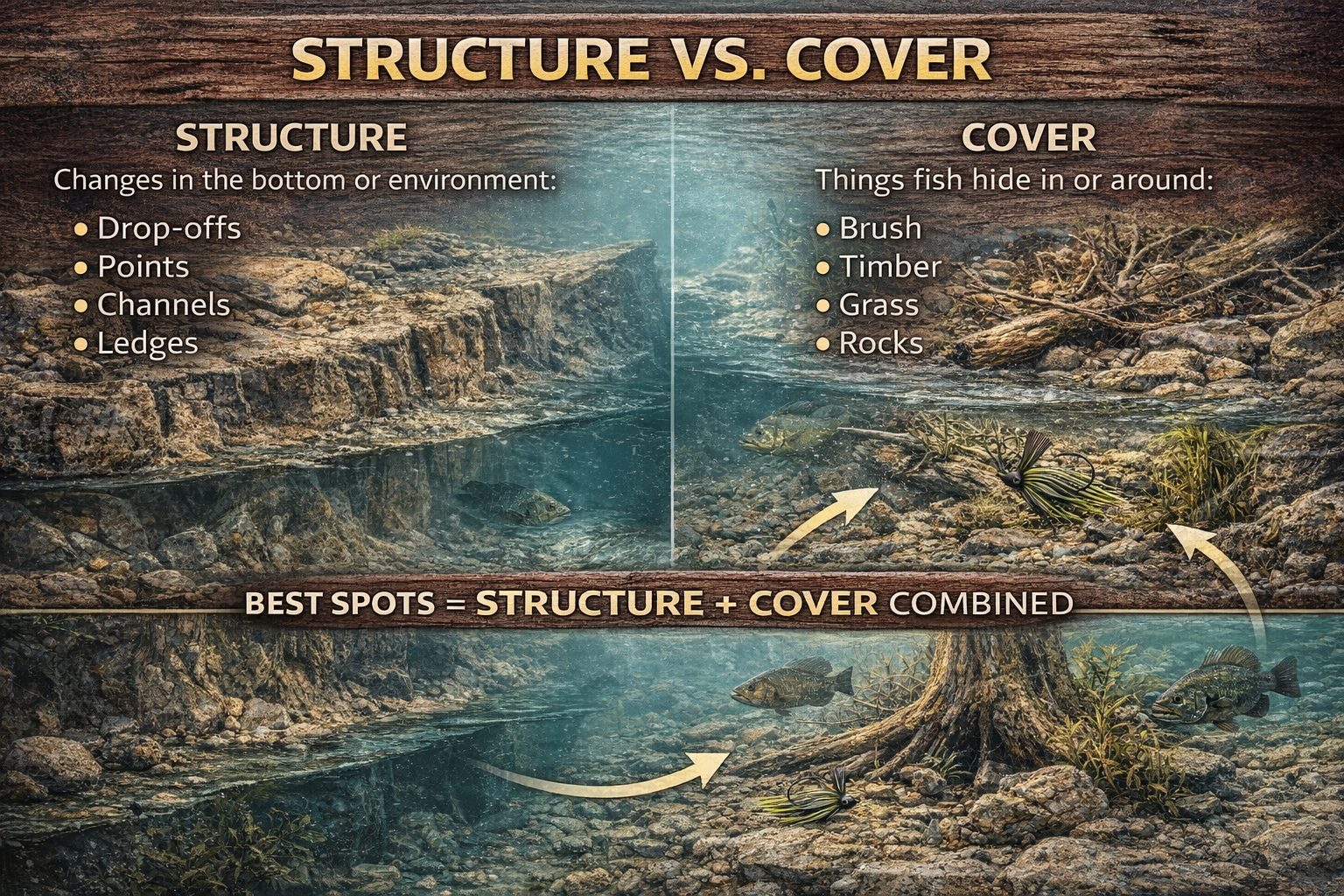
Structure (Big Picture)
Changes in the bottom or environment:
- Drop-offs
- Points
- Channels
- Ledges
Cover (Objects on Structure)
Things fish hide in or around:
- Brush
- Timber
- Grass
- Rocks
Best spots = Structure + Cover combined
Where to Find Fish by Water Type
Lakes & Ponds (Most Common Scenario)
Fish relate heavily to structure and cover.
Focus on:
- Weed edges
- Drop-offs
- Points
- Docks
- Brush piles
Simple strategy:
Start shallow → move deeper until you find fish.
Rivers & Streams
Current changes everything.
Fish avoid fighting strong current constantly.
Look for:
- Current seams
- Eddies
- Deep pools
- Slack water
- Areas behind structure
Key idea:
Fish sit where they can rest but still access food drifting by.
Reservoirs
More complex, but very predictable.
Focus on:
- Old river channels
- Points
- Depth transitions
- Submerged structure
Fish often move between deep and shallow zones.
Ocean & Coastal Waters
Everything revolves around bait.
Focus on:
- Bait schools
- Temperature breaks
- Structure (reefs, rocks)
- Tide movement
Rule:
No bait = no fish.
Depth: The Most Overlooked Factor
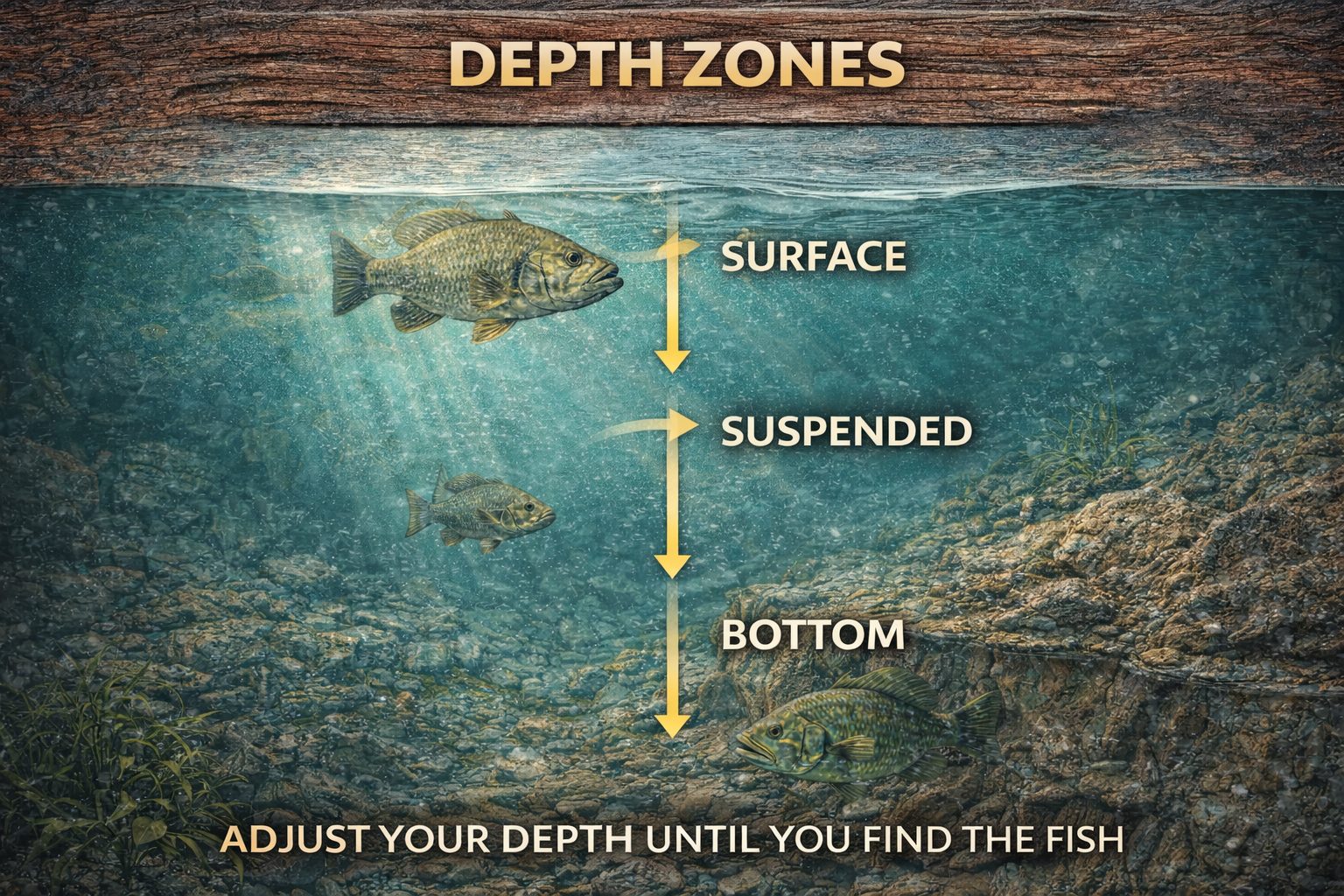
If you’re not catching fish, you’re probably at the wrong depth.
Adjust by:
- Letting bait sink longer
- Using longer leaders
- Fishing higher in the water column
Fish can be:
- On the bottom
- Suspended
- Near the surface
You need to find where they are.
Reading the Water (Visual Clues)
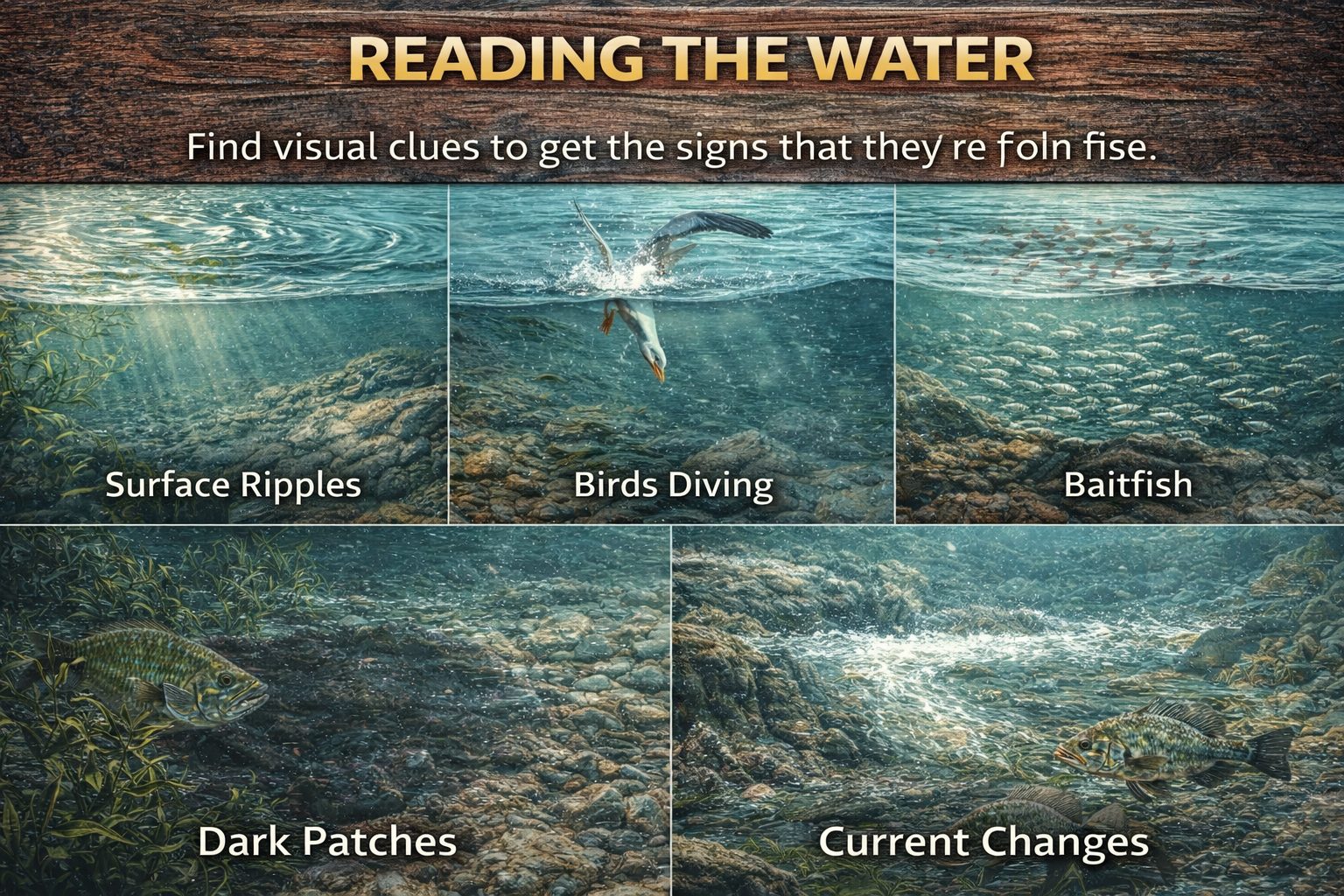
Look for signs before you even cast:
- Ripples or surface activity
- Birds diving
- Baitfish movement
- Dark patches (structure/weed beds)
- Current changes
These clues shorten your learning curve instantly.
How to Break Down New Water (Step-by-Step)
Use this exact system:
Step 1: Start with Visible Structure
Fish near:
- Docks
- Weed edges
- Rocks
Step 2: Cover Different Depths
- Shallow first
- Then mid-depth
- Then deep
Step 3: Watch for Activity
Adjust based on:
- Bites
- Follows
- Visible fish
Step 4: Lock In the Pattern
Once you catch one fish:
- Repeat that exact setup
- Same depth
- Same structure
Fish group up — where there’s one, there are more.
How the Bubble Rig Helps You Find Fish Faster
This is where your system naturally fits.
The bubble rig gives you a huge advantage:
- Lets you fish multiple depths quickly
- Works with flies and bait
- Easy to adjust leader length
- Covers water efficiently
And with snap swivels:
- You can switch leaders in seconds
- Test different depths and presentations fast
This makes it one of the best tools for figuring out where fish are holding.
Common Mistakes to Avoid
- Fishing only one depth
- Ignoring structure
- Moving too fast without learning the area
- Not paying attention to bait
- Staying in unproductive water too long
Final Thoughts
Fish aren’t randomly scattered.
They follow patterns.
If you focus on:
- Food
- Cover
- Structure
- Depth
You can walk up to any body of water and start catching fish faster.
Next Step
Once you understand where fish are, the next step is knowing how to catch them.
Explore our fishing guides: