
Bodega Bay is one of the most complete fishing destinations on the Northern California coast.
Few places offer this combination:
- Easy-access shore fishing
- Protected harbor water
- Jetty structure
- Immediate access to deep ocean
That variety means one thing:
If you understand how this place works, you can catch fish here consistently.
This guide breaks down exactly where to fish, when to fish, and how to approach each zone so you can show up with a plan instead of guessing.
Bodega Bay Fishing Overview
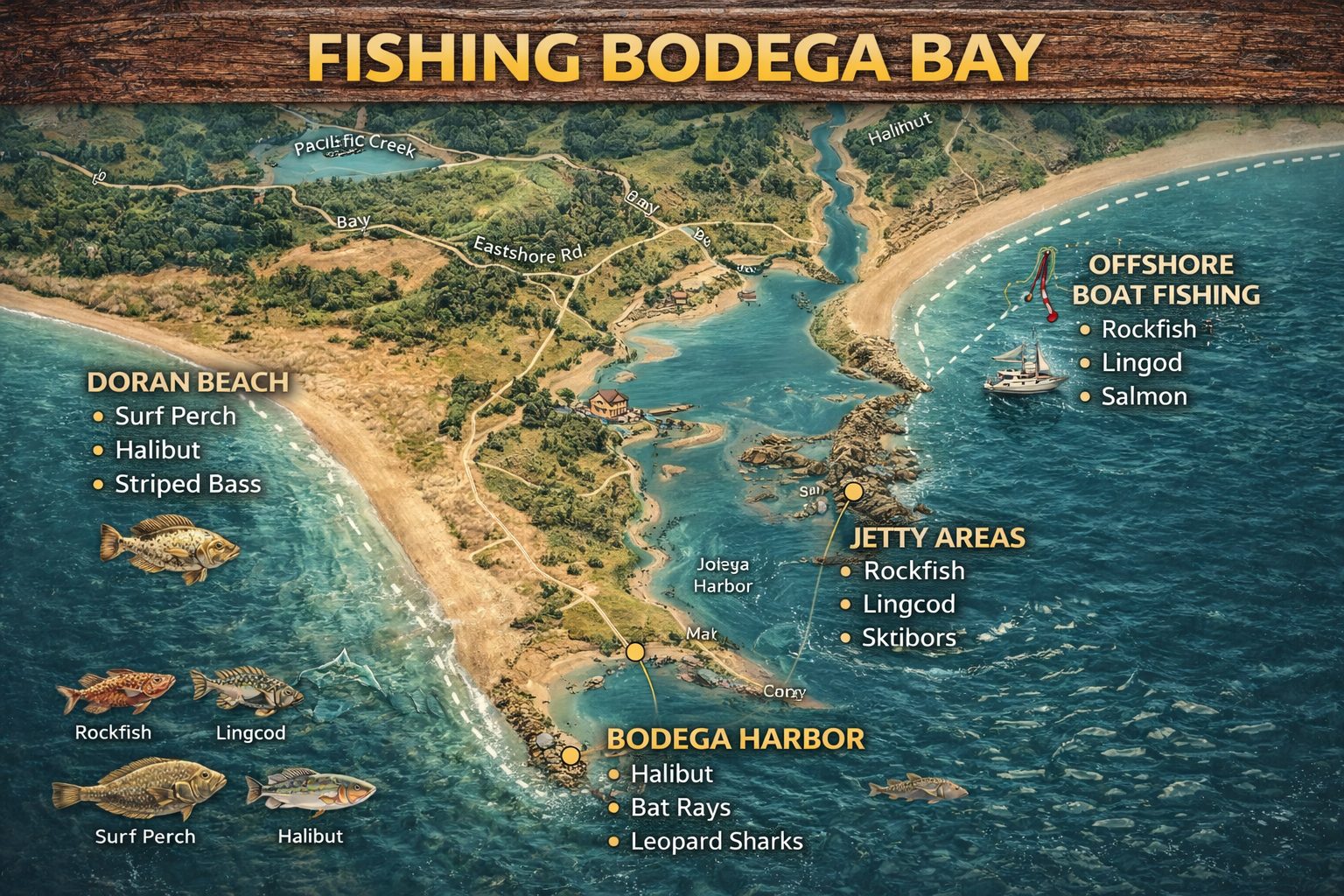
Bodega Bay sits at a natural convergence point where:
- Cold Pacific water pushes bait inshore
- Rocky structure creates ambush zones
- Protected harbor water gives fish a place to stage
This creates a fishery built around movement and structure.
Primary species include:
- Rockfish
- Lingcod
- Surf perch
- Halibut
- Salmon (seasonal)
The key to success here is not luck — it’s understanding how fish position based on tide, structure, and bait.
Fishing Structure (Rockfish & Lingcod)
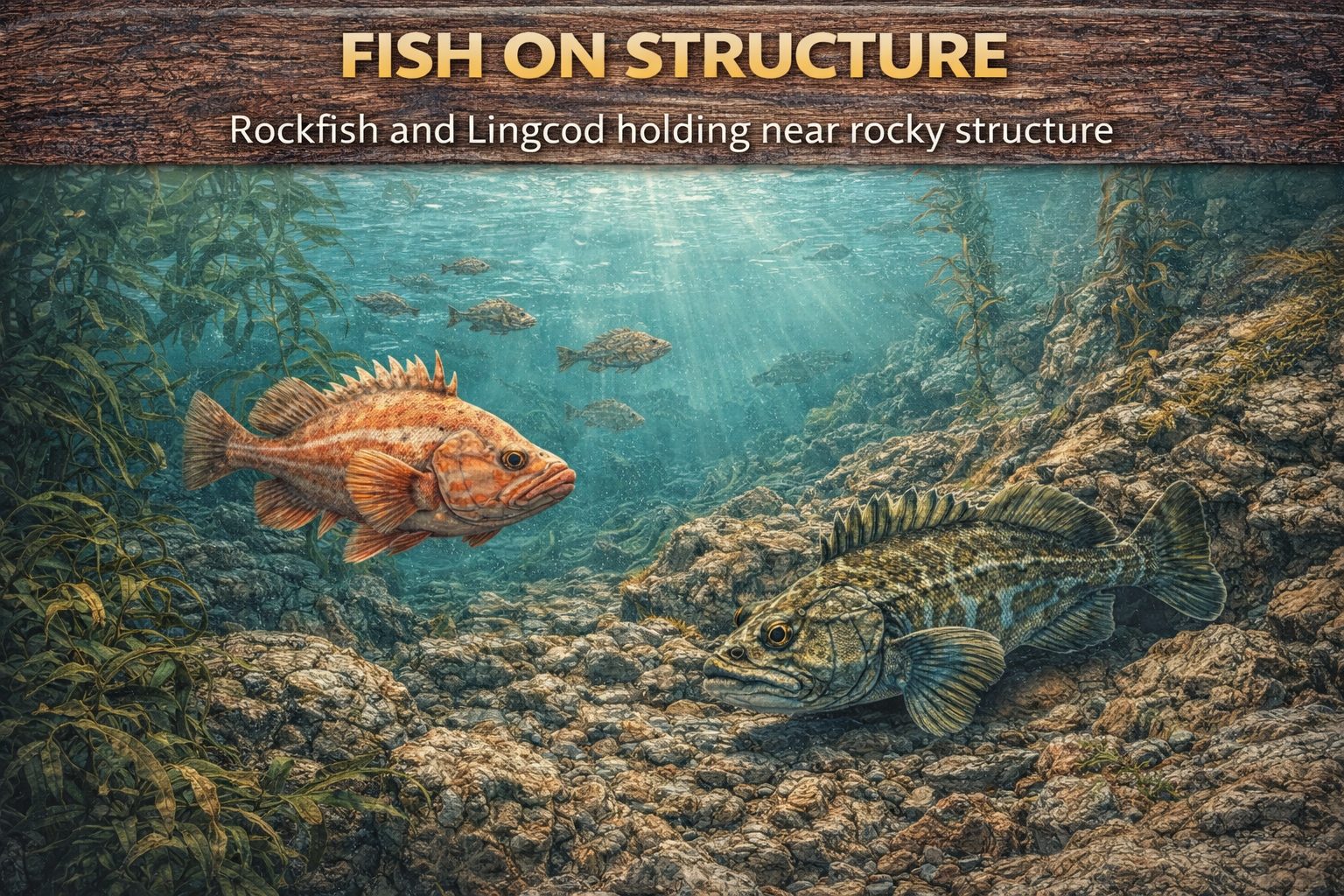
Offshore and jetty fishing in Bodega Bay revolves around one thing: structure.
Where to Look:
- Rocky reefs
- Boulder fields
- Submerged ledges
- Jetty rock systems
How Fish Use It:
- Lingcod hold tight to structure, often sitting motionless waiting to ambush prey
- Rockfish school just above structure, moving vertically through the water column
How to Fish It:
- Get your bait or lure down to the bottom
- Stay close to structure
- Use slow lifts and controlled drops
Key Insight:
If you’re not fishing close to structure, you’re not fishing where these fish live.
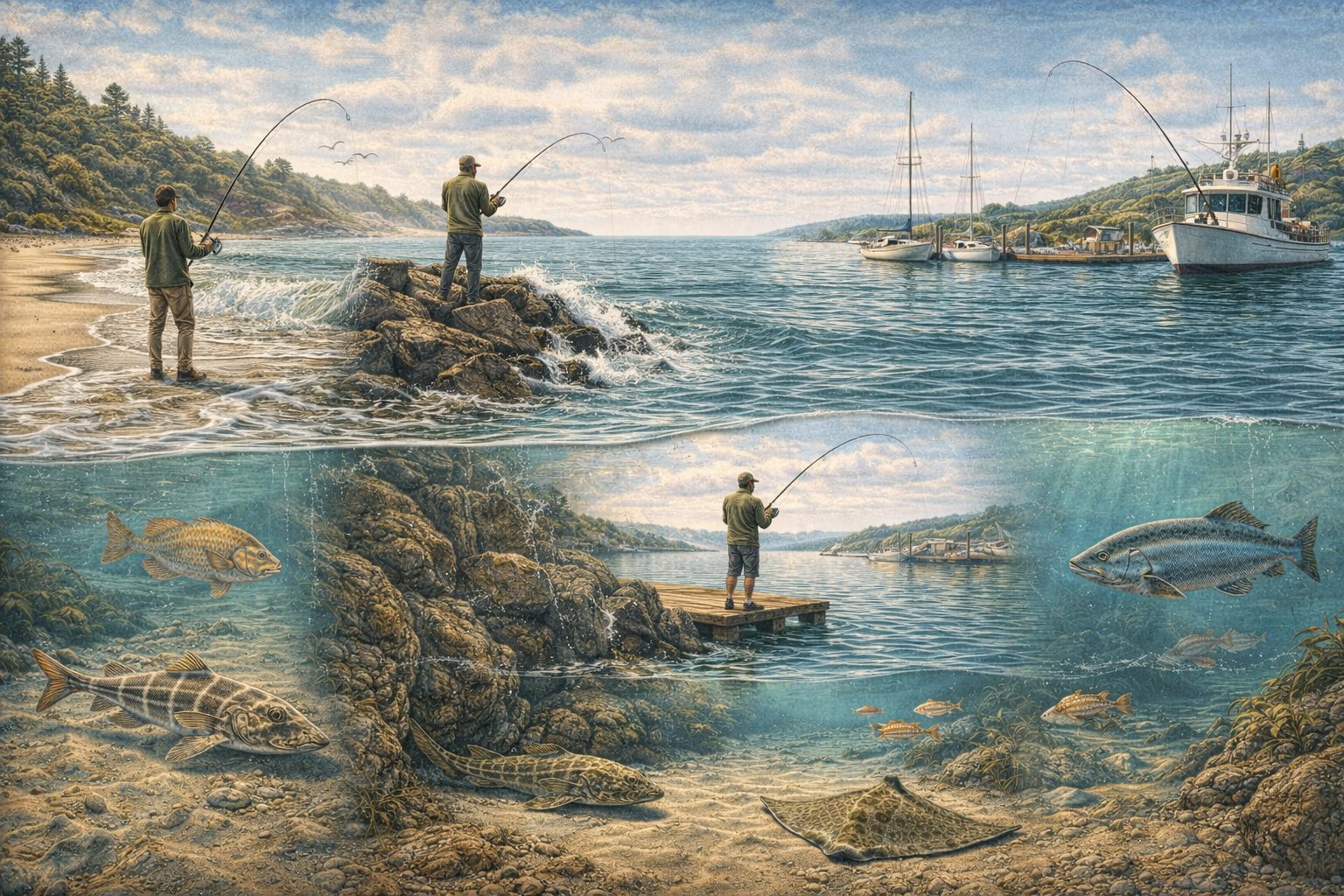
Surf Fishing Zones
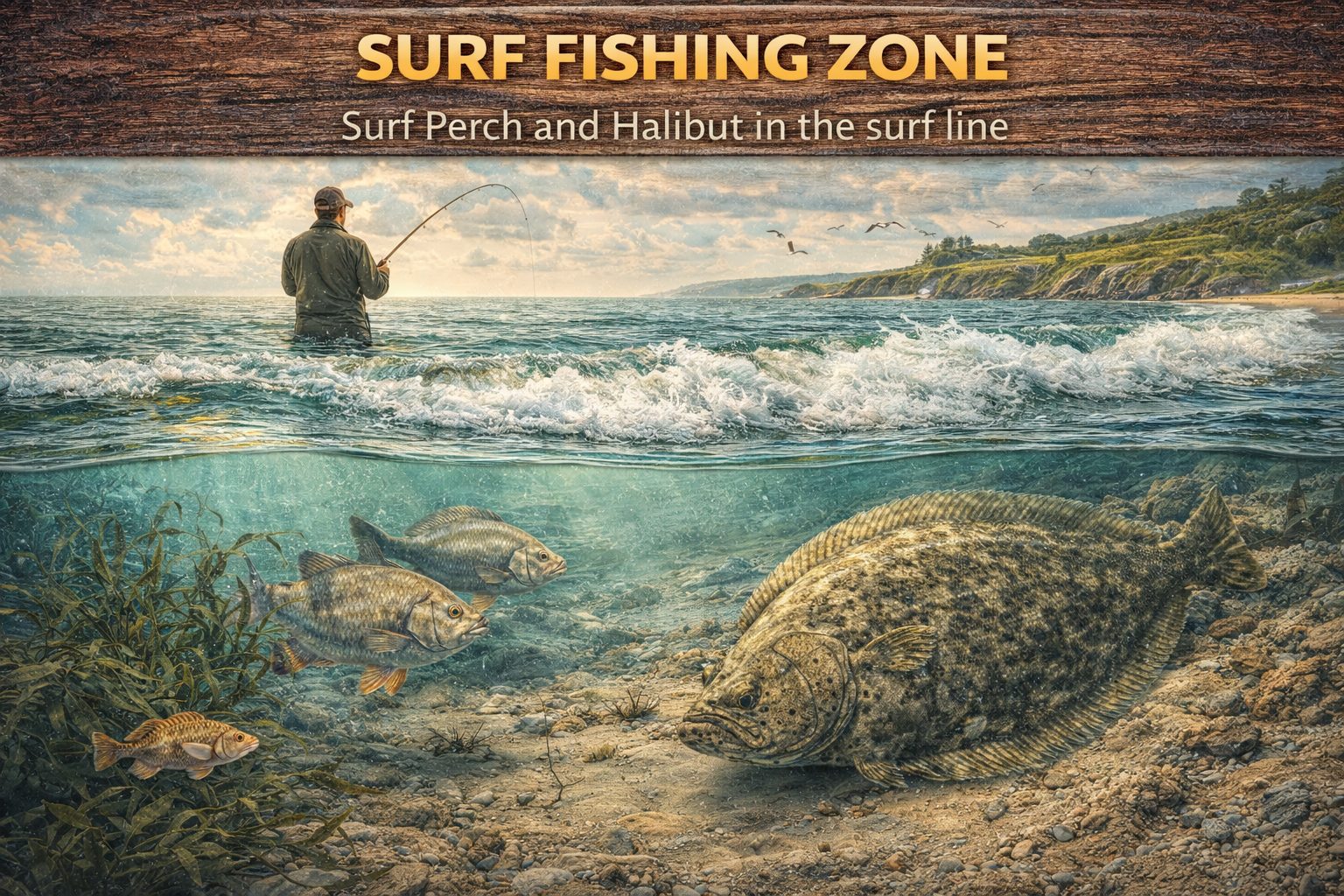
Bodega Bay’s beaches, especially around Doran Beach, offer some of the most accessible and productive fishing in the area.
What Most People Miss:
Fish are not randomly scattered in the surf. They hold in specific zones.
Look for:
- Troughs between breaking waves
- Sandbars and drop-offs
- Areas where waves lose energy
What Lives Here:
- Surf perch cruising the shoreline
- Halibut lying flat on sandy bottoms
- Striped bass moving through (seasonal)
How to Fish It:
- Cast into troughs and transition zones
- Cover water with a fan casting pattern
- Adjust distance before changing location
Key Insight:
Most anglers cast too far. Many fish are closer than you think.
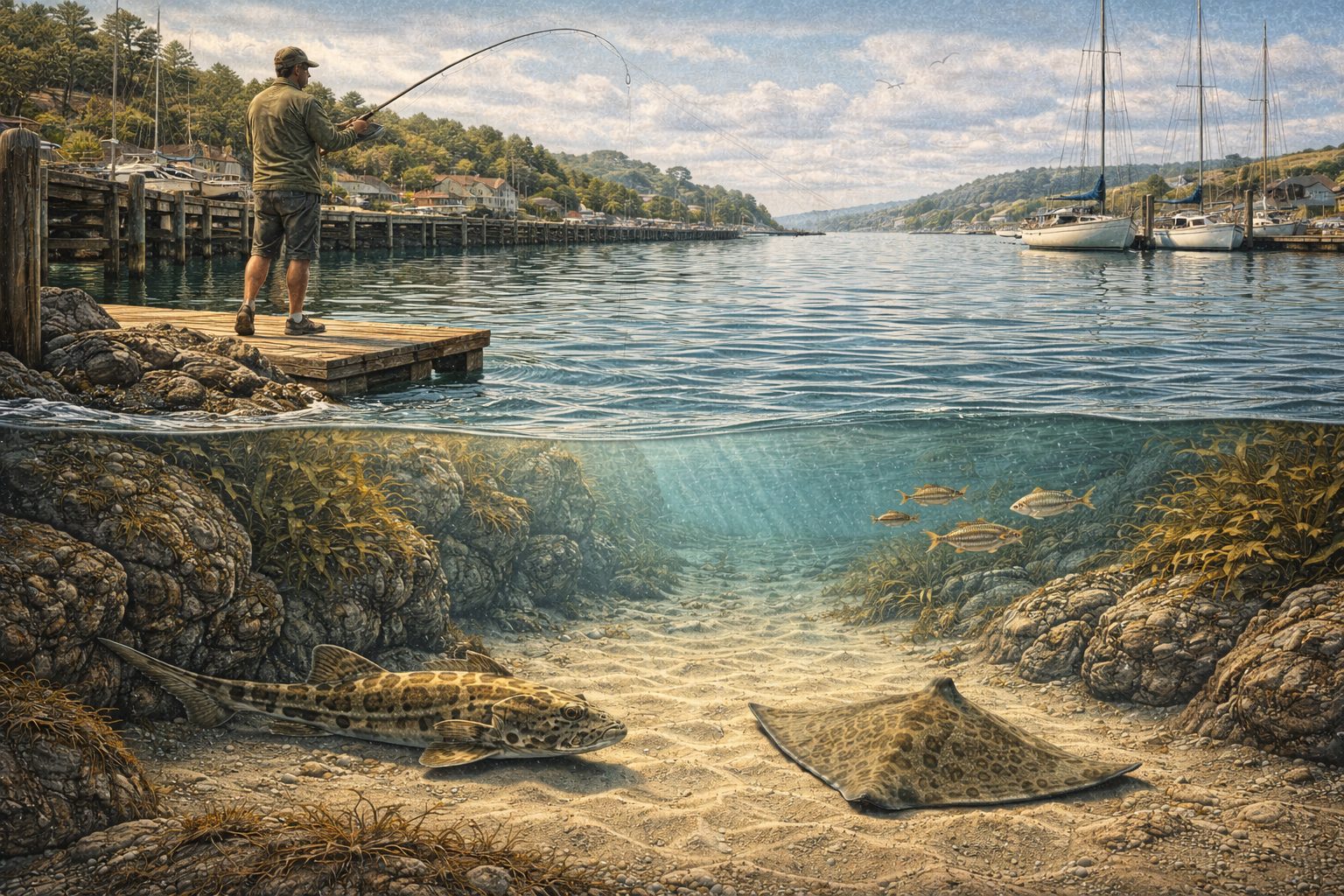
Harbor & Jetty Fishing
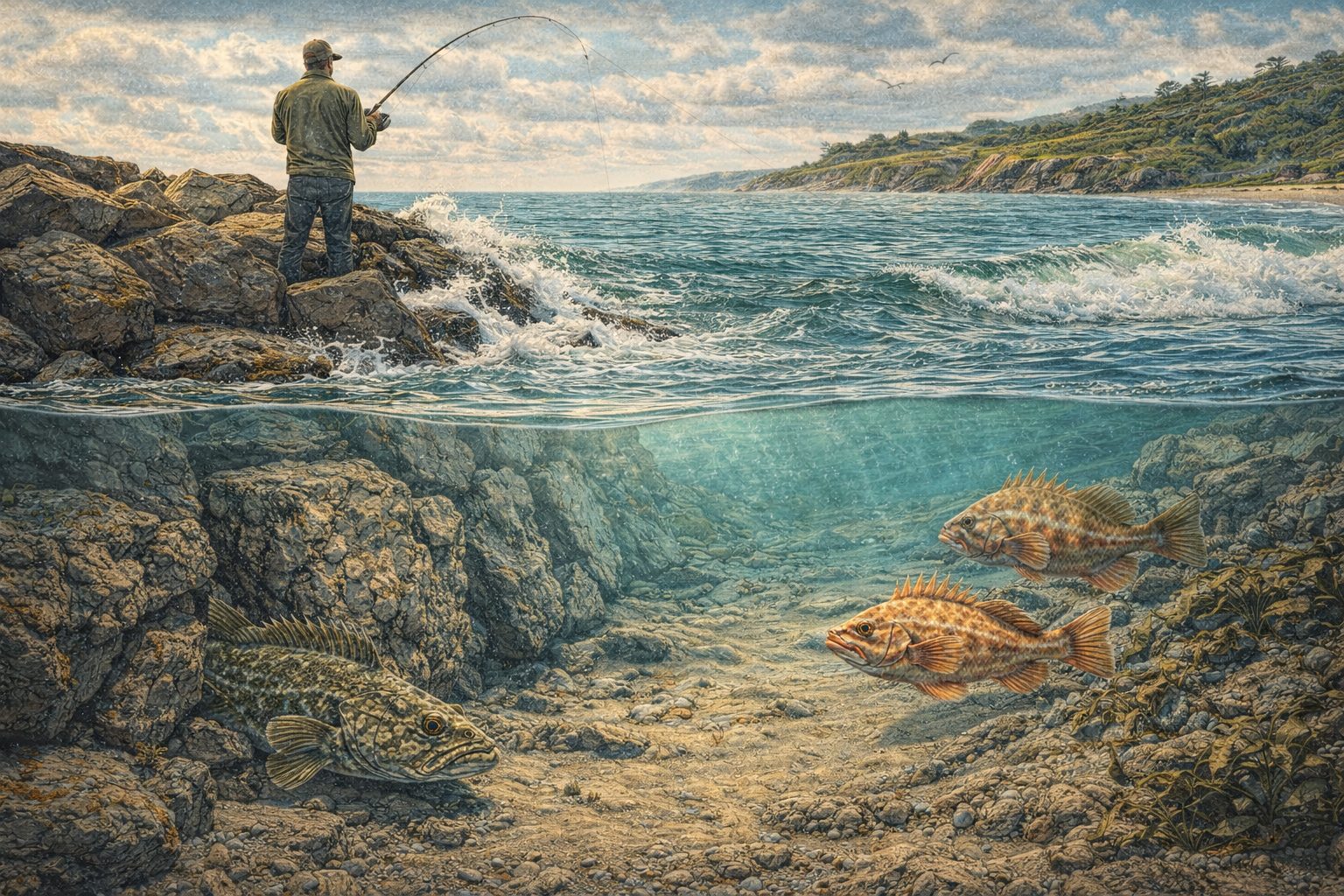
If you want consistent action, this is where you start.
The harbor and jetty systems combine structure, current, and protection, making them reliable year-round.
Focus Areas:
- Jetty rocks and boulder fields
- Harbor edges and drop-offs
- Calm water near moving current
What Lives Here:
- Rockfish
- Lingcod
- Surf perch
- Leopard sharks
- Bat rays
How Fish Position:
- Jetty structure creates ambush points
- Fish hold where current brings food but reduces effort
- Edges and transitions are key
How to Fish It:
- Fish tight to rocks and structure
- Focus on incoming or outgoing tides
- Work vertically or slow along edges
Key Insight:
Structure alone is not enough—structure with moving water is where fish feed.
Best Times & Seasons
Fishing Bodega Bay is productive year-round, but conditions and species change.
Spring
- Rockfish and lingcod seasons begin
- Strong surf perch fishing
- Increasing activity across all areas
Summer
- Peak fishing conditions
- Salmon season (when open)
- Calm water and consistent offshore access
Fall
- Aggressive feeding patterns
- Larger fish potential
- Reduced fishing pressure
Winter
- Offshore opportunities limited
- Harbor and surf remain viable
- Focus on calm weather windows
Daily Timing Matters
- Early morning is consistently the best
- Moving tides trigger feeding activity
- Afternoon winds often reduce fishability
Key Insight:
Fish when conditions are right—not just when it’s convenient.
Gear & Tactics
Success here depends on matching your setup to the environment.
Surf Fishing Setup
- Medium-heavy spinning rod
- Strong line for current and surf
- Bait or artificial presentations
Approach:
- Target troughs and structure
- Cover water before moving
Jetty & Harbor Setup
- Durable rod with abrasion resistance
- Jigs or bait rigs
Approach:
- Fish vertical near rocks
- Slow presentations along structure
- Expect snags—structure holds fish
Offshore Setup
- Heavy rod and reel
- Bottom rigs or jigs
Approach:
- Drop straight down
- Maintain bottom contact
- Stay near structure
Efficiency Tip
Serious anglers prepare multiple rigs or leaders in advance so they can adjust quickly without wasting time.
Local Knowledge (What Actually Matters)
This is where most anglers gain an edge—or struggle.
What Locals Know:
Wind controls everything
- Mornings are typically calm
- Afternoon wind builds quickly
Tide movement drives feeding
- Slack tide slows activity
- Moving water triggers bites
Small structure still matters
- You don’t need massive reefs
- Small rock clusters hold fish
Jetty safety is real
- Watch swell conditions
- Never turn your back to the ocean
Fish the details
- Edges
- Transitions
- Subtle depth changes
These are often better than obvious spots.
One-Day Fishing Plan (Simple and Effective)
If you only had one day to fish Bodega Bay:
Morning
Start at Doran Beach
- Fish incoming tide
- Cover water
Midday
Move to harbor or jetty
- Target structure
- Adjust depth
Afternoon
If conditions allow:
- Fish offshore structure
Key Insight:
The anglers who move and adapt throughout the day catch the most fish.
Final Thoughts
Bodega Bay rewards anglers who understand a few key things:
- Fish relate to structure
- Movement triggers feeding
- Depth matters more than most people realize
If you combine those with observation and adjustment, you can consistently catch fish here—whether you're on shore or offshore.
Next Steps
To get more specific, explore: