
Salmon Fishing Guide
A Complete, Real-World System for Finding and Catching Salmon
Salmon Fishing Guide
A Complete, Real-World System for Finding and Catching Salmon
Overview
Salmon are not structure fish.
They are movement-driven, migratory fish—and everything about how you catch them revolves around that fact.
They don’t sit in one place waiting for food.
They:
- Travel
- Follow bait
- Move with water conditions
- Return to spawn
That means success comes down to one thing:
Being in the right place at the right time
Where to Find Salmon
Salmon locations are defined by movement patterns, not just structure.
Ocean & Coastal Waters
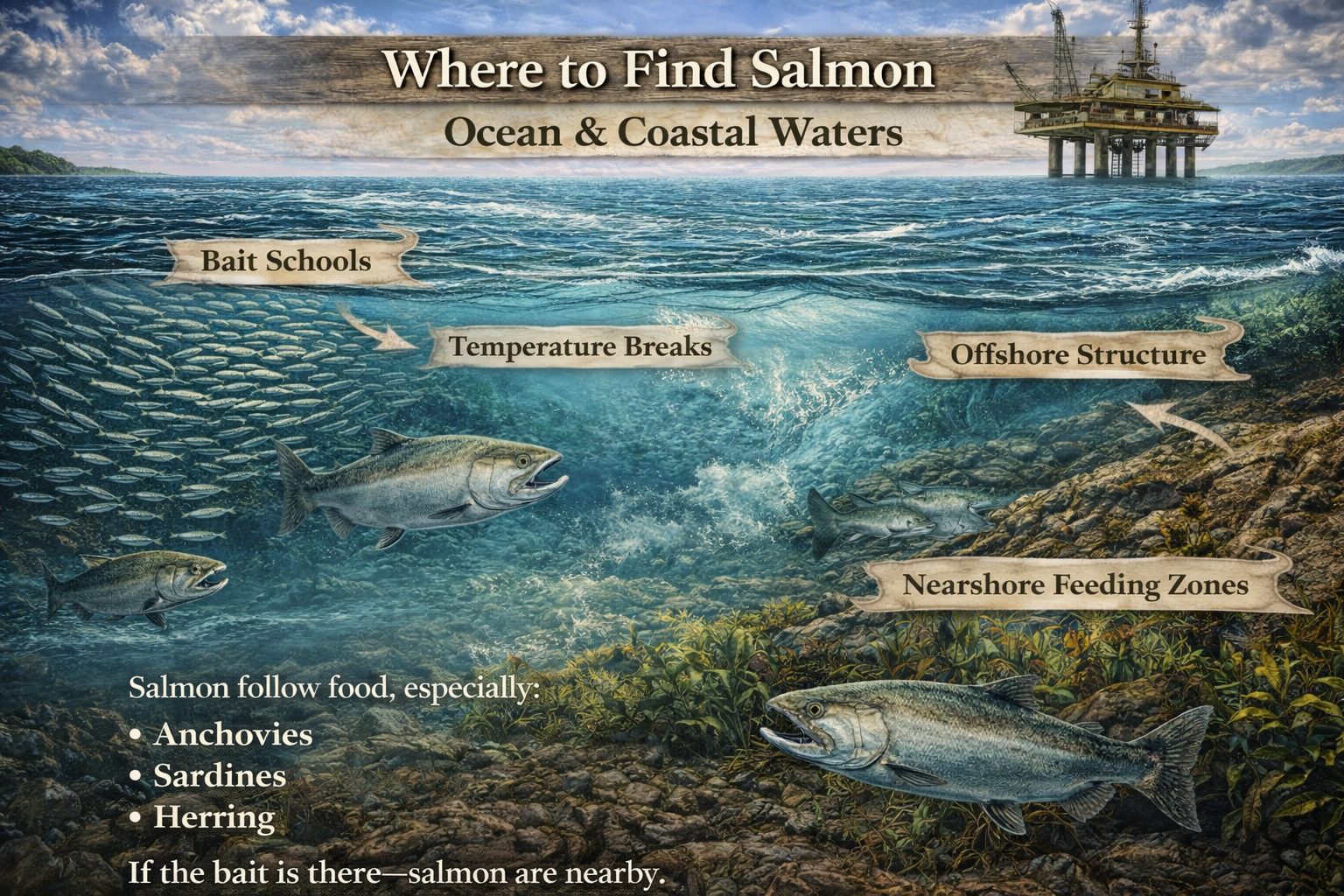
Primary holding zones:
- Bait schools
- Temperature breaks
- Offshore structure
- Nearshore feeding zones
Salmon follow food, especially:
- Anchovies
- Sardines
- Herring
If the bait is there—salmon are nearby.
Great Lakes
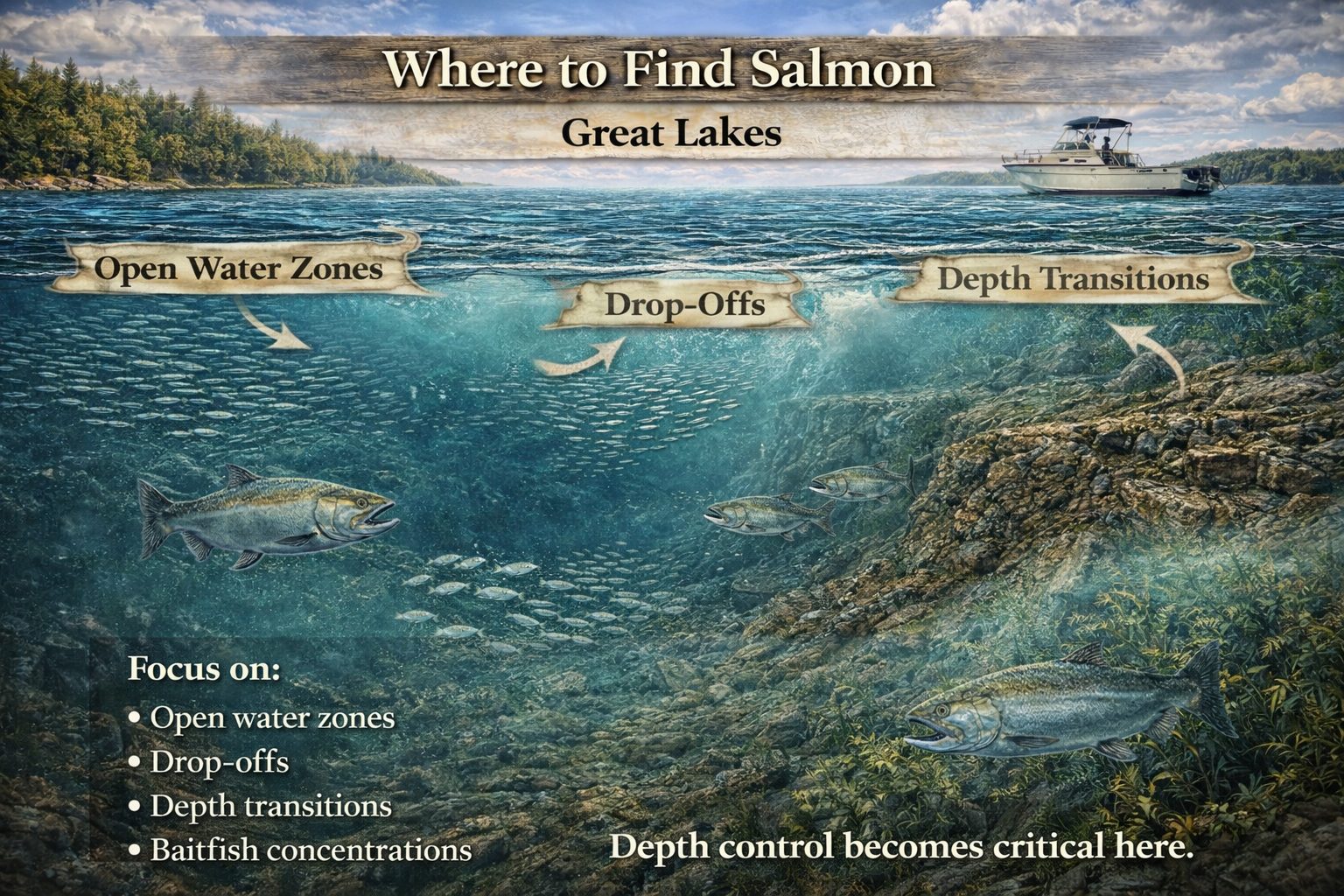
Completely different system, but highly productive.
Focus on:
- Open water zones
- Drop-offs
- Depth transitions
- Baitfish concentrations
Depth control becomes critical here.
Rivers (Spawning Runs)
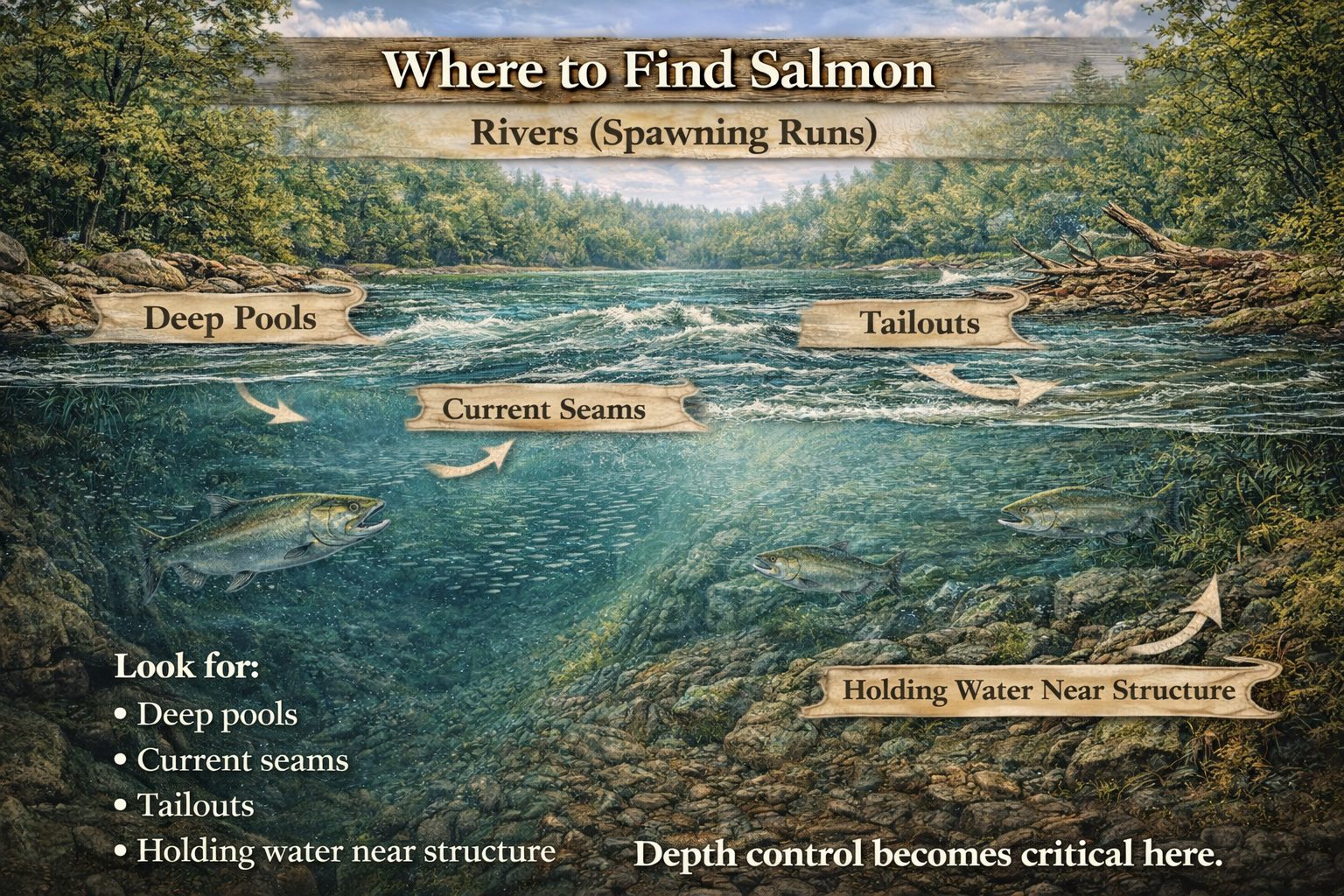
This is where many anglers target them.
Look for:
- Deep pools
- Current seams
- Tailouts
- Holding water near structure
Salmon stop feeding aggressively during spawn—but still react to presentations.
Seasonal Patterns
Salmon fishing is entirely driven by timing.
Ocean Season
- Spring through summer
- Fish actively feeding
- Follow bait schools
This is peak action fishing.
River Runs (Fall Primary)
- Salmon move upstream to spawn
- Stack in holding areas
- Less aggressive—but still catchable
This is where positioning matters most.
Winter (Limited Opportunities)
- Some late runs
- Slower fishing
- Location becomes everything
Best Times to Fish
Time of Day
- Early morning → best
- Tide changes → critical (saltwater)
- Overcast conditions help
Conditions That Matter
- Water temperature
- Bait presence
- Current flow
- Tides (coastal fishing)
Tackle & Setup
Salmon require stronger gear than most freshwater species.
- Rod: Medium-heavy to heavy
- Reel: Strong drag system
- Line: 10–25 lb depending on location
You’re not finesse fishing here—you’re controlling powerful fish.
Proven Methods
Trolling (Primary Method)
Most consistent method in open water.
Use:
- Spoons
- Flashers
- Hoochies
- Bait rigs
Control:
- Depth
- Speed
- Direction
Depth control is everything.
Casting (Shore & River)
Use:
- Spinners
- Spoons
- Jigs
Best in:
- River systems
- Shore access points
Drift Fishing (Rivers)
Use:
- Eggs
- Soft beads
- Natural presentations
Let bait move naturally with current.
Bubble + Bait / Fly System (Situational but Effective)
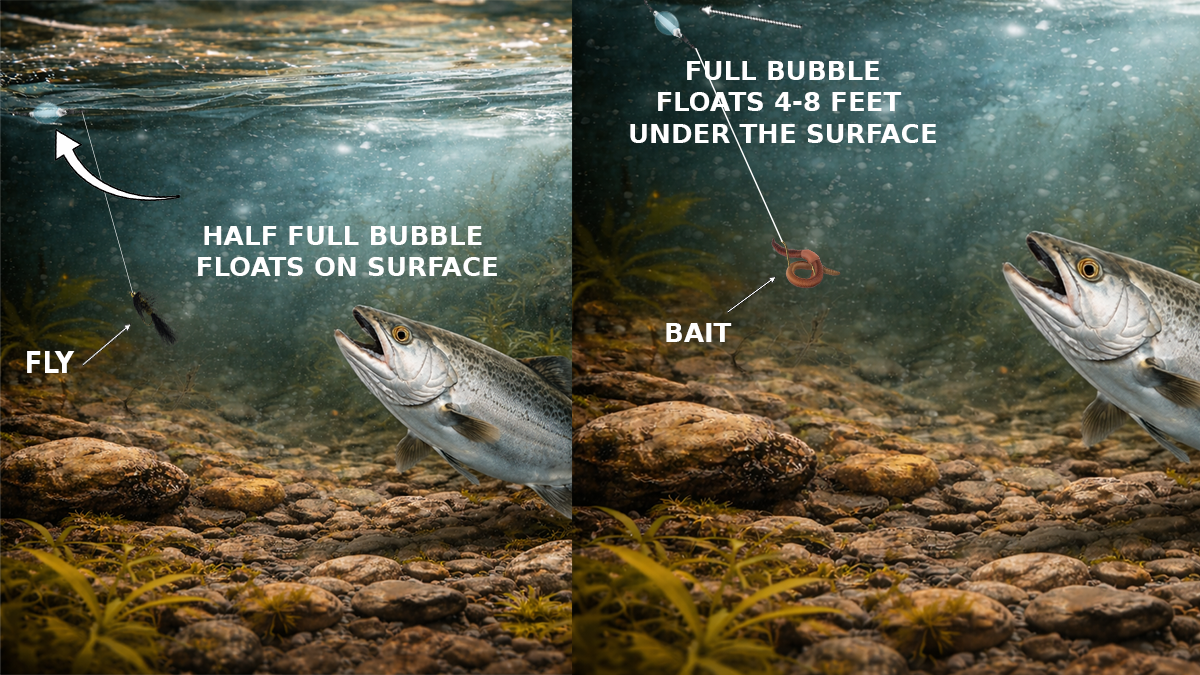
This is where we position your system correctly—not forced, but smart.
When It Works for Salmon
- Shore fishing
- Calm water zones
- River pools
- When fish are holding, not moving fast
Why It Works
Even though salmon aren’t actively feeding during spawn:
They still react to:
- Movement
- Intrusion
- Natural drift
The bubble allows you to:
- Present lighter offerings
- Control depth
- Drift naturally
How to Fish It
- Use a weighted or partially filled bubble depending on current
- Longer leader (4–8 ft typical)
- Cast upstream or across current
- Let bait or fly drift naturally
Best Options
- Egg patterns
- Small flies
- Natural bait
The key is natural movement—not aggressive action.
Fly Fishing for Salmon
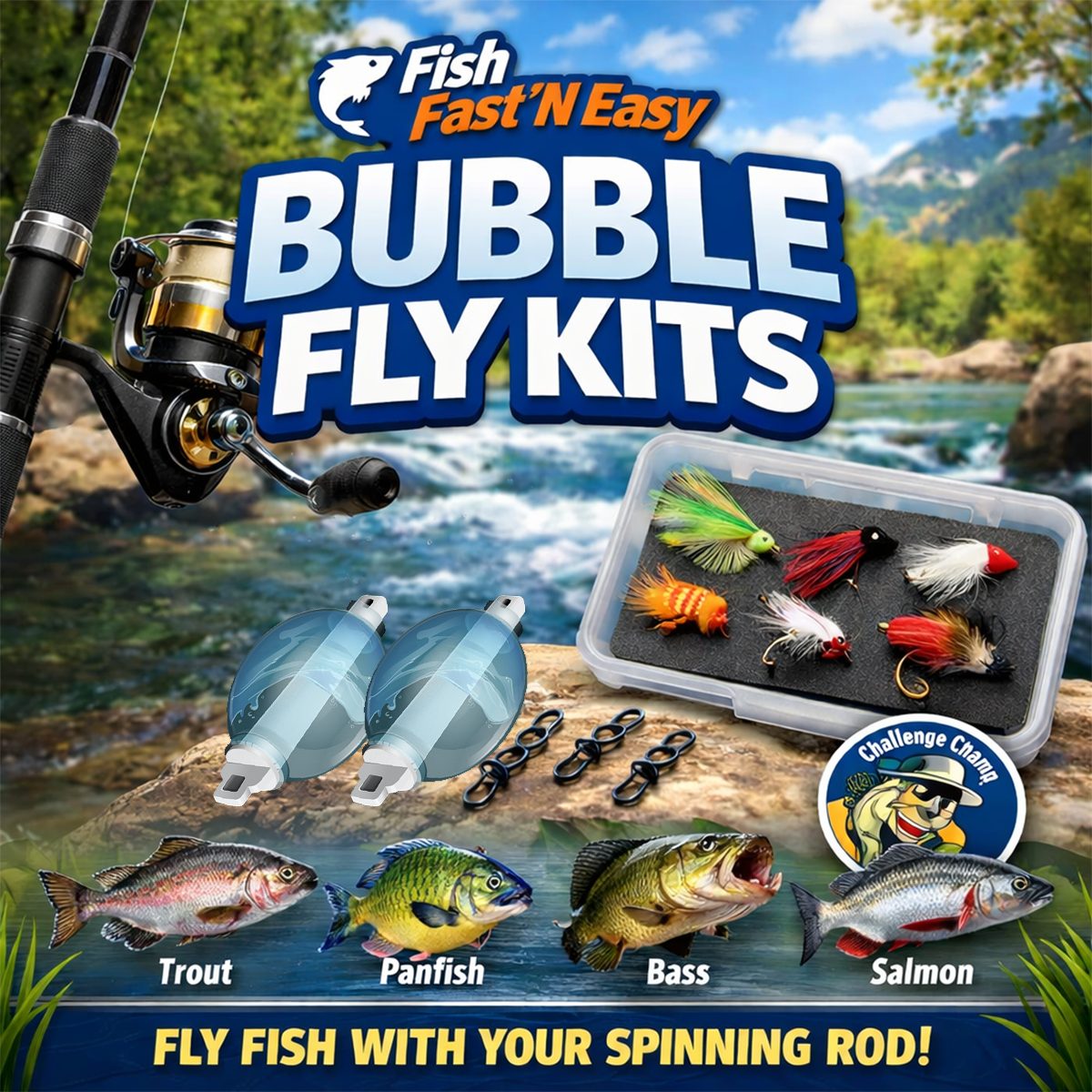
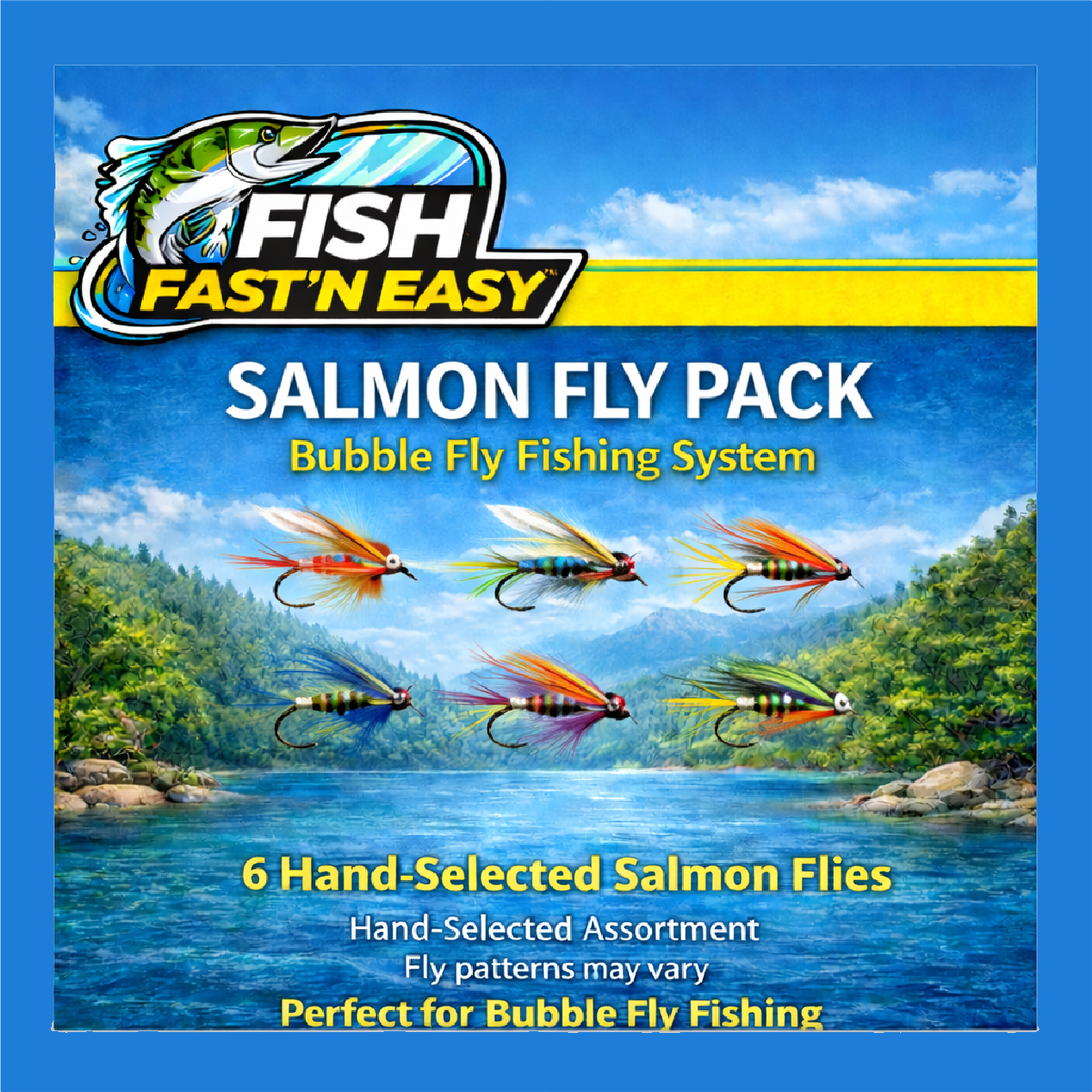
Highly effective in rivers.
Use:
- Egg patterns
- Streamers
- Intruder-style flies
Focus on:
- Drift
- Depth
- Swing presentation
Species-Specific Strategy
They Move Constantly
If fish aren’t there: You won’t catch them
This isn’t a “wait it out” fish.
Timing Beats Technique
You can do everything right and still fail if:
- You’re early
- You’re late
- You’re in the wrong zone
Depth Control Is Critical
Especially in:
- Great Lakes
- Rivers
If you’re not in their zone: You’re invisible
Common Mistakes
- Fishing the wrong time of year
- Ignoring bait movement
- Poor depth control
- Fishing empty water
- Using finesse when power is needed
Best Salmon Destinations
- Alaska (world-class fisheries)
- Pacific Northwest (WA, OR)
- California coast
- Great Lakes (MI, WI)
Quick Tactical Summary
If you want consistent success:
- Focus on timing first
- Find bait → find salmon
- Control depth precisely
- Adjust to movement patterns
- Use bubble system in controlled river or shore situations
- Fish where salmon actually are—not where you hope they are
Looking for more species and techniques? Explore our Complete Fishing Guides.
SHARING IS CARING
FishingVacations.com Copyright 2019 - 2026