
“Striped bass are not structure fish. They are movement fish—and if you understand that, everything changes.”
Striped Bass Fishing Guide
A Complete, Real-World System for Finding and Catching Striped Bass
Overview
Striped bass are not structure fish.
They are movement fish—driven by bait, current, and seasonal transitions. Whether in coastal surf, tidal estuaries, rivers, or inland reservoirs, their behavior follows one consistent rule:
Find the food, and you find the fish.
This is what makes striped bass both challenging and predictable. If you understand how they move and feed, you stop guessing and start intercepting.
Where to Find Striped Bass
Striped bass position themselves where feeding is easiest, not where structure simply exists.
Surf Zones (Coastal Beaches)
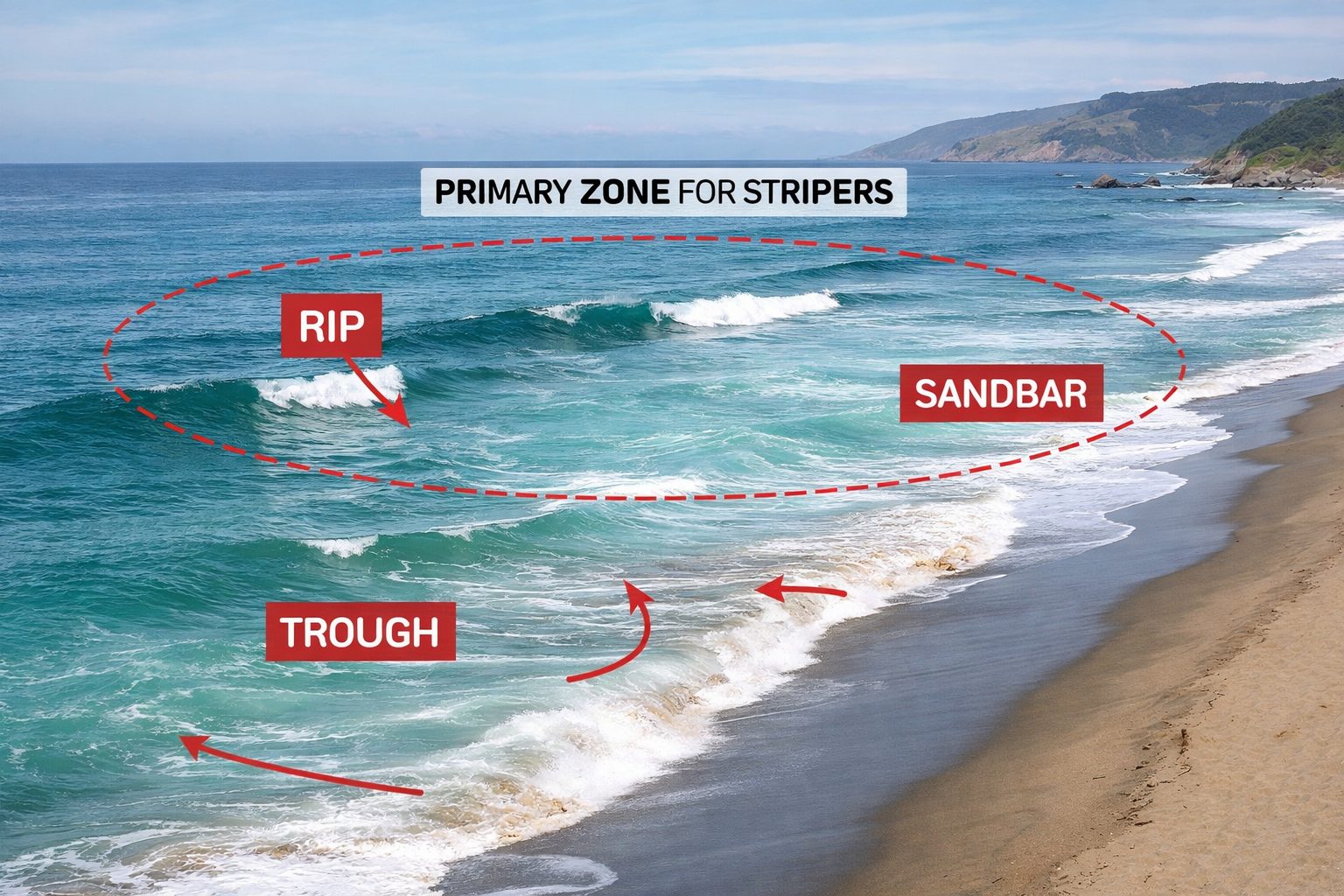
- Patrol parallel to shore, often within casting distance
- Key zones:
- Troughs (deeper water between shore and sandbar)
- Cuts in sandbars
- Rip currents
These areas funnel bait and create feeding lanes.
Bays & Estuaries
Highly productive due to constant bait movement.
Focus on:
- Channel edges
- Current seams
- Mudflats on incoming tide
- Bridge pilings and structure
Stripers use current to let food come to them.
Rivers
- Follow bait runs (shad, herring, anchovies)
- Hold in:
- Deep bends
- Current breaks
- Tailouts below riffles
Lakes & Reservoirs (Landlocked Stripers)
This is where most guides fall short.
Striped bass in lakes are:
- Open-water (pelagic) predators
- Rarely structure-oriented
- Constantly tracking bait schools (usually shad)
Key areas:
- Main lake basins
- Submerged river channels
- Points and drop-offs
- Dam areas
If you’re not finding bait, you’re not finding stripers.
Seasonal Patterns
Striped bass movement is controlled by temperature, bait migration, and oxygen levels.
Spring
- Fish move shallow and into rivers (spawning systems)
- Aggressive feeding begins
- One of the most reliable seasons
Summer
- Fish push deeper during the day
- Feed early, late, and at night
- In lakes: suspend over deep water following bait
Fall
- Peak feeding season
- Fish bulk up before winter
- Large schools follow migrating bait
This is often the most consistent time to fish.
Winter
- Fish hold deeper and move less
- Short feeding windows—but still catchable
Best Times to Fish
Time of Day
- Dawn and dusk are prime
- Night fishing can be excellent, especially in pressured areas
Tides (Saltwater)
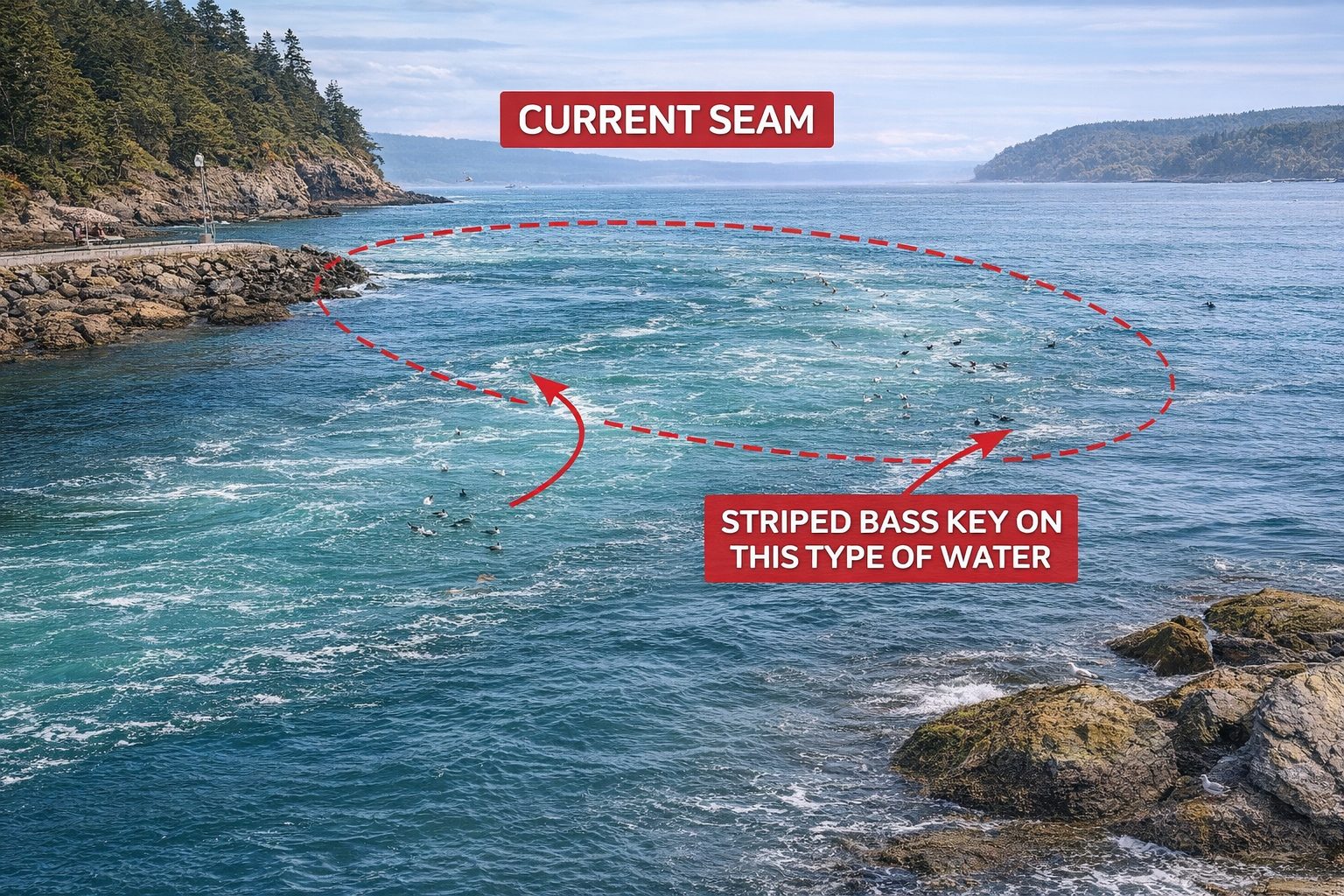
- Moving water = feeding opportunity
- Incoming tide brings bait in
- Outgoing tide concentrates bait
Weather
- Overcast extends feeding windows
- Wind pushes bait and creates structure in the water
Tackle & Setup
- Rod: 7’–10’ depending on environment
- Reel: Medium to large spinning setup
- Line: 15–30 lb braid
- Leader: 15–40 lb fluorocarbon
- Hooks: 2/0–6/0 circle hooks for bait
Keep it simple, strong, and adaptable.
Proven Methods
Bait Fishing
- Live bait: shad, anchovies, bunker, herring
- Cut bait works well in surf and current
Best when fish are feeding but not aggressively chasing.
Artificial Lures
- Swimbaits
- Topwater plugs
- Jerkbaits
- Spoons
The key is not the lure—it’s matching the bait size and behavior.
Fly Fishing
Effective in:
- Flats
- Calm bays
- Rivers
Use baitfish imitations like:
- Clousers
- Deceivers
Bubble + Bait System (Signature Method)
What You Need to Fish This System Correctly
The bubble + bait method is simple—but it is not forgiving.
Most anglers who try it either:
- Fish it too shallow
- Move it too much
- Or use the wrong components entirely
When that happens, the system loses what makes it effective:
natural presentation at the correct depth.
When it’s set up correctly, this method becomes one of the most consistent ways to catch striped bass from shore.
The Bubble System (Core of the Method)
Everything starts with the bubble.
This is not just a float—it is the piece that controls:
- Casting distance
- Depth
- Drift behavior
- Presentation speed
What the Right Bubble Setup Does
A properly designed bubble allows you to:
- Cast lightweight bait farther than traditional rigs
- Keep bait suspended naturally in the water column
- Adjust depth instantly by changing fill level
- Fish slower, longer, and more naturally than most anglers
This is why it consistently outperforms heavier rigs in:
- Clear water
- Pressured areas
- Near-surface feeding conditions
Why Most Setups Fail
Most anglers lose effectiveness because:
- The float is too heavy or unstable
- The rig doesn’t drift naturally
- Depth is not controlled precisely
- The presentation becomes mechanical instead of natural
Striped bass are movement feeders—but they are not careless.
If something looks wrong, they will follow and refuse.
Bubble + Bait System (Primary Method for Stripers)
This is where your advantage becomes real.
For striped bass, this is not a finesse technique—
this is one of the most reliable ways to consistently catch fish.
Why Bait Wins Here
Striped bass key heavily on:
- Anchovies
- Shad
- Bunker
- Small baitfish
A properly presented natural bait will:
- Outperform artificial lures in pressured conditions
- Trigger strikes from fish that are following but not committing
- Stay effective even when fish are scattered
What the System Allows You To Do
With the correct setup, you can:
- Present bait 4–6 feet below the surface where stripers often sit
- Drift naturally through feeding lanes
- Cover water without constantly re-casting
- Stay in the strike zone longer than nearly any other method
When This System Is at Its Best
- Surf fishing (especially troughs and cuts)
- Bays with moving current
- Areas with visible or scattered bait
- Low-light feeding periods
Complete Bubble System (Simplest Way to Fish It Right)
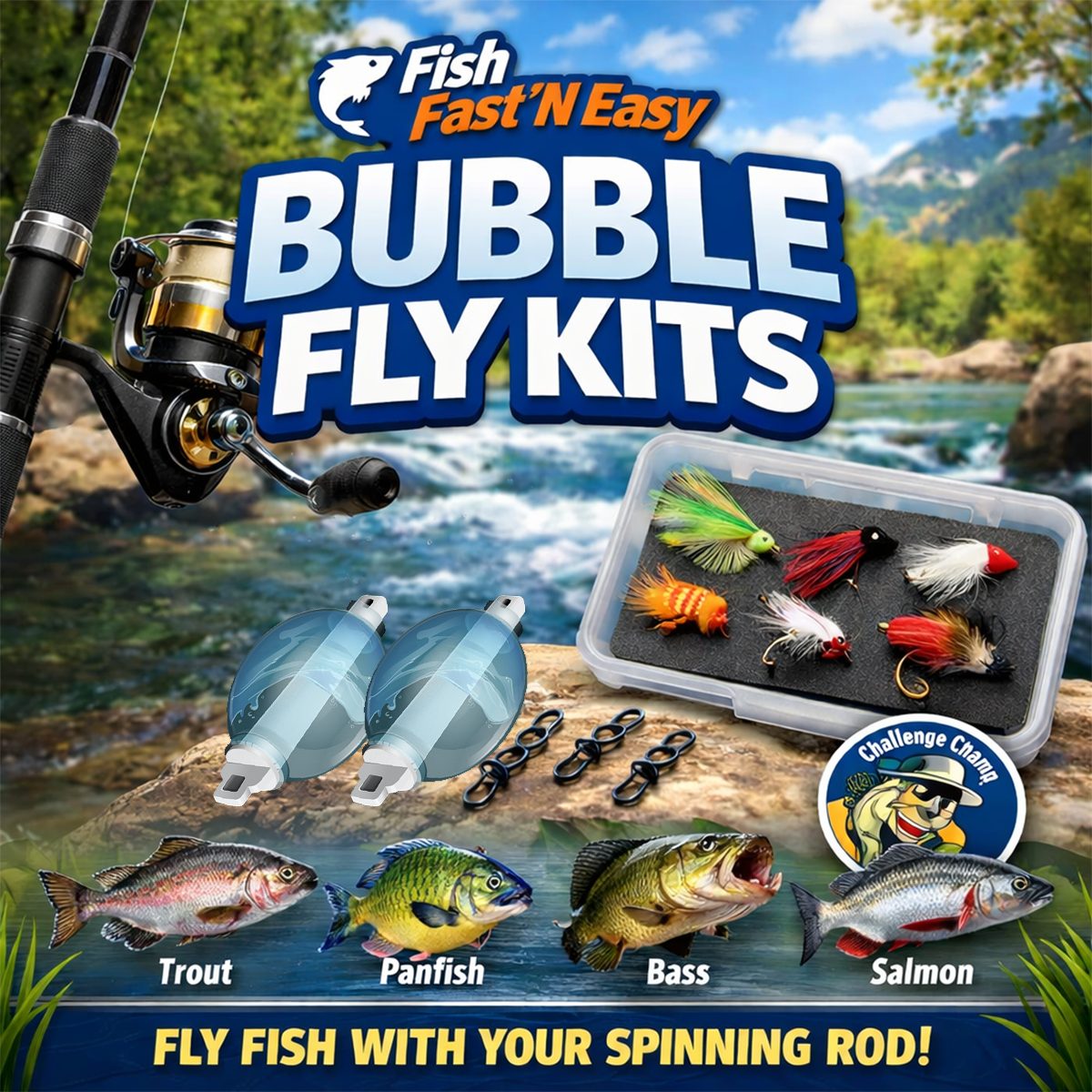
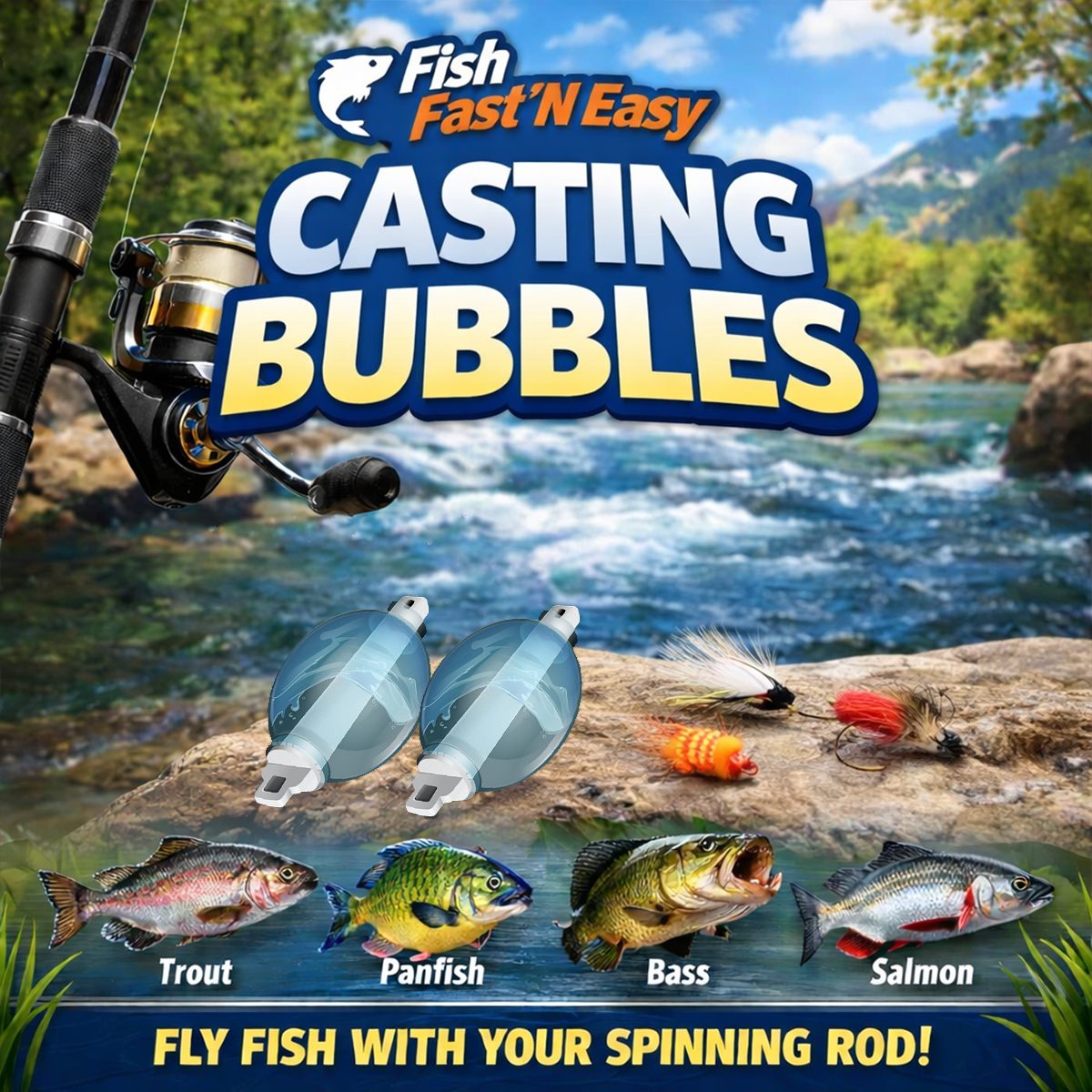
If you want consistency, the biggest advantage is removing setup errors.
What This Solves Immediately
- No guesswork in rigging
- Proper balance between float, leader, and presentation
- Reliable drift behavior
- A system designed specifically for this method—not adapted from something else
Why This Matters
Most anglers don’t fail because fish aren’t there.
They fail because:
- Their bait isn’t at the right depth
- Their presentation is unnatural
- Their setup works against them
This system removes those variables.
Advanced Depth Control (Where Most Anglers Lose Fish)
This is the difference between getting follows and getting bites.
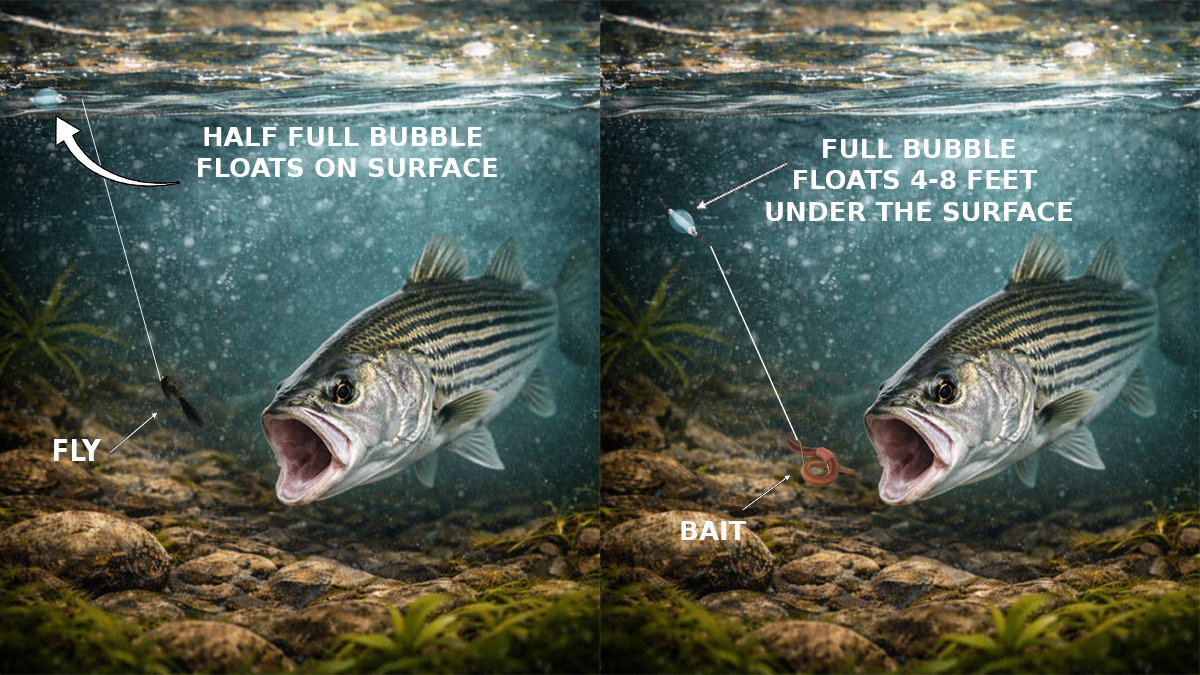
Partially Filled Bubble
- Keeps bait higher
- Best for surface-feeding fish
Fully Filled Bubble
- Sinks the presentation slightly
- Keeps bait 4–6 feet below the surface
- Produces a slower, more natural drift
Why This Matters
Striped bass often sit just below visible activity.
If your bait is:
- Too high → ignored
- Too low → missed
This system lets you stay exactly where they are feeding.
Why This System Consistently Produces
Most anglers rely on:
- Speed
- Reaction strikes
- Covering water quickly
This system does the opposite.
It:
- Slows the presentation
- Extends time in the strike zone
- Matches natural bait movement
And that’s what striped bass actually respond to.
When to Use This Over Other Methods
Choose this system when:
- Fish are present but not committing to lures
- Water is clear or pressured
- Bait is visible but scattered
- You need a natural presentation instead of reaction strikes
Bottom Line
If you want to consistently catch striped bass from shore:
- Control your depth
- Slow your presentation
- Match natural bait
- Let the water do the work
And most importantly:
Use a system that is designed to do exactly that.
Striped Bass in Lakes & Reservoirs
Lake stripers behave differently—but predictably.
Core Behavior
- Open-water predators
- Follow bait schools (primarily shad)
- Suspend at specific depths based on temperature and oxygen
Where to Look
- Over deep water
- Along submerged channels
- Near points and drop-offs
- Around bait schools (most important factor)
Effective Methods
- Topwater during feeding windows
- Swimbaits and spoons
- Live bait at depth
- Trolling to locate schools
Where Bubble + Bait Fits
Bubble rigs are not the primary lake method—but they are effective when:
- Fish are feeding near the surface
- Bait is small and scattered
- You need a natural suspended presentation
The fully filled bubble setup is especially effective here.
Species-Specific Strategy
They Follow Before They Strike
Stripers often track bait before committing.
If you’re not getting bites:
- Slow down
- Add pauses
- Change rhythm before changing lures
Current Creates Opportunity
Stripers position themselves where food is delivered.
Find moving water—not just structure.
Depth Is Everything
You can have the perfect bait and still fail if you’re not in the right zone.
Common Mistakes
- Fishing areas without bait
- Ignoring current and tide
- Retrieving too quickly
- Using heavy, unnatural setups in clear water
- Not adjusting depth
Best Destinations for Striped Bass
Bodega Bay, California
Surf and bay systems with strong seasonal bait movement
Chesapeake Bay (MD/VA)
One of the most consistent striper fisheries in the country
Hudson River, New York
Known for spring spawning runs
Lake Mead (NV/AZ)
Top-tier landlocked striper fishery
Quick Tactical Summary
If you want consistent success:
- Find bait first
- Fish moving water
- Focus on low-light periods
- Match bait size and behavior
- Adjust depth before changing gear
- Use bubble + bait for natural suspended presentation
- Use a fully filled bubble to reach the 4–6 ft strike zone
Looking for more species and techniques? Explore our Complete Fishing Guides.
SHARING IS CARING
FishingVacations.com Copyright 2019 - 2026