






Oklahoma State Fishing Records
| Species | Weight | Length | Location | Angler | Date |
| Alligator Gar | 192 lbs 1 oz | 91.5" | Red River | James Tucker | 1/27/2011 |
| American Eel | 5 lbs 7 oz | 39.5" | Illinois River | Dolores Munsell | 6/3/1995 |
| Bigmouth Buffalo | 59 lbs 15 oz | 43.75" | Greenleaf Lake | Leroy Broaddrick | 11/12/1988 |
| Black Buffalo | 22 lbs 3.024 oz | 35" | Fort Gibson Lake | E. Dale Dampf | 4/2/2010 |
| Black Bullhead | 6 lbs 13 oz | 18.675" | private pond | Gary Cole | 5/24/1984 |
| Black Crappie | 4 lbs 10 oz | 20" | private pond | Rollie Williams | 5/16/1974 |
| Blue Catfish | 98 lbs 0 oz | 54.6" | Lake Texoma | BJ Nabors | 11/11/2004 |
| Bluegill Sunfish | 2 lbs 6 oz | 12.75" | private pond | Tom Shorter | 5/8/1987 |
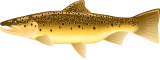
| Brown Trout | 17 lbs 4 oz | 32.75" | Mountain Fork River | Jason Archie | 4/10/2005 |
| Chain Pickerel | 2 lbs 10 oz | 22.5" | Mountain Fork | Eric Lowe | 4/22/1982 |
| Channel Catfish | 35 lbs 15 oz | 39.25" | Taft Lake | Gary Doak Jr. | 9/11/2005 |
| Common Carp | 35 lbs 0 oz | 37.5" | Spavinaw Lake | Kenneth Patton | 4/19/1997 |
| Flathead Catfish | 78 lbs 8 oz | 51" | El Reno City Reservoir | Richard Williams | 5/11/2010 |
| Freshwater Drum | 38 lbs 0 oz | 41.75" | Tenkiller Lake | Harold Phillips | 5/23/1976 |
| Goldeye | 2 lbs 8 oz | 18.675" | Arkansas River | James R. Smith | 4/27/1996 |
| Grass Carp | 64 lbs 46 oz | 46" | Arbuckle Lake | Dan West | 2/5/1998 |
| Grass Pickerel | 0 lbs 7 oz | 13" | Beaver Creek | Barry Bryant | 3/17/1995 |
| Green Sunfish | 2 lbs 7 oz | 13" | private pond | Eddie Shulanberger | 10/16/1972 |
| Hybrid Striped Bass | 23 lbs 4 oz | 33.5" | Altus-Lugert Lake | Paul Hollister | 4/1/1997 |
| Hybrid Sunfish | 1 lbs 14 oz | 12.375" | private pond | Hal Smith | 3/24/1997 |
| Hybrid Yellow Bass | 2 lbs 5 oz | 15.75" | Kiamichi River | George R. Edwards | 3/26/1991 |
| Largemouth Bass | 14 lbs 12.3 oz | 26" | Cedar Lake | Benny Williams, Jr. | 3/23/2012 |
| Longnose Gar | 41 lbs 0 oz | 62" | Red River | Dean Pittman | 1/30/1988 |
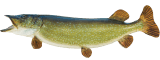
| Northern Pike | 36 lbs 8 oz | 44" | Lake Carl Etling | Raymond Fernandez | 6/13/1976 |
| Paddlefish | 125 lbs 7 oz | 55" | Arkansas River | Aaron Stone | 4/10/2011 |
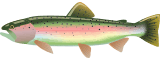
| Rainbow Trout | 10 lbs 4 oz | 27" | Illinois River | Billy Payne | 7/3/1966 |
| Redear Sunfish | 2 lbs 1 oz | 12.75" | private pond | Ruby Lee Farmer | 11/15/1973 |
| River Carpsucker | 7 lbs 11 oz | 24" | private pond | Bill Kenyon | 4/18/1990 |
| River Redhorse | 8 lbs 5 oz | 28.5" | Illinois River | Williw Pippin | 2/11/1977 |
| Sauger | 5 lbs 5 oz | 23" | Kerr Reservoir | Chet Munds | 1/18/1981 |
| Saugeye | 10 lbs 0 oz | 28.5" | Fort Cobb Lake | Curt Wilkerson | 2/24/2006 |
| Shortnose Gar | 5 lbs 6 oz | 32" | Brown Lake | Robert Byrd | 8/13/2003 |
| Shovelnose Sturgeon | 2 lbs 15 oz | 29" | Arkansas River | Paul R. Foreman | 10/12/1997 |
| Skipjack Herring | 3 lbs 6 oz | 19" | Lake Eufaula Tailwaters | Bobby Moore | 4/3/1992 |
| Smallmouth Bass | 8 lbs 7 oz | 23.2" | Lake Lawtonka | Ryan Wasser | 3/31/2012 |
| Smallmouth Buffalo | 44 lbs 2 oz | 35" | Konawa | Marvin Williams | 8/15/2007 |
| Spotted Bass | 8 lbs 2 oz | 23.5" | private pond | O. J. Stone | 6/27/1958 |
| Striped Bass | 47 lbs 8 oz | 48" | Illinois River | Louis Parker | 6/10/1996 |
| Walleye | 12 lbs 13 oz | 30.33" | Robert S Kerr | Kerry Carter | 5/8/2004 |
| White Bass | 5 lbs 4 oz | 21" | Lake Eufaula | Paul Grace | 10/26/1984 |
| White Crappie | 4 lbs 15 oz | 19" | private pond | Frank Robinson | 5/4/1991 |


